Anyone who operates a boom lift, scissor lift, or other aerial work platform on the job needs certification, and employers must provide that training before a worker steps on the platform. This covers construction, warehousing, tree care, sign installation, window washing, and any other field using powered platforms to reach elevated work areas. OSHA doesn't use the word "certification" in its regulations, but it does require documented, competency-based training for every operator, and skipping it can trigger fines running into the thousands per violation. Knowing who falls under this requirement keeps employers out of trouble and keeps workers safer on equipment that causes hundreds of serious injuries every year.
Key Takeaways
- Any employee who operates a scissor lift, boom lift, or other aerial work platform must receive documented training under OSHA rules before independent use.
- The core regulations are 29 CFR 1926.453 (construction) and 29 CFR 1910.67 (general industry), supported by the ANSI/SAIA A92.24-2018 training standard.
- Training must be renewed roughly every three years, or sooner if an operator switches lift types or is involved in a near-miss or accident.
- Online courses typically run $30 to $150 per operator, while combined online plus in-person evaluation programs run $100 to $300.
- Employers face OSHA penalties of roughly $16,500 to $17,000 per serious violation in 2026, and over $165,000 for willful or repeat violations, for failing to train operators.
- Certification alone is not enough; a qualified supervisor must also complete a hands-on evaluation of each operator on the specific equipment used at the job site.
Who Actually Needs Aerial Lift Certification
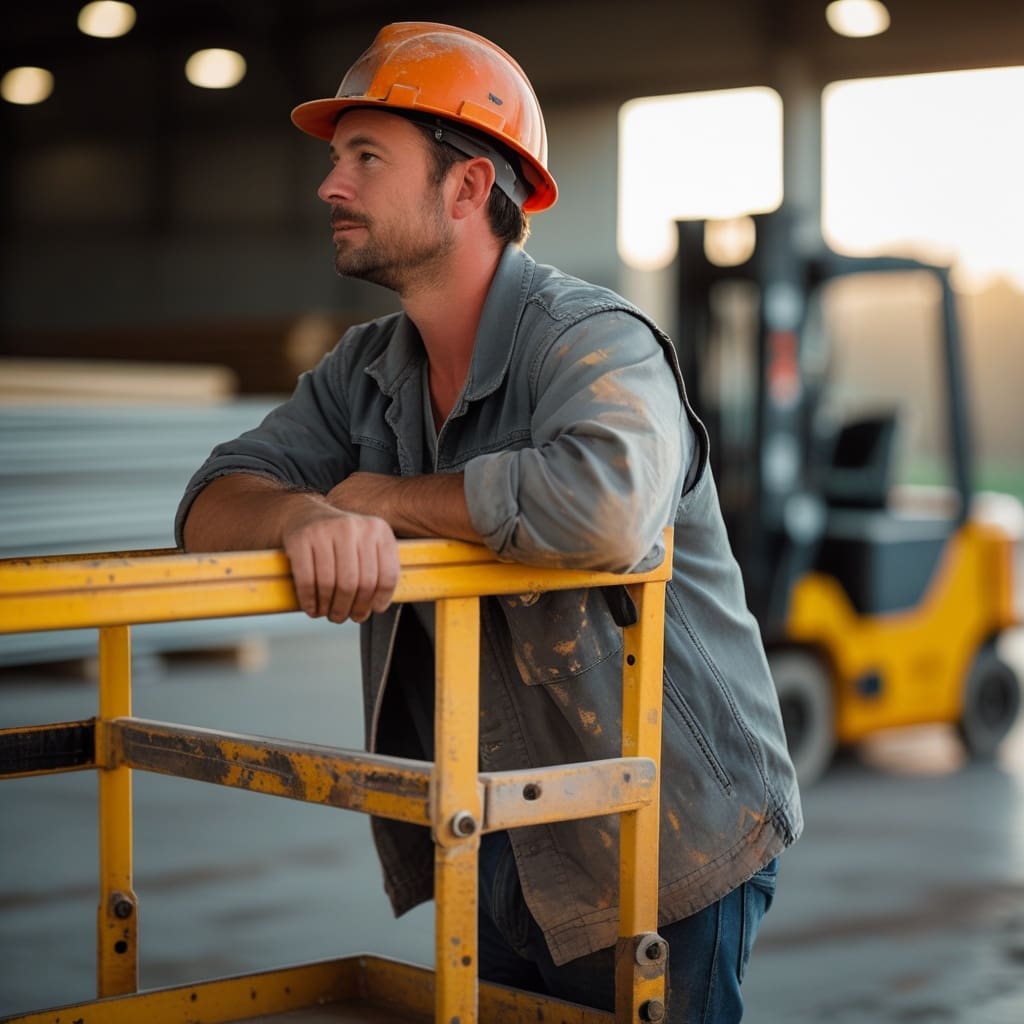
Every worker who directly operates a scissor lift, articulating boom, telescopic boom, or vertical mast lift needs certification, regardless of how briefly they use the machine. This includes full-time equipment operators as well as workers who only climb into a lift occasionally, such as electricians, HVAC technicians, painters, or warehouse staff pulling stock from high shelving. OSHA does not carve out exceptions for infrequent users. If a person’s feet leave the ground on a powered platform, that person needs documented training first.
Supervisors and site managers who assign lift work also need at least a working knowledge of the equipment, even if they never operate it themselves, because they are responsible for confirming that operators are properly trained and that the equipment is inspected before use. In practice, this means the following groups almost always fall under the certification requirement:
- Construction workers using scissor lifts or boom lifts for framing, drywall, electrical, or finish work
- Warehouse employees operating order pickers or lifts for high-shelf inventory
- Tree care and utility line workers using bucket trucks or aerial devices
- Sign installers, painters, and window washers working from elevated platforms
- Maintenance technicians servicing HVAC units, lighting, or roofing systems
- Rental company staff who deliver equipment and demonstrate operation to customers
Temporary workers and subcontractors are not exempt either. If a staffing agency places a worker on a job site where lift operation is part of the role, either the staffing agency or the host employer must confirm and document that the worker has received proper training. Assuming someone else handled the paperwork is one of the most common and costly mistakes on multi-employer job sites.
The Regulations That Require Certification
OSHA’s aerial lift requirements live in two main places depending on the industry. Construction employers must follow 29 CFR 1926.453, which covers aerial lifts under the scaffolding standards, while general industry employers follow 29 CFR 1910.67. Both regulations require that only trained and authorized employees operate aerial lifts, and both hold the employer, not the training vendor, ultimately responsible for compliance.
Supporting these OSHA rules is the American National Standards Institute training standard ANSI/SAIA A92.24-2018, which lays out the specific competencies an operator must demonstrate, including recognizing hazards, understanding load limits, and performing pre-shift inspections. Many employers reference this standard directly in their internal safety programs because OSHA inspectors often look for alignment between a company’s training documentation and ANSI’s competency framework.
A related but separate standard, ANSI/SAIA A92.22-2018, governs safe use requirements once equipment is on site, while A92.20-2018 covers design and manufacturing. Employers do not need to memorize every ANSI number, but they should know that OSHA’s general duty clause combined with these three standards forms the backbone of what inspectors check during a citation review. Training records, typically kept for the duration of employment plus a few years, are often the first documents an OSHA compliance officer requests after an incident.
Types of Aerial and Scissor Lifts Covered by Training
Certification is not a single blanket credential that covers every machine. OSHA and ANSI both recognize distinct equipment categories, and training must address the specific type or types an operator will actually use. The main categories include:
- Scissor lifts, which move straight up and down and are common in warehouses and indoor construction
- Articulating boom lifts, which have jointed arms that can reach up and over obstacles
- Telescopic boom lifts, which extend in a straight line for greater horizontal reach
- Vertical mast lifts, smaller and more maneuverable, often used indoors for tasks like fixture installation
- Bucket trucks and aerial devices, typically mounted on vehicles for utility and tree work
An operator certified on a scissor lift is not automatically qualified to run a telescopic boom. OSHA’s standard is explicit that training must be specific to the type of equipment the employee will use, and retraining is required whenever an employee is assigned to operate a different class of lift. This distinction trips up many employers who assume a single training course covers their entire fleet.
What Aerial Lift Certification Training Actually Covers
A compliant training program moves through several stages, and skipping any of them leaves both the worker and employer exposed to citation. Most reputable programs, whether delivered online, in a classroom, or through a blended format, follow a similar structure:
- Module 1: Equipment fundamentals. Covers the differences between scissor lifts, articulating booms, and telescopic booms, including load capacity, platform height limits, and manufacturer-specific controls, usually taking 30 to 60 minutes.
- Module 2: Pre-operation inspection. Teaches the operator how to perform a documented daily inspection covering hydraulic fluid levels, tire condition, guardrails, and emergency lowering controls, typically 20 to 30 minutes of instruction.
- Module 3: Safe operating procedures. Addresses fall protection anchor points, minimum clearance from power lines (generally 10 feet under OSHA’s approach distance guidance), wind speed limits, and stability on uneven ground, usually 45 to 60 minutes.
- Module 4: Hazard recognition and emergency response. Covers tip-over scenarios, entanglement hazards, and what to do if the platform becomes stuck or the machine loses power, generally 20 to 30 minutes.
- Written knowledge check. Most programs require a passing score of 80 percent or higher on a 20 to 40 question exam before issuing a completion certificate.
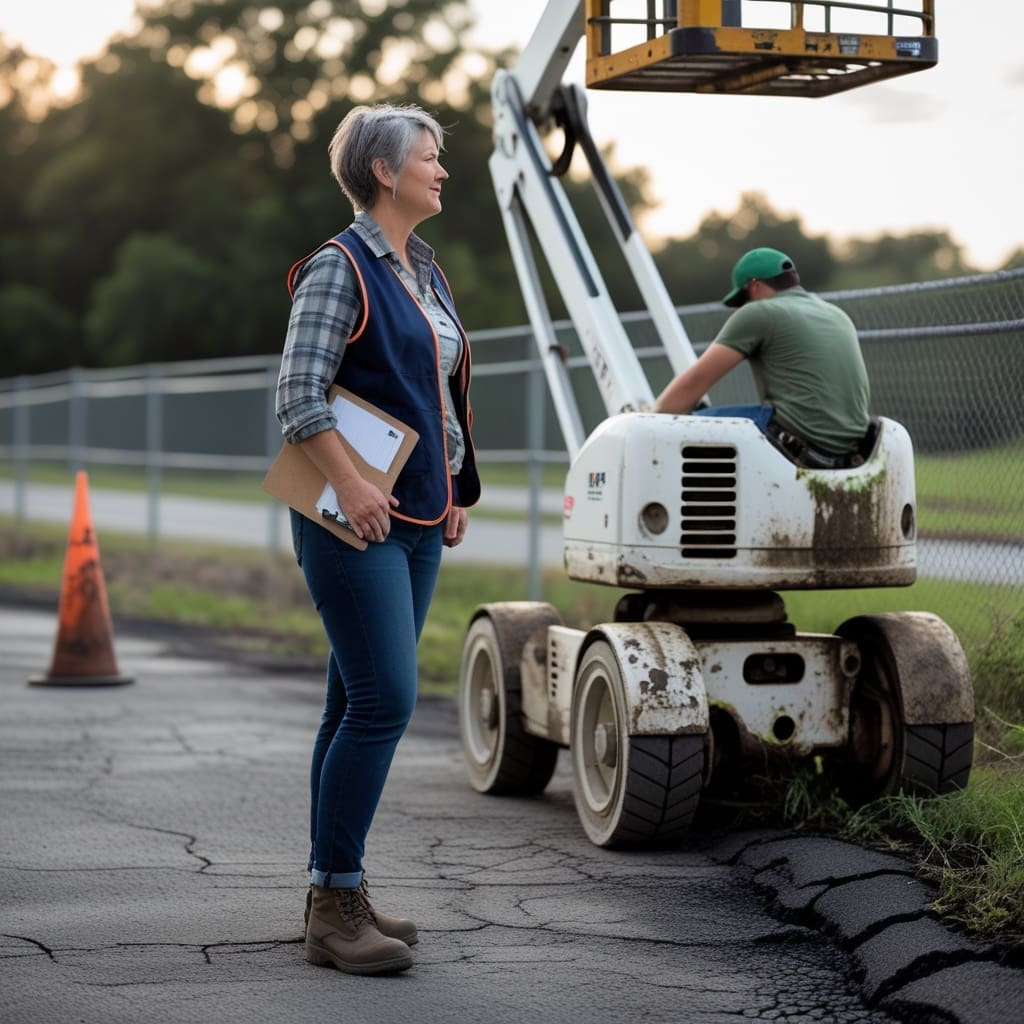
- Hands-on evaluation. A qualified supervisor at the job site must observe the operator using the actual equipment and sign off on competency, a step OSHA requires regardless of how the classroom or online portion was delivered.
That final step is the one employers most often overlook. A worker can pass an online exam with a perfect score and still not be considered fully trained under OSHA’s standard until someone with authority and equipment knowledge watches them operate the specific lift and confirms they can do it safely.
Costs, Renewal Timelines, and Certification Options
Aerial lift training costs vary by delivery method, but real ranges exist and employers should budget accordingly rather than guessing. Online-only courses covering the classroom portion typically run $30 to $75 per operator for a single certification, or $99 to $150 for bundled packages covering multiple lift types. In-person or blended programs that include a trainer-led hands-on evaluation generally cost $100 to $300 per worker, depending on region and whether the trainer travels to the job site.
Renewal is not a one-time event. OSHA does not specify an exact expiration date in the regulation text itself, but ANSI A92.24 and standard industry practice call for retraining every three years, with several situations that trigger earlier retraining regardless of the calendar:
- The operator is assigned to a new type of lift they have not used before
- The operator is observed operating equipment unsafely
- The operator is involved in an accident or near-miss incident
- Workplace conditions change in a way that creates new hazards, such as a new job site layout
- A new law, standard, or updated manufacturer manual changes safe operating procedures
Employers who manage larger crews often find it more economical to purchase site licenses, which run $500 to $2,000 annually and allow unlimited course completions for a set number of employees. For a company with fewer than ten operators, per-seat online pricing is usually the more economical route.
What Happens If You Operate Without Certification
Operating an aerial lift without documented training exposes both the worker and the employer to real financial and legal risk. OSHA’s penalty structure, adjusted annually for inflation, sets serious violation fines at roughly $16,500 to $17,000 per violation in 2026. Willful or repeat violations, which apply when an employer knowingly ignores the training requirement or has been cited for the same issue before, can exceed $165,000 per violation.
Beyond fines, the safety stakes are significant. Falls remain one of the leading causes of death in construction, and aerial lift tip-overs and structural collisions account for a meaningful share of those incidents each year. An untrained operator is far more likely to misjudge ground stability, exceed load limits, or fail to recognize an overhead power line hazard, any of which can turn a routine task into a fatality. The certification requirement exists because the consequences of skipping it are measured in lives, not just paperwork.
Workers’ compensation claims and general liability insurance policies frequently include clauses that reduce or deny coverage when an employer cannot produce training documentation after an incident. This means the financial exposure from skipping certification often extends well beyond the initial OSHA fine.
How Employers Can Set Up a Compliant Program
Building a training program that actually holds up under an OSHA inspection takes more than buying a course and filing a certificate. Employers should treat certification as an ongoing safety system rather than a one-time transaction, and the following steps outline a practical approach:
- Identify every employee who touches a lift, including occasional users, not just full-time operators, to avoid gaps in coverage.
- Select a training provider whose course content aligns with ANSI A92.24-2018 and covers the specific lift types your fleet includes.
- Schedule the hands-on evaluation with a qualified in-house supervisor within days of course completion, since a certificate alone does not satisfy OSHA’s competency requirement.
- Store training records for at least three years, including exam scores, evaluation sign-offs, and the specific equipment models each worker is authorized to operate.
- Set calendar reminders for renewal at the three-year mark, or sooner if any retraining trigger occurs.
- Conduct spot checks on job sites periodically to confirm that certified operators are following safe procedures in practice, not just on paper.
Companies with high turnover, such as construction subcontractors, often benefit from an online course with unlimited access for a flat annual fee, since it lets new hires complete training within their first day on site rather than waiting for a scheduled in-person session.
Ready to Get Your Team Trained
If any employee on your team operates a scissor lift, boom lift, or aerial work platform, the time to confirm their certification status is before the next shift, not after an inspector arrives or an incident occurs. Review your current training records, identify any gaps by lift type, and schedule both the course and the hands-on evaluation for every worker who needs it. A properly certified team is not just a compliance checkbox; it is the difference between a job site that runs safely and one that becomes a statistic.
Conclusion
Aerial lift certification is not optional for anyone who operates powered platforms on the job, whether that person runs a scissor lift full time or climbs into a boom lift once a month. OSHA’s regulations under 29 CFR 1926.453 and 1910.67, backed by the ANSI A92.24-2018 training standard, place clear responsibility on employers to train, evaluate, and document every operator before they work unsupervised. Costs are modest compared to the fines and safety risks of skipping the process, typically $30 to $300 per worker depending on the format chosen. Staying current with renewal every three years, or sooner when equipment or conditions change, keeps both the workforce and the business protected.
Frequently Asked Questions
Does aerial lift certification expire?
Yes, most certifications should be renewed roughly every three years. Retraining is also required sooner if an operator switches to a different lift type, is involved in an accident, or is observed operating equipment unsafely.
Can I get aerial lift certified online, or do I need in-person training?
Online courses satisfy the classroom portion, but OSHA still requires a hands-on evaluation. A qualified supervisor must watch the operator use the actual equipment at the job site and confirm competency before the training is considered complete.
Do supervisors and site managers need aerial lift certification too?
Supervisors do not need full operator certification unless they operate the equipment themselves, but they do need enough training to verify others are properly trained. Many companies still put supervisors through the same course for consistency and liability protection.
What is the difference between OSHA compliance and ANSI certification?
OSHA sets the legal training requirement, while ANSI A92.24-2018 defines the specific competencies that training should cover. A program built around ANSI’s framework generally satisfies OSHA’s requirement, but OSHA itself does not issue or endorse any specific certificate.
How much does aerial lift certification cost for a small crew?
Expect to pay between $30 and $150 per worker for online-only training, or $100 to $300 per worker for programs that include an in-person hands-on evaluation. Site licenses covering multiple employees typically run $500 to $2,000 per year and often make more financial sense for crews larger than ten operators.