Aerial lift certification typically costs between $75 and $600 per operator, depending on whether you choose an online course, an in-person program, or a combined classroom-and-evaluation package through your employer. Online-only training runs on the lower end, often $75 to $150 per person, while in-person courses with hands-on equipment evaluation can reach $300 to $600 or more. Group rates, employer-provided evaluators, and the number of lift classes covered all shift that final number significantly.
The price you pay reflects more than just a fee for a certificate. It covers instruction on OSHA standard 29 CFR 1926.453 for aerial lifts and ANSI A92 equipment classifications, plus a practical skills evaluation that most employers are legally required to document. Understanding where the money actually goes helps you budget correctly, whether you are certifying one operator or an entire crew.
Key Takeaways
- Online aerial lift certification courses generally cost $75 to $150 per person, while in-person or blended programs range from $200 to $600.
- OSHA does not require a specific “certification” but mandates operator training and evaluation under 29 CFR 1926.453 and 1910.67 for aerial lifts.
- Employers, not workers, are legally responsible for training costs under most OSHA interpretations, since training must be provided at no cost to the employee.
- Certification cards typically remain valid for three years, after which recertification or a refresher course is required, usually at a reduced cost.
- Group and bulk pricing can cut per-person costs by 20 to 40 percent for companies certifying five or more employees at once.
- Hidden costs, including evaluator fees, equipment rental for hands-on testing, and travel, can add $50 to $200 beyond the base course price.
What Determines the Price of Aerial Lift Certification
Several concrete factors push the price up or down, and none of them work in isolation. The delivery format matters most: a self-paced online module costs less to produce and deliver than an instructor-led session with rented equipment. The number of lift categories included also changes the price, since a course covering only scissor lifts costs less than one covering boom lifts, scissor lifts, and aerial work platforms together.
Geographic location plays a role as well. Training providers in metropolitan areas with higher labor costs, such as Chicago or Los Angeles, often charge 10 to 20 percent more than providers in smaller markets. Finally, whether the course bundles a printed wallet card, a digital certificate, or both changes the final invoice by $10 to $25.
Typical Cost Ranges by Training Type
- Online-only course: $75 to $150 per operator, completed in 1 to 3 hours, with instant digital certificate.
- Blended course (online theory plus employer-led hands-on evaluation): $100 to $250 per operator, including a printed card mailed within 5 to 10 business days.
- Full in-person course with instructor and equipment: $250 to $600 per operator, usually a half-day to full-day session.
- Train-the-trainer program (qualifies someone to evaluate other operators internally): $400 to $900 per person, a one-time cost that eliminates future per-operator evaluator fees.
- Recertification or refresher course: $50 to $150, roughly half the cost of initial certification.
These figures reflect national averages reported by industry training providers as of 2026 and can shift based on promotional pricing, seasonal demand in construction-heavy regions, or whether a company negotiates an annual training contract.
What OSHA Actually Requires (and Why “Certification” Is a Misleading Term)
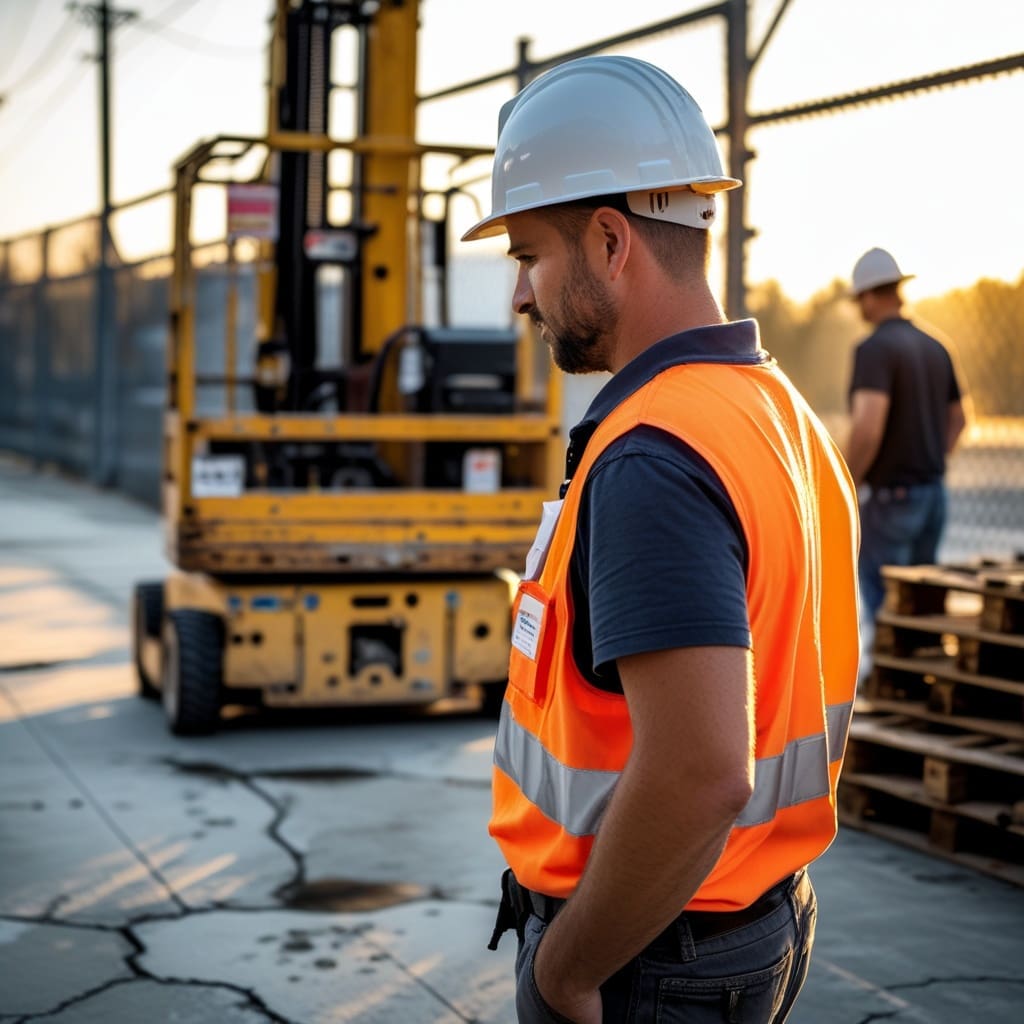
OSHA does not issue or mandate a national aerial lift “certification” card, and no federal exam number exists for aerial lifts the way it does for some other trades. Instead, 29 CFR 1926.453 and 29 CFR 1910.67 require that operators be trained and evaluated by a qualified person before operating an aerial lift unsupervised. The term “certification” is industry shorthand for the documentation employers use to prove that training and evaluation took place.
ANSI A92.24 and the ANSI/SAIA A92.22 standards, updated in recent years, add more specific requirements around operator training content, including pre-use inspections, workplace inspections, and supervisor responsibilities. Many training providers align their courses with both OSHA regulatory language and ANSI content requirements, which is why course prices often reflect the depth of material covered rather than a single flat government fee.
Because there is no centralized federal registry, a certificate from one provider is not automatically recognized by every employer. Some companies require operators to redo training upon hire even if they hold a valid card from a previous employer, which is worth confirming before you pay for a course.
Sample Cost Breakdown for a Five-Person Crew
Consider a construction contractor certifying five employees on scissor lifts and boom lifts through a blended online-and-onsite program. The numbers below reflect a realistic scenario based on average 2026 provider pricing.
- Online theory module for five operators: $125 per person at a bulk rate, totaling $625.
- Onsite hands-on evaluation by a company-designated qualified trainer: $0 additional cost if an existing employee is already trained as an evaluator, or $300 flat fee if hiring an outside evaluator for the group.
- Printed wallet cards for all five workers: $10 each, totaling $50.
- Equipment rental for practical testing (if no lift is already on site): $150 to $250 per day.
- Administrative recordkeeping and digital certificate storage: Often included free with online providers, or $25 as a one-time setup fee with some platforms.
Total cost for this crew ranges from roughly $700 if the company already has a qualified evaluator and equipment, up to $1,250 if outside evaluators and rented equipment are needed. Per-person cost lands between $140 and $250, which lines up closely with industry averages for blended training.
Hidden Fees and Extra Costs to Watch For
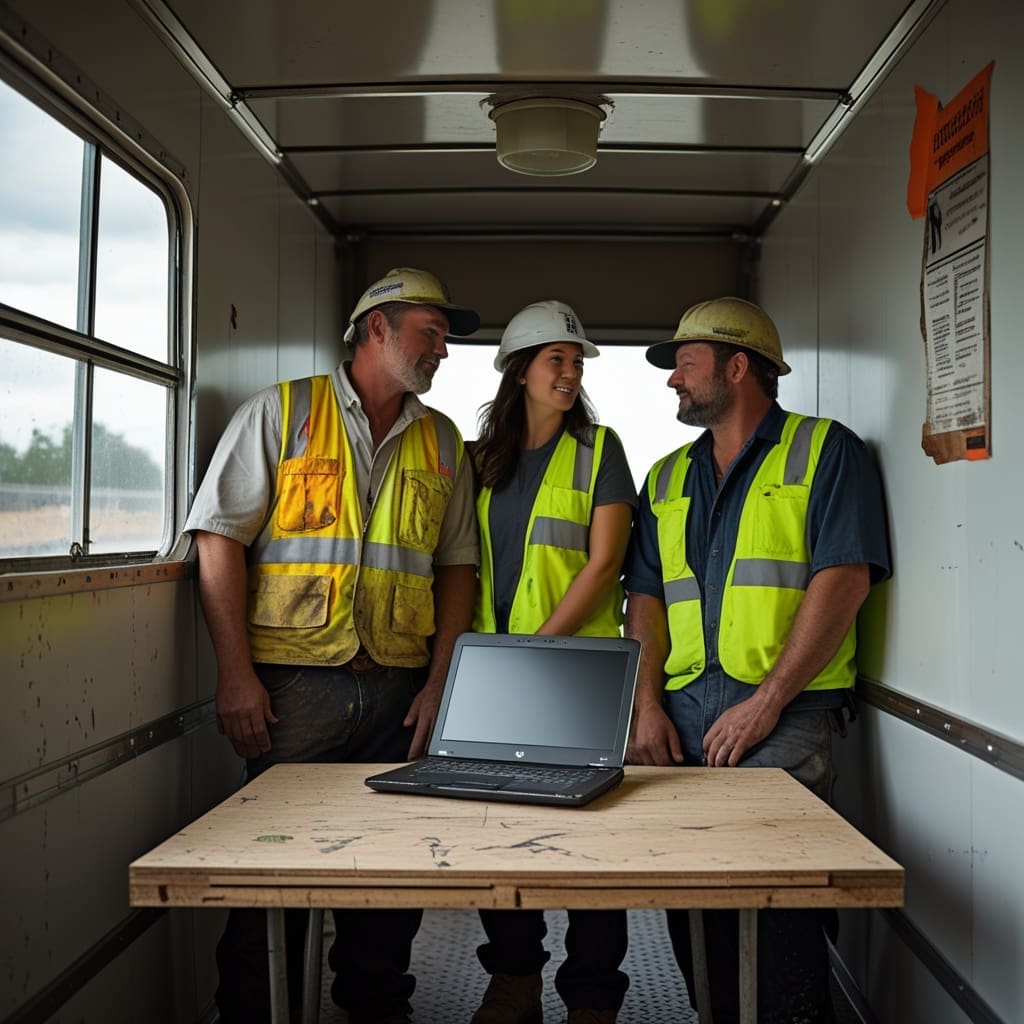
The advertised course price rarely tells the whole story. Several add-on charges appear after checkout or during the hands-on portion of training, and workers rarely budget for them in advance.
- Retake or retest fees: $25 to $75 if an operator fails the written exam or practical evaluation and needs a second attempt.
- Shipping fees for physical cards: $5 to $15 for standard mail, or $20 to $35 for expedited two-day delivery.
- Multi-class add-ons: Adding boom lift training to a scissor-lift-only course can cost an extra $50 to $100.
- Employer-required background documentation: Some companies charge $10 to $20 to process training records into internal HR systems.
- Language or accessibility accommodations: Courses offered in Spanish or with accessibility features sometimes carry a $10 to $20 premium, though this is becoming less common as providers expand default offerings.
Before enrolling, it is worth asking the provider directly whether the quoted price includes the practical evaluation, since some online-only vendors sell the written portion separately from the hands-on skills check that OSHA regulations actually require.
Online vs. In-Person Training: Which Costs Less Long-Term
Online courses win on upfront price, usually landing at $75 to $150, but they do not fully satisfy OSHA requirements on their own. A qualified person must still evaluate the operator’s hands-on performance with the actual equipment, which means online training almost always needs to be paired with an internal or third-party practical evaluation.
In-person training bundles both the classroom instruction and the hands-on evaluation into one session, which explains the higher sticker price of $250 to $600. For a single operator, online-plus-internal-evaluation is usually cheaper. For companies without a qualified in-house evaluator, a full in-person course often ends up costing about the same once evaluator fees are added to the cheaper online option.
Companies training more than ten employees per year frequently find it more economical to send one supervisor through a train-the-trainer program, priced between $400 and $900, rather than paying for repeated outside evaluations. That upfront investment typically pays for itself after the third or fourth operator certified internally.
How Long Certification Lasts and What Recertification Costs
Most aerial lift certification cards remain valid for three years, a timeframe based on ANSI guidance rather than a fixed OSHA rule. Some employers, particularly in high-risk industries like utility work or high-rise construction, choose to require annual refreshers regardless of the three-year industry standard.
Recertification courses cost less than the initial certification, typically $50 to $150, since they focus on updates to equipment standards, incident review, and a shortened practical evaluation rather than full instruction from scratch. Operators involved in a workplace accident, a near-miss incident, or a switch to a new type of lift are usually required to recertify immediately, regardless of how much time remains on their current card.
Letting a certification lapse even by a few weeks can force an operator to retake the full initial course rather than the cheaper refresher, so tracking expiration dates closely is one of the simplest ways to control long-term training costs.
Ways to Reduce Your Aerial Lift Certification Cost
Cutting training costs without cutting corners on safety is possible with a few practical strategies. The following approaches consistently save companies money based on standard provider pricing structures.
- Buy in bulk. Certifying five or more operators at once often triggers a 20 to 40 percent discount per seat compared to single-operator pricing.
- Train an internal evaluator. A one-time $400 to $900 investment in a train-the-trainer program eliminates repeated $50 to $300 outside evaluator fees for every future new hire.
- Bundle multiple equipment classes. Combining scissor lift and boom lift training in a single course is usually $50 to $100 cheaper than purchasing two separate courses.
- Track expiration dates closely. Renewing before the three-year mark avoids paying full initial-certification prices for a lapsed card.
- Compare digital-only certificates against printed cards. Skipping the physical card saves $10 to $35 per operator when a digital record satisfies your company’s documentation needs.
Employers should also remember that OSHA generally requires training to be provided at no direct cost to the employee, since it qualifies as a job requirement rather than optional professional development. Workers asked to pay out of pocket for mandatory certification should confirm their state’s labor rules, since some states enforce this more strictly than others.
Choosing a Training Provider Without Overpaying
Price alone should never be the only factor in choosing where to certify. A course priced at $75 that skips the required hands-on evaluation is not actually cheaper if your company still has to pay separately for that evaluation later. Look for providers who clearly state that their course covers both the OSHA-required theory portion and the practical skills check, or who explain exactly how the practical evaluation will be completed on your equipment.
Ask providers directly about card validity length, whether refresher pricing is guaranteed at a discount, and whether the course covers the specific lift classes your crew actually uses, since a generic course covering only one lift type may leave gaps if your equipment fleet is more varied. A slightly higher upfront cost from a provider offering clear documentation and support during OSHA inspections is often a better long-term value than the cheapest available option.
Conclusion
Aerial lift certification cost typically falls between $75 and $600 per operator, with the final number shaped by delivery format, group size, equipment classes covered, and whether hands-on evaluation is bundled into the price. Understanding the real cost structure, including hidden fees for retesting, shipping, and multi-class add-ons, allows you to budget accurately rather than being surprised by charges after enrollment. Whether you are certifying one operator or an entire crew, comparing providers on both price and completeness of OSHA and ANSI compliance will save money without compromising safety.
If you are ready to certify your team, request a written quote from at least two training providers that clearly breaks down the theory course, practical evaluation, and card issuance fees before you commit. Comparing those itemized quotes side by side is the single fastest way to avoid overpaying for aerial lift certification.
Frequently Asked Questions
How much does aerial lift certification cost for one person?
Individual certification typically costs between $75 and $250, depending on whether it includes only online instruction or a full in-person course with hands-on evaluation. Online-only courses sit at the lower end of that range, while blended courses that include a practical skills check cost more but satisfy OSHA requirements more completely.
Is aerial lift certification required by law?
OSHA does not require a specific certification document but does legally require operator training and evaluation under 29 CFR 1926.453 and 1910.67. Employers must ensure operators are trained by a qualified person and evaluated on the specific equipment they will use before working unsupervised.
How long does aerial lift certification last before it needs renewal?
Most certifications remain valid for three years based on ANSI guidance, though some employers require annual refreshers. Recertification after an incident or after switching to a new lift type is usually required immediately, regardless of remaining time on the card.
Can I get certified entirely online without hands-on training?
No, online courses alone typically do not satisfy full OSHA requirements, since a qualified evaluator must still assess your hands-on performance on the actual equipment. Most reputable providers pair online theory with a required practical evaluation component, either through their own staff or your employer’s designated trainer.
Who is supposed to pay for aerial lift certification, the employer or the employee?
Employers are generally required to cover training costs since certification is a condition of employment rather than optional development. Workers asked to pay out of pocket for mandatory training should check their state labor regulations, as enforcement of this requirement can vary by location.