
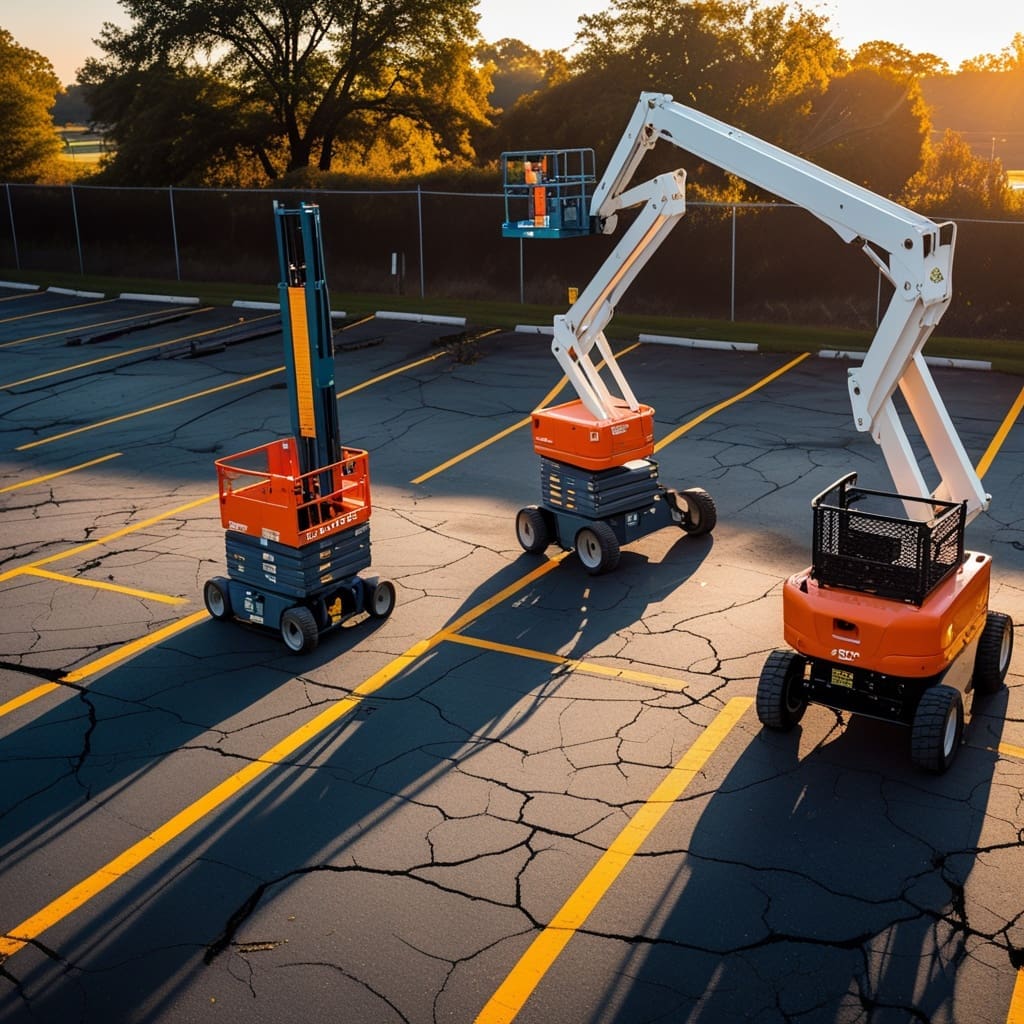
The main types of aerial lifts are scissor lifts, boom lifts (articulating and telescopic), vertical mast lifts, and truck-mounted or trailer-mounted platforms, each built for a different combination of height, reach, and terrain. Choosing the wrong one can stall a project or create a serious fall hazard, since the Occupational Safety and Health Administration reports that falls remain one of the top causes of construction fatalities each year. The right lift depends on how high you need to reach, whether you need horizontal or angled reach around obstacles, and what kind of ground you are working on. This article compares the major categories, breaks down realistic rental and purchase costs, and explains the certification rules that apply under 29 CFR 1926.453.
Key Takeaways
- Scissor lifts move straight up and down and typically reach 19 to 50 feet, best for flat, indoor, or paved surfaces.
- Boom lifts extend outward as well as up, with telescopic models reaching up to 185 feet and articulating models bending around obstacles.
- Vertical mast lifts are compact, narrow-base machines suited for tight indoor spaces like warehouses and retail aisles.
- Rental rates range from roughly $95 per day for a small scissor lift to $600 or more per day for a large telescopic boom.
- OSHA 29 CFR 1926.453 and ANSI/SIA A92 standards govern operator training, inspection, and safe use for every aerial lift category.
What Counts as an Aerial Lift?
An aerial lift is any powered platform or bucket that raises a worker off the ground to perform tasks at height, as defined under OSHA 29 CFR 1926.453. This definition covers everything from a small electric scissor lift used to change light fixtures to a 150-foot telescopic boom used on bridge inspections. The category excludes fixed ladders and standard scaffolding, since aerial lifts must have a powered lifting mechanism and a platform or bucket that moves relative to a chassis.
Manufacturers such as JLG, Genie, and Skyjack build most of the equipment used across the United States, and their model numbers often reflect platform height in feet. Rental companies like Sunbelt Rentals and United Rentals stock dozens of variations, so understanding the categories below helps you request the right machine instead of relying on a generic term like “cherry picker.”
Scissor Lifts
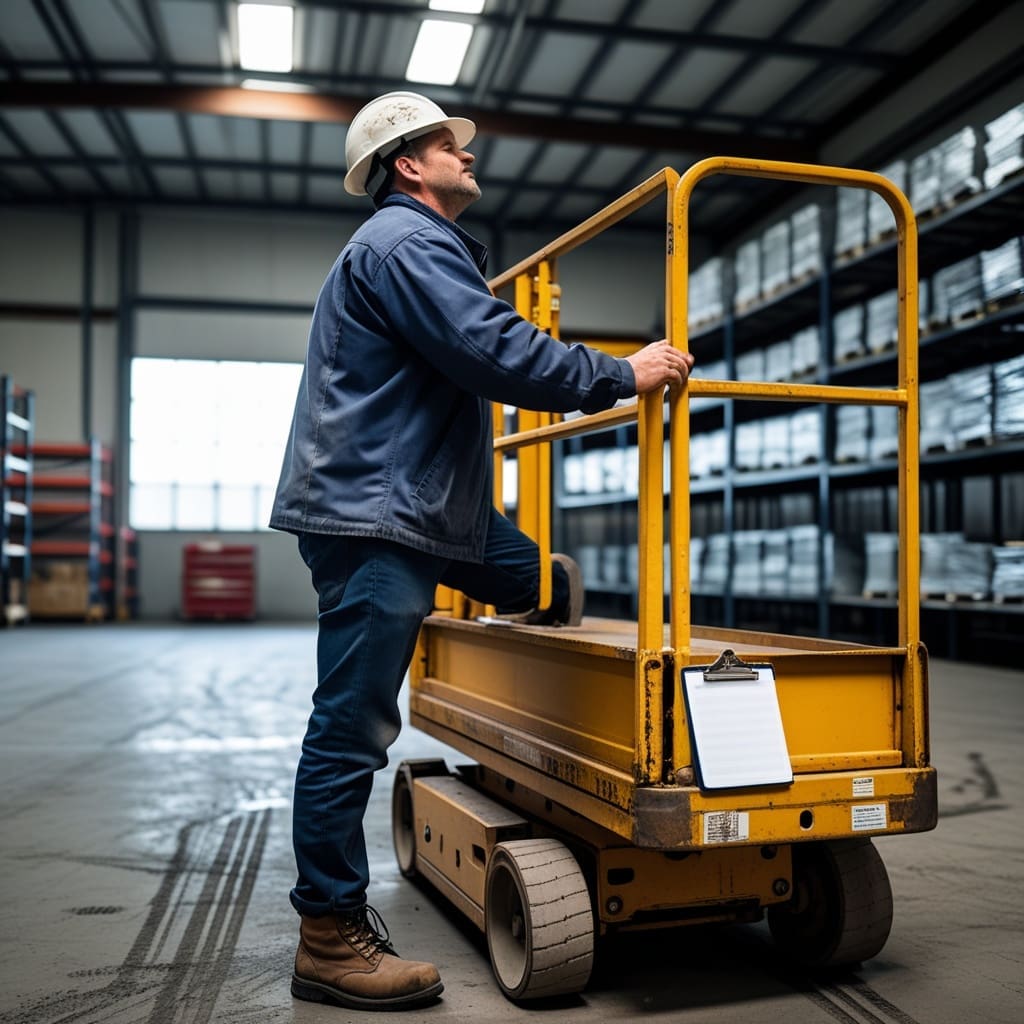
Scissor lifts raise a platform straight up using a crisscrossing metal support structure that expands like an accordion. They do not extend outward, which limits horizontal reach but makes them stable and simple to operate for tasks directly above the base.
- Platform height: typically 19 to 50 feet, with some rough-terrain models reaching 60 feet.
- Platform capacity: 500 to 1,500 pounds, enough for two workers and light materials.
- Best use cases: warehouse maintenance, retail fixture installation, drywall and ceiling work, electrical and HVAC tasks in commercial buildings.
- Ground requirements: electric models need smooth, level floors; rough-terrain diesel models handle gravel and uneven grading.
Electric scissor lifts are common indoors because they produce no exhaust and run quietly, while rough-terrain diesel scissor lifts with four-wheel drive work on active construction sites. A typical electric scissor lift with a 26-foot platform height rents for around $110 to $175 per day, while a 40-foot rough-terrain model can run $250 to $350 per day.
Boom Lifts: Articulating and Telescopic
Boom lifts mount a platform on a jointed or straight arm that extends both vertically and horizontally, allowing access around obstacles that a scissor lift cannot clear. They split into two main styles, and the difference matters more than most buyers expect.
Articulating Boom Lifts
Articulating booms, sometimes called knuckle booms, have multiple joints that bend like an elbow, letting the platform reach up, over, and around barriers such as pipes, ductwork, or landscaping. Working heights generally run from 30 to 150 feet, with horizontal reach commonly between 20 and 80 feet depending on the model. These machines suit tree trimming, building maintenance around architectural features, and utility work where a straight-line path to the target is blocked.
Telescopic Boom Lifts
Telescopic booms extend in a straight line like a fishing rod, offering the greatest horizontal reach of any aerial lift category. Some models, such as the JLG 1850SJ, reach working heights near 185 feet with horizontal outreach exceeding 80 feet. These machines dominate steel erection, bridge work, stadium construction, and any job requiring long, unobstructed reach over a wide area.
Boom lift rental costs vary widely based on height class. A 45-foot articulating boom typically rents for $275 to $375 per day, while an 80-foot telescopic boom can cost $500 to $700 per day, and units above 120 feet often require a specialized rental agreement with delivery charges of $300 to $800 depending on distance.
Vertical Mast Lifts
Vertical mast lifts use a single telescoping mast, or occasionally two, to raise a small platform straight up without any scissor mechanism or boom arm. Their narrow chassis, often under 32 inches wide, lets them pass through standard doorways and navigate tight aisles that larger lifts cannot enter.
- Platform height: typically 26 to 40 feet.
- Weight capacity: 350 to 500 pounds, generally one to two workers.
- Best use cases: warehouse pick operations, retail store maintenance, hospital and hotel corridor work, sign installation in narrow spaces.
Because they weigh less than scissor or boom lifts, often under 3,000 pounds, vertical mast lifts also work on upper floors with weight-restricted flooring, a detail engineers frequently check before approving equipment for multi-story interior use. Daily rental rates run $85 to $150, making them one of the more budget-friendly options for short indoor jobs.
Personnel Lifts and Push-Around Lifts
Push-around lifts, sometimes marketed as personnel lifts, are compact vertical platforms that a single worker manually rolls into position before raising. They reach 12 to 20 feet and support one person at loads around 300 pounds, making them suitable for changing light bulbs, stocking shelves, or minor ceiling repairs in retail and office settings.
These units skip the drive controls found on larger lifts, so they cannot be repositioned once elevated, which limits their use to short, single-spot tasks. Rental rates are the lowest in the category, typically $60 to $100 per day, and purchase prices start around $3,500 for a basic model.
Truck-Mounted and Trailer-Mounted Lifts
Truck-mounted aerial lifts, commonly called bucket trucks, attach a boom directly to a vehicle chassis and are standard equipment for utility companies, tree service crews, and telecommunications work. Working heights range from 40 to over 100 feet, and the mobility of a full vehicle means crews can move quickly between job sites without separate transport.
Trailer-mounted lifts offer similar height ranges, often 40 to 80 feet, but tow behind a standard pickup truck rather than requiring a dedicated bucket truck chassis. This makes them a lower-cost alternative for contractors who need occasional high-reach access, such as sign companies or exterior painting crews, without investing in a specialized vehicle. Purchase prices for trailer-mounted units typically run $25,000 to $65,000, compared to $80,000 to $200,000 for a fully equipped bucket truck.
Comparing the Main Aerial Lift Types
Selecting between categories comes down to three questions: how high, how far outward, and over what kind of ground. The list below summarizes typical specifications so you can match a machine to your task before requesting a rental quote.
- Scissor lift: 19 to 50 feet vertical, no horizontal reach, best on flat or paved ground, rental $110 to $350 per day.
- Articulating boom: 30 to 150 feet, 20 to 80 feet horizontal reach, works around obstacles, rental $275 to $500 per day.
- Telescopic boom: up to 185 feet, 60 to 80+ feet horizontal reach, best for long unobstructed spans, rental $400 to $700 per day.
- Vertical mast lift: 26 to 40 feet, minimal horizontal reach, narrow chassis for tight indoor spaces, rental $85 to $150 per day.
- Push-around lift: 12 to 20 feet, no drive-while-raised function, ideal for single-spot indoor tasks, rental $60 to $100 per day.
- Truck or trailer-mounted: 40 to 100+ feet, high mobility between sites, purchase $25,000 to $200,000 depending on configuration.
How to Choose the Right Aerial Lift Type
Matching the equipment to the job takes more than picking the tallest available machine. Follow these steps to narrow the decision before contacting a rental company.
- Measure the maximum working height needed, then add 5 feet for platform clearance, since most tasks require the platform to sit slightly below the actual work point.
- Check horizontal reach requirements by measuring the distance from the nearest safe ground position to the work area; distances beyond 10 feet usually rule out a scissor lift.
- Assess ground conditions including slope, since most rough-terrain lifts tolerate up to a 5-degree grade while indoor electric models require near-level flooring.
- Confirm doorway and aisle widths if the job is indoors; standard doorways run 32 to 36 inches, which rules out most scissor lifts wider than 32 inches.
- Verify floor load limits for indoor multi-story work, since a scissor lift can weigh 4,000 to 8,000 pounds compared to under 3,000 pounds for a mast lift.
- Compare rental versus purchase cost based on project duration; renting typically breaks even against buying after roughly 60 to 90 rental days for mid-size equipment.
Cost Breakdown: Renting vs. Buying
Daily rental costs depend on lift category and size, but weekly and monthly rentals typically offer 30 to 45 percent savings over the daily rate multiplied out. A 40-foot electric scissor lift, for example, might run $175 per day, $525 per week, and $1,400 per month, which works out to roughly $47 per day on a monthly agreement.
Purchasing makes sense for companies running lifts more than 100 days per year. New electric scissor lift prices start around $15,000 for a 19-foot model and climb to $45,000 for a 40-foot model, while new telescopic booms range from $90,000 to $180,000 depending on height class and reach. Used equipment, typically five to eight years old, sells for 40 to 60 percent of the new price, though buyers should budget an additional $2,000 to $5,000 for inspection and recertification before putting a used lift into service.
Safety Standards and Certification Requirements
Every aerial lift operator in the United States must receive training under 29 CFR 1926.453, which requires employers to train workers on load capacity, fall protection, and emergency procedures before operation. The American National Standards Institute publishes companion standards, including ANSI/SIA A92.20-2018 for design and A92.22 for safe use, which most manufacturers and rental companies reference directly in their operator manuals.
Operators must also complete a practical evaluation, and many employers use programs through the National Commission for the Certification of Crane Operators or equivalent third-party providers to document competency. Certification typically remains valid for three years, after which a refresher course and evaluation are required. OSHA data consistently shows that a significant share of aerial lift injuries involve tip-overs or falls from the platform, both of which proper harness use and load limit compliance directly address.
A lift rated for a 500-pound platform capacity does not become safer by removing the guardrail chain to fit an extra tool box. Load ratings account for total weight, not just personnel.
Take Action Before Your Next Height Access Project
Contact a certified rental provider and request the equipment specification sheet before booking, since platform height alone rarely tells the full story about reach, weight capacity, or ground clearance. Ask specifically whether the operator training records on file meet the 29 CFR 1926.453 requirement, and confirm the machine received its most recent annual inspection within the last 12 months. Taking these steps before the lift arrives on site prevents costly delays and keeps your crew working within OSHA guidelines from the first day of the project.
Conclusion
Aerial lifts fall into distinct categories for good reason, and matching platform height, horizontal reach, and ground conditions to the right type prevents both wasted rental spend and avoidable safety risk. Scissor lifts handle straight-up indoor work, boom lifts solve reach-around problems that other equipment cannot, mast lifts fit through tight doorways, and truck-mounted units serve utility crews who need mobility above all else. Reviewing the specifications and cost ranges above before your next project gives you a clear starting point for a rental request or purchase decision.
Frequently Asked Questions
What is the most common type of aerial lift used in construction?
Scissor lifts and articulating boom lifts are the two most commonly used types on construction sites. Scissor lifts handle interior work like drywall and electrical installation, while articulating booms cover exterior tasks that require reaching around scaffolding, beams, or other structures.
What height do you need an aerial lift certification for?
OSHA requires training for any aerial lift regardless of height, since the standard covers the equipment category, not a minimum elevation. Any powered platform meeting the definition under 29 CFR 1926.453 requires an operator to complete training before use, even for lifts that only reach 12 to 15 feet.
Can one person operate a boom lift alone?
Yes, a single trained operator can run a boom lift alone, provided they wear a harness attached to the designated anchor point. Most boom lift platforms are rated for one or two occupants, but solo operation is standard practice on most job sites as long as fall protection requirements are met.
What is the difference between a scissor lift and a boom lift?
A scissor lift only moves straight up and down, while a boom lift extends both vertically and horizontally. This makes scissor lifts better for direct overhead access on flat ground, while boom lifts suit jobs requiring reach around obstacles or over uneven terrain.
How much does it cost to rent an aerial lift for a day?
Daily rental rates typically range from $60 for a small push-around lift to $700 for a large telescopic boom. Mid-size scissor lifts generally fall between $110 and $250 per day, and rates often drop 20 to 30 percent when booked for a full week instead of a single day.