Rigger Level I is the entry point for anyone who works with rigging equipment on a crane or hoisting operation. It covers the core knowledge and hands-on skills a worker needs to safely attach, position, and detach loads under the direction of a lift director or more experienced rigger. Without this foundation, workers are a liability on any job site where a crane is in operation.
This guide breaks down exactly what rigger level i training covers, who it is designed for, what skills you walk away with, and how it fits into a longer rigging career path. Whether you are new to the trade or a supervisor looking to get your crew certified, this is where it starts.
Ready to learn more? Explore the full Rigger Level I Training program offered by Certified Safety Experts and get your crew ready to rig safely and confidently.
What Rigger Level I Actually Means
The term “Rigger Level I” refers to a specific competency tier defined by NCCCO, the National Commission for the Certification of Crane Operators. A level 1 rigger is trained to perform basic rigging tasks under supervision, meaning they do not yet direct a lift or make independent load calculations. They execute the ground-level work: attaching slings, using hitches, and communicating load status to the lift director.
This is not a casual or informal designation. OSHA’s rigging rules require that anyone who rigs a load must be a qualified rigger, meaning they have the knowledge, training, and experience to rig loads safely. Rigger Level I training is the structured path to meeting that requirement at the entry level. It gives workers documented, verifiable credentials rather than relying on informal on-the-job exposure.
OSHA Requirements That Make This Training Necessary
Under 29 CFR 1926.1425, OSHA requires that loads be rigged by a qualified rigger during personnel hoisting and certain other critical lifts. A qualified rigger is someone who, by possession of a recognized degree, certificate, or professional standing, or by extensive knowledge, training, and experience, has successfully demonstrated the ability to solve rigging problems. Basic rigger training at Level I is the most accessible and direct route to that qualification.
OSHA does not require a specific certification card, but it does require demonstrated competence. Completing a structured Rigger Level I course, especially one that includes a written and practical evaluation, gives employers documented proof that a worker meets the qualified rigger standard. That documentation matters enormously when OSHA inspectors show up on site.
| OSHA Requirement | What It Means for Riggers | How Level I Addresses It |
|---|---|---|
| Qualified Rigger Standard | Workers must demonstrate rigging knowledge and skill | Structured training with written and practical exam |
| Documentation of Competence | Employers must verify worker qualifications | Certification card serves as verifiable credential |
| Equipment Inspection | Rigging hardware must be inspected before each use | Pre-use inspection procedures taught in coursework |
| Load Handling Safety | Workers must understand load behavior during lifts | Load dynamics and center of gravity covered in training |
Core Skills Covered in Rigger Level I Training
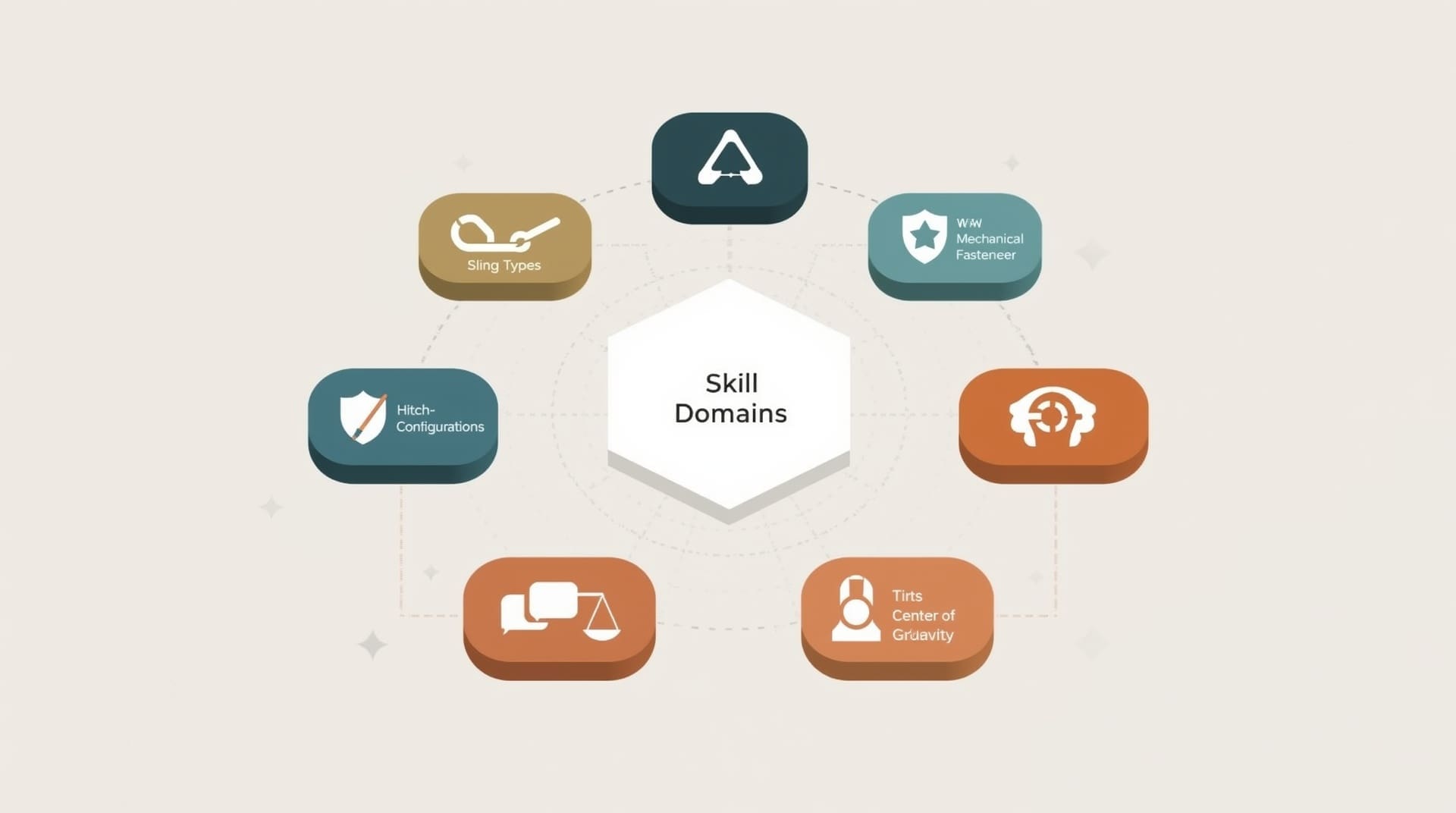
A well-structured Level I course gives you a working knowledge of the hardware, math, and safety protocols involved in basic rigging. You are not expected to direct complex lifts after this course. You are expected to execute assigned rigging tasks correctly and recognize when something is wrong before a lift begins.
Here is what the curriculum typically covers:
- Sling types and selection: Wire rope, chain, synthetic web, and round slings each have specific use cases, capacities, and inspection criteria. You learn which one fits which job.
- Hitch configurations: Vertical, choker, and basket hitches each change how a load is supported and how the sling’s working load limit applies. Knowing the difference is non-negotiable.
- Working load limits (WLL): WLL is the maximum load a piece of rigging hardware is rated to carry in normal use. Level I training teaches you how to read, calculate, and respect these ratings.
- Hardware identification: Shackles, hooks, eyebolts, turnbuckles, and rigging rings all get covered with emphasis on correct use and inspection before each lift.
- Pre-use inspection procedures: Every piece of rigging gear must be checked for damage, wear, and deformation before it touches a load. You learn what to look for and what to do when you find a problem.
- Load weight estimation: You cannot rig what you cannot weigh. Basic methods for estimating load weight using material density and volume are part of the core curriculum.
- Center of gravity basics: Understanding where a load’s center of gravity sits determines how it will hang and whether it will swing or tip during the lift.
- Communication on the lift site: Hand signals, verbal commands, and communication protocols between the rigger, signal person, and operator are all covered.
Who Qualifies as a Rigger and Who Needs Level I
Anyone who physically attaches a load to a crane hook or hoisting device is functioning as a rigger, regardless of their job title. That includes ironworkers, pipefitters, millwrights, laborers, and construction workers who handle rigging as part of their daily duties. If your job ever puts you in a position where you attach, position, or detach a suspended load, you need this training.
Employers in commercial construction, industrial plant work, steel erection, and heavy civil projects commonly require Rigger Level I as a baseline credential before a worker can touch rigging equipment on site. Some owner-clients and general contractors write it directly into subcontractor safety requirements. Getting certified before you need it puts you ahead of the hiring process.
New workers entering the rigging trade benefit the most, but experienced workers who learned rigging informally also gain value from formal Level I training. Structured coursework fills knowledge gaps that on-the-job experience alone often leaves open, particularly around load calculations and hardware inspection standards.
The Difference Between Level I and Level II Rigging
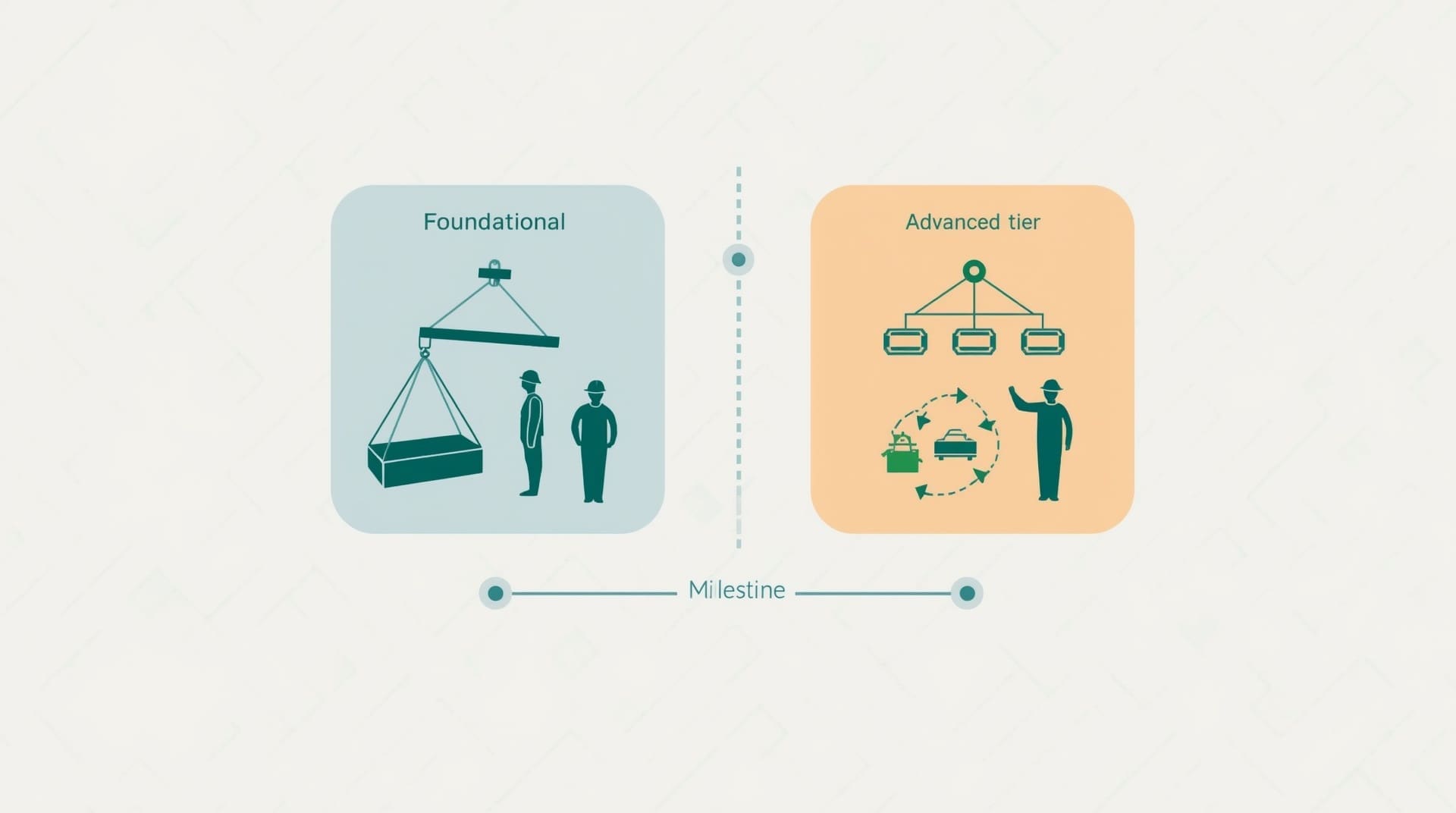
Rigger Level I and Rigger Level II are two distinct tiers of competency, and understanding where one ends and the other begins helps you plan your career path. Level I prepares you to perform basic rigging tasks as directed. Level II expands your scope to include more complex rigging configurations, multi-crane lifts, and greater independent responsibility for rigging plan execution.
A Level II rigger has typically completed Level I first and accumulated meaningful field experience. The written and practical exams for Level II are more demanding, and the subject matter goes deeper into rigging math, load dynamics, and lift planning. If you are aiming toward a lead rigger or rigging supervisor role, Level II is the natural next step after you complete and apply your Level I credential.
Think of it this way: a level 1 rigger executes the plan. A Level II rigger helps build it. Both roles are essential on a well-run lift site, and both require formal training to do safely.
How Rigger Level I Fits Into Your Career Path
Rigger Level I is not the finish line. It is the starting block. Once you earn your Level I credential, you open the door to more complex lift assignments, higher pay grades, and a clearer path toward advanced rigging roles. Many workers in the rigging trade started exactly here and went on to become certified lift directors, rigging supervisors, or crane operators.
The credential also travels with you. A certified Level I rigger carries documentation that is recognized across job sites and employers. That portability matters in industries where workers move between projects and contractors. Your credential does not reset when you change employers.
From Level I, the typical progression looks like this:
- Rigger Level I: Basic rigging tasks under supervision. Entry point for most workers.
- Rigger Level II: Complex configurations, greater independence, involvement in lift planning.
- Lift Director: Oversees the entire lift, directs riggers and signal persons, responsible for lift plan execution.
- Crane Operator: Operates the crane itself, requiring separate and more extensive certification.
What to Expect From a Rigger Level I Exam
NCCCO’s Rigger Level I certification exam has two components: a written test and a practical evaluation. The written portion tests your knowledge of rigging theory, hardware, load calculations, and safety regulations. The practical portion tests your ability to perform actual rigging tasks correctly in a controlled environment.
The practical exam is conducted by a qualified evaluator, a credentialed professional who observes and scores your performance on specific rigging tasks. That evaluator checks whether you can correctly identify hardware, build a proper hitch, inspect slings, and communicate effectively during a simulated lift scenario. Passing both components earns you your NCCCO Rigger Level I certification card.
Preparation matters. Workers who show up having only skimmed the material tend to struggle on load calculation problems and hardware identification. A structured training course walks you through every exam topic so there are no surprises on test day.
Rigging Hardware You Will Learn to Work With
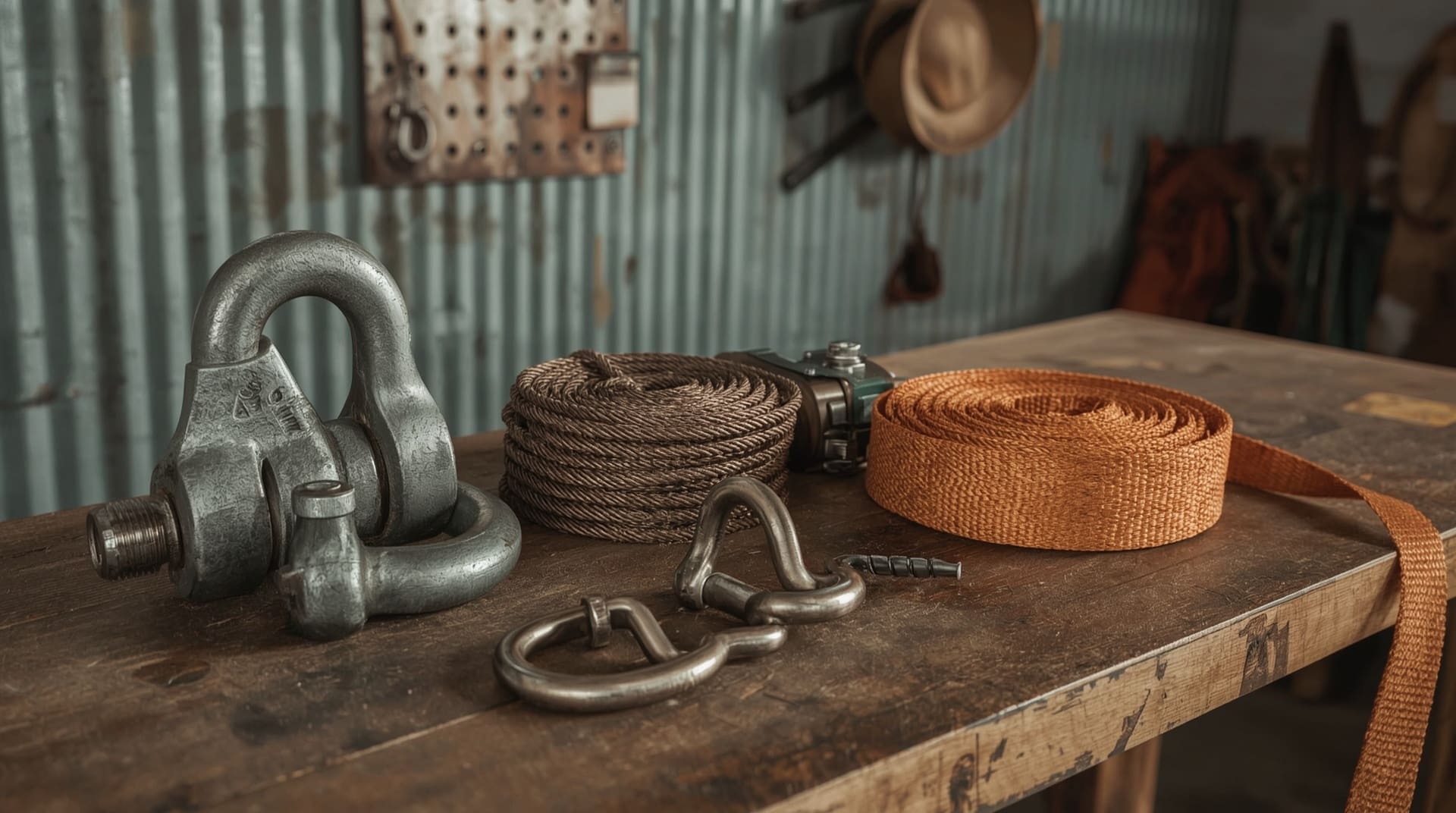
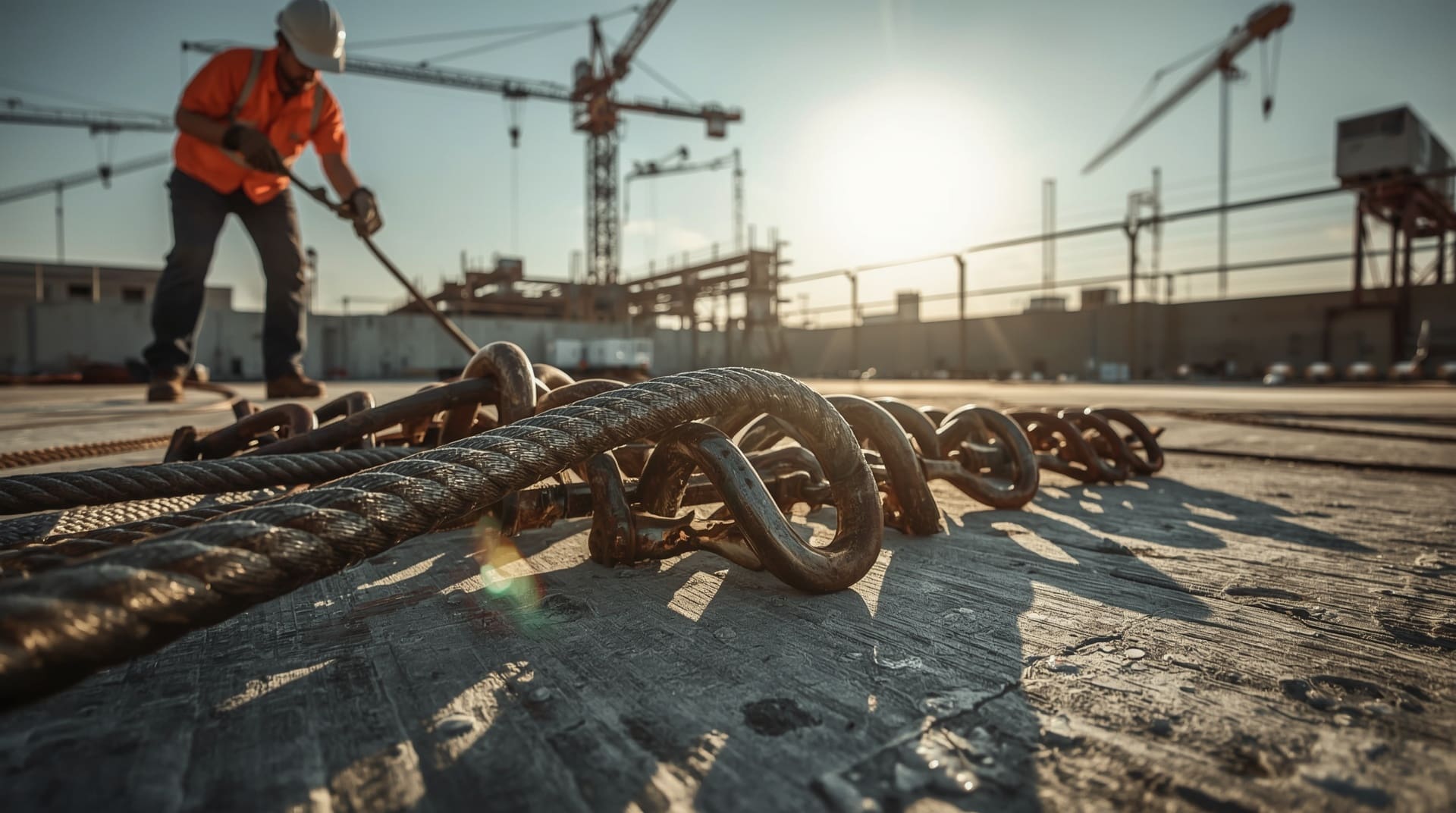
One of the most practical parts of basic rigger training is getting hands-on experience with the actual hardware used on lift sites. You learn not just what each piece is called, but how it works, what its rated capacity means, and what damage looks like before it becomes a failure.
Key hardware categories covered in Level I training include:
- Slings: Wire rope slings, chain slings, synthetic web slings, and round slings. Each has different stretch characteristics, temperature tolerances, and sensitivity to abrasion.
- Shackles: Anchor shackles (also called bow shackles) and chain shackles (dee shackles) are used to connect slings to loads and to lifting hardware. You learn pin types, torque requirements, and inspection criteria.
- Hooks: Crane hooks, eye hooks, and swivel hooks all have specific load ratings and mousing requirements. A hook without a safety latch is a common failure point.
- Eyebolts and hoist rings: Used to attach rigging to a load directly. Angular loading on a straight eyebolt drastically reduces its capacity, which is a common mistake among untrained workers.
- Wire rope clips and thimbles: Used to form end terminations on wire rope. Correct clip spacing and orientation are critical for maintaining the rated strength of the assembly.
Common Mistakes That Level I Training Corrects
Most rigging accidents on job sites do not happen because workers are careless. They happen because workers were never taught the correct way to do the job. Level I training directly addresses the most common errors seen in the field.
Here are the mistakes this training is specifically designed to eliminate:
- Overloading rigging hardware: Using a sling or shackle beyond its working load limit is the most frequent rigging error. Level I training makes WLL calculation a reflex, not an afterthought.
- Ignoring sling angle effects: As a sling angle decreases from vertical, the tension in each leg increases dramatically. A 30-degree sling angle doubles the load on each sling leg. Many untrained workers do not know this.
- Skipping pre-use inspections: Rigging gear that looks fine visually can have hidden damage. Level I covers exactly what to check and how to document it.
- Improper hitch selection: A choker hitch reduces sling capacity compared to a vertical hitch. Using the wrong hitch for a load type can result in a dropped load.
- Poor communication with the operator: Miscommunication between a rigger and crane operator is a leading cause of lift incidents. Level I training covers communication protocols clearly and practically.
Individual and Company Training Options
Rigger Level I training is available for individual workers who want to earn their certification independently. It is also offered as group or company training for employers who need to certify an entire crew at once. Both paths lead to the same credential, but the format and scheduling differ.
Individual training works well for workers between jobs, new hires looking to build their resume, or experienced workers filling a credential gap. Company training works best when an employer needs a consistent standard across a team, wants to minimize downtime, and prefers a trainer to come to the work site or a local facility. Both options are available through Certified Safety Experts, based in Cary, North Carolina, serving clients across the region.
Final Thoughts on Rigger Level I
Rigger Level I is the first and most important step in building a safe, credentialed rigging career. It gives you a structured understanding of hardware, load behavior, inspection procedures, and communication protocols that informal on-the-job exposure rarely provides completely. Employers recognize it, OSHA supports it, and the credential follows you across every job site you work.
If you are entering the rigging trade, returning to it after time away, or leading a crew that needs documented qualifications, starting with Level I puts everyone in a stronger position. The investment in basic rigger training pays for itself the first time it prevents an incident or keeps a project moving without a compliance delay.
Frequently Asked Questions About Rigger Level I
What is the difference between a Rigger Level I and a qualified rigger?
A qualified rigger is the OSHA standard: someone with the knowledge, training, and experience to rig loads safely. Rigger Level I is the NCCCO certification that formally documents that a worker meets the qualified rigger standard at the entry level. Completing Level I training and passing the exam is the most direct way to demonstrate you meet OSHA’s qualified rigger definition.
Do I need previous experience to enroll in Rigger Level I training?
No prior rigging experience is required to enroll in a Rigger Level I course. The training is designed as an entry-level program and builds knowledge from the ground up. That said, workers with some field exposure often find the material easier to connect to real-world application, which can help during the practical evaluation.
How long does Rigger Level I training take?
Most Rigger Level I programs run between one and two days depending on the course format, class size, and whether the practical exam is included. Classroom instruction covering theory, hardware, and regulations is followed by hands-on practice and the practical evaluation. Some programs spread the content across multiple shorter sessions to accommodate working schedules.
Is a Rigger Level I certification the same as being OSHA certified?
OSHA does not issue its own rigging certification. OSHA sets the regulatory standard for what a qualified rigger must know and be able to do. NCCCO’s Rigger Level I certification is a third-party credential that demonstrates compliance with that standard. Holding a Level I certification gives employers documented evidence that a worker meets OSHA’s qualified rigger requirements.
How does Rigger Level I connect to other crane and rigging roles on a job site?
Rigger Level I is one piece of a larger lift team. On a typical lift, the rigger attaches the load, the signal person communicates with the crane operator, and the lift director oversees the entire operation. Each role requires its own training and credential. Earning your Level I is the logical starting point, and from there you can pursue Level II, lift director, or even crane operator certification depending on your career goals.