You get aerial lift certified by completing an OSHA-compliant training program that combines classroom instruction, a written exam, and a hands-on evaluation conducted by a qualified trainer at your worksite or a training center. The entire process typically takes between four and eight hours and costs between $75 and $350 depending on the provider and equipment type. Certification is not a one-time credential from a government agency; instead, your employer or a designated trainer verifies your competency, and that authorization must be renewed roughly every three years or sooner if you show unsafe operation.
Aerial lifts include boom lifts, scissor lifts, and vertical mast lifts, and each category carries its own operating quirks and hazards. The Occupational Safety and Health Administration (OSHA) does not issue a physical “aerial lift license,” which surprises many workers expecting a wallet card similar to a driver’s license. Instead, 29 CFR 1926.453 and general industry standard 29 CFR 1910.67 require employer-provided training documented in writing, along with periodic retraining. Understanding this distinction from the start saves you time and prevents confusion when searching for a program.
Key Takeaways
- Aerial lift certification is employer-verified training, not a government-issued license, and it must comply with OSHA standards 29 CFR 1926.453 and 1910.67.
- Training programs usually run four to eight hours and cost between $75 and $350 per person, depending on lift type and provider.
- You must pass a written exam (commonly requiring 70% to 80% accuracy) and a hands-on skills evaluation.
- Certification cards are typically valid for three years, after which retraining and re-evaluation are required.
- The American National Standards Institute (ANSI) A92 standards, updated in 2020, set the technical benchmarks that most training curricula follow.
- Employers must document training and evaluate operators after any accident, near miss, or observed unsafe practice, regardless of the three-year cycle.
Understanding What Aerial Lift Certification Actually Means
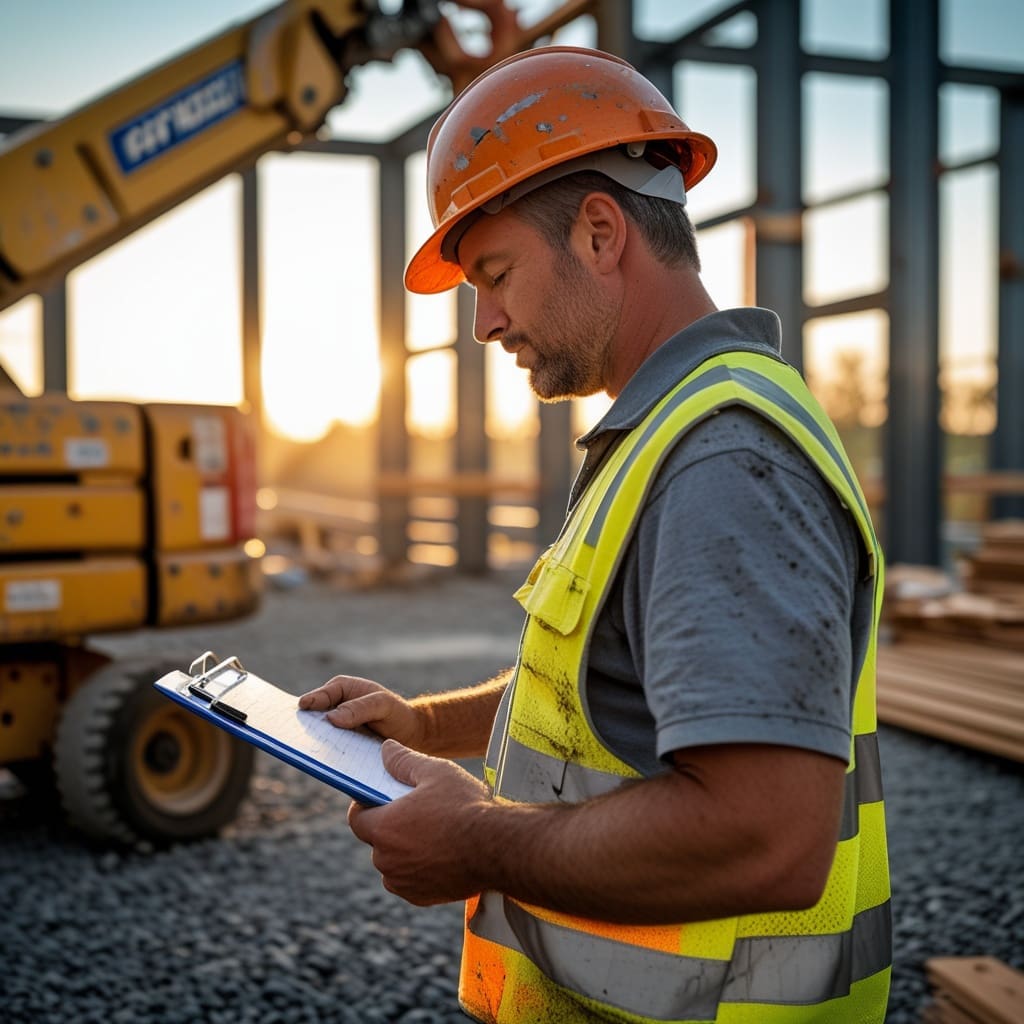
Certification confirms that you have received documented training on a specific category of aerial lift and demonstrated safe operation to a qualified evaluator. OSHA places aerial lifts under 29 CFR 1926.453 for construction environments and 1910.67 for general industry settings such as warehouses. Neither regulation names a specific certifying body, which means the responsibility falls on your employer to select a training program that satisfies the regulatory language.
Most employers rely on curricula built around ANSI/SIA A92.20, A92.22, and A92.24, the technical safety standards published by the American National Standards Institute that replaced the older A92.6 standard in June 2020. These standards define design, safe use, and training requirements for mobile elevating work platforms (MEWPs), a term that now appears alongside “aerial lift” in most modern courses. If your training completion card references A92.22 (safe use) and A92.24 (training), you can be confident the course meets current industry expectations.
It is worth remembering that a card from one employer does not automatically transfer authority to operate at another job site. A new employer is legally required to evaluate your competency again, even if you hold a valid, unexpired certification card from a previous position.
Step-by-Step: How to Get Aerial Lift Certified
The certification path follows a predictable sequence regardless of which training provider you choose. Below is the process broken into concrete steps with realistic time and cost figures attached to each.
- Step 1: Choose your lift category (30 minutes of research). Decide whether you need certification for boom lifts (articulating or telescopic), scissor lifts, or vertical mast lifts, since each requires separate evaluation under ANSI A92 standards.
- Step 2: Select an accredited training provider (1 to 3 days of scheduling lead time). Options include the National Association of Home Builders (NAHB), the International Powered Access Federation (IPAF), the Association of Equipment Manufacturers (AEM), or private safety consultants who issue OSHA-aligned completion cards.
- Step 3: Complete classroom or online instruction (2 to 4 hours). This portion covers OSHA regulations, ANSI A92 fall protection rules, load charts, pre-operation inspection checklists, and site-specific hazard recognition.
- Step 4: Pass the written examination (30 to 60 minutes, 70% to 80% passing score required). Exams typically contain 25 to 50 multiple-choice questions covering stability, wind load limits, and electrical hazard clearance distances (commonly 10 feet from lines up to 50kV under OSHA guidance).
- Step 5: Complete the hands-on skills evaluation (1 to 3 hours). A qualified trainer observes you performing pre-operation inspection, maneuvering the lift through an obstacle course, and demonstrating emergency lowering procedures.
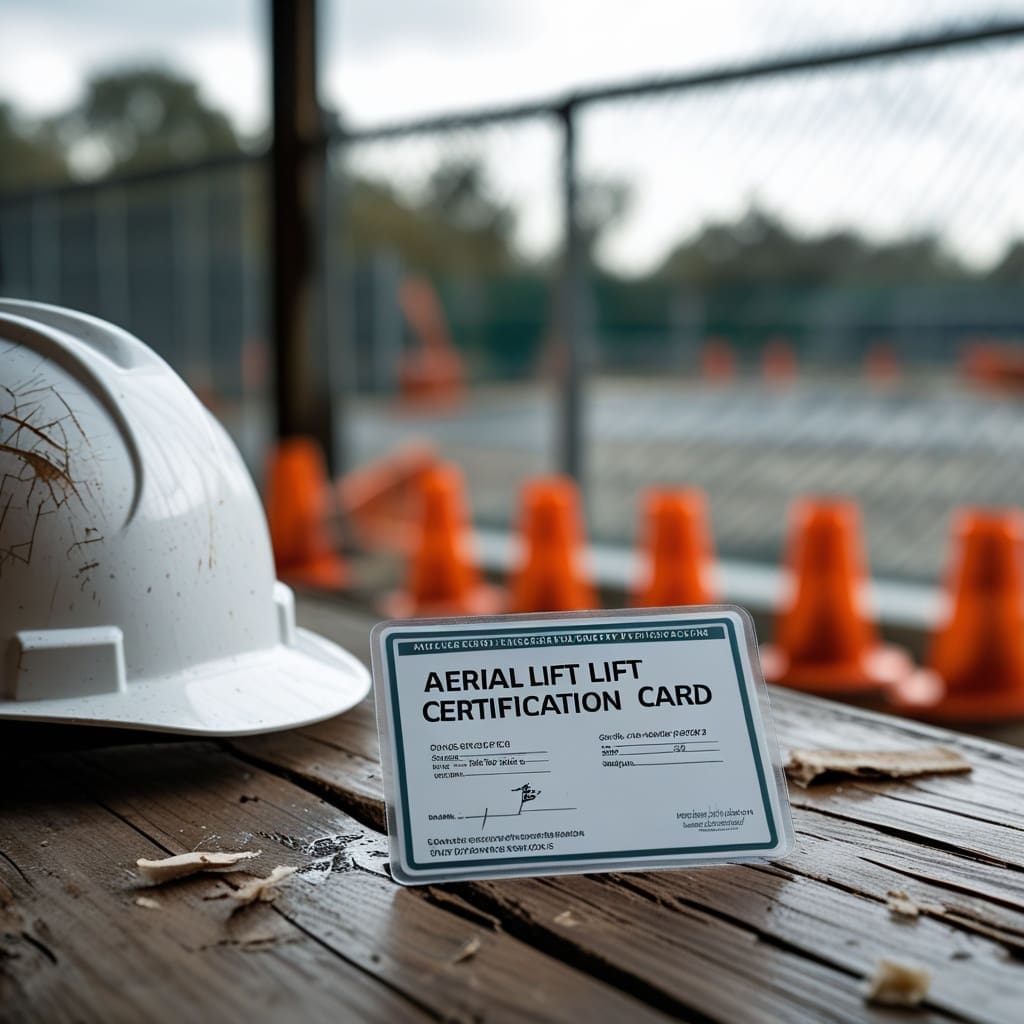
- Step 6: Receive your certification card and documentation (same day to 5 business days). Your employer or trainer issues a wallet card and a training record that must be kept on file, often for the duration of your employment plus three years.
- Step 7: Schedule renewal (every 3 years, or immediately after an incident). OSHA and ANSI both call for retraining if you are involved in an accident, observed operating unsafely, or assigned to a new lift type you have not used before.
Where to Get Trained: Comparing Your Options
Several paths lead to a valid certification, and each fits a different budget and schedule. Local equipment rental companies, such as United Rentals or Sunbelt Rentals, often offer in-person training bundled with equipment rental contracts for $100 to $250 per person. Independent safety training companies provide standalone courses ranging from $75 for online-only modules to $300 for combined online and in-person hybrid formats.
IPAF, an international organization with over 30 accredited training centers across the United States, charges approximately $150 to $250 for its PAL Card (Powered Access License) program, which is recognized internationally, a useful feature if you anticipate working on projects outside the country. The National Center for Construction Education and Research (NCCER) also offers a Mobile Crane and Aerial Lift module that many union apprenticeship programs incorporate directly into their curricula at no direct cost to the apprentice.
Consider the following comparison of common certification routes:
- Online-only course: $75 to $150, completed in 2 to 4 hours, requires a separate in-person hands-on evaluation by your employer afterward.
- Employer-led in-house training: Often free to the employee, typically 4 to 6 hours, uses your actual worksite equipment for the practical evaluation.
- Third-party training center (IPAF, NAHB, AEM): $150 to $350, usually a full day (6 to 8 hours), includes both classroom and hands-on components in one session.
- Union apprenticeship program (NCCER-aligned): No direct cost, integrated into a multi-year apprenticeship, hands-on hours can exceed 20 across the program.
Union and apprenticeship routes tend to offer the deepest hands-on exposure, while third-party centers offer the fastest turnaround for workers who need a card within a week.
What the Written Exam and Practical Test Actually Cover
The written exam typically includes 25 to 50 questions pulled from a bank covering four main areas: regulatory knowledge, equipment components, hazard recognition, and emergency procedures. A passing score usually falls between 70% and 80%, though some third-party providers, including IPAF, require 80% accuracy before issuing a PAL Card. Questions might ask you to calculate safe working load, identify minimum clearance distances from power lines, or select the correct fall protection anchor point on a boom lift basket.
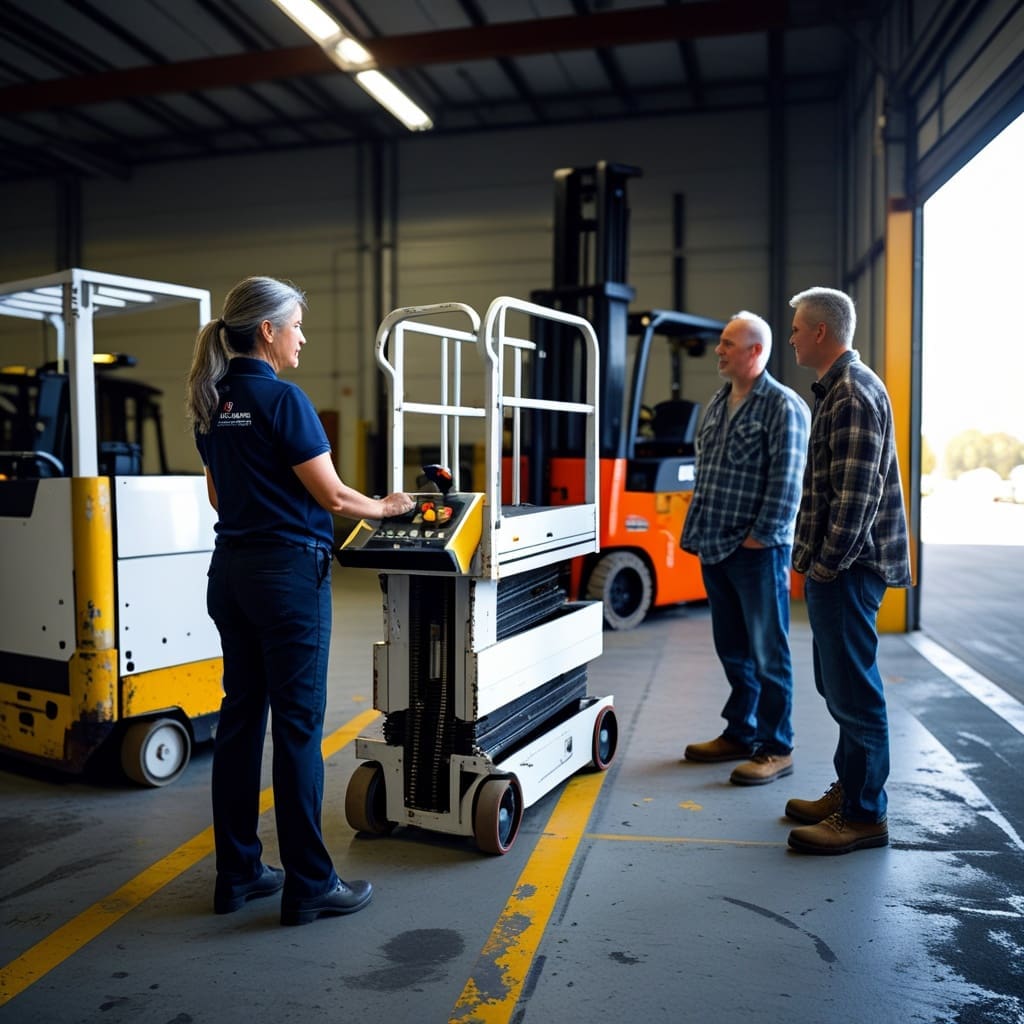
The hands-on portion is where most first-time candidates feel the most pressure, though failure rates are generally low, estimated between 5% and 10% nationally, since instructors typically coach candidates through the process rather than simply testing them cold. During this segment, an evaluator watches you complete a full pre-operation inspection using a checklist that usually contains 15 to 20 items, including hydraulic fluid levels, tire condition, and emergency descent function. You then maneuver the lift through a marked course, demonstrating controlled starts, stops, and platform leveling on uneven terrain.
A candidate who rushes the pre-operation inspection is the most common reason for a failed practical evaluation, according to instructors at multiple third-party training centers.
Expect the evaluator to also test your knowledge of the lift’s load chart, since exceeding rated capacity, commonly 500 to 1,000 pounds depending on the model, remains one of the leading causes of tip-over accidents reported to OSHA each year.
Costs, Timeframes, and Renewal Requirements
Total certification cost typically lands between $75 and $350 per person, with most workers paying around $150 for a combined online and in-person course. Some employers absorb this cost entirely as part of onboarding, particularly in industries with high aerial lift usage such as warehousing, construction, and telecommunications. If you are self-funding your training, budget an additional $20 to $50 for materials or retesting fees if you do not pass the written exam on your first attempt.
Renewal cycles are set at a maximum of three years under most ANSI-aligned programs, though OSHA itself does not specify an exact renewal interval, leaving employers to set policy based on ANSI recommendations. Retraining before the three-year mark becomes mandatory if any of the following occur:
- You are observed operating the lift in an unsafe manner.
- You are involved in a near miss or an actual accident while operating the equipment.
- You are assigned to operate a different lift type or model with unfamiliar controls.
- A workplace condition changes, such as new hazards introduced to the operating environment.
Renewal training is generally shorter than initial certification, often taking only 1 to 2 hours, since it focuses on refreshing knowledge rather than teaching material from scratch.
Common Mistakes That Delay or Derail Certification
Many workers assume a certification card from a previous job automatically transfers to a new employer, but OSHA requires each employer to verify operator competency independently. This means arriving at a new job site with an expired mindset toward your old card can cost you a full day of retraining before you are cleared to operate equipment.
Another frequent mistake involves confusing lift categories. A worker certified on a scissor lift is not automatically certified to operate a telescopic boom lift, since the controls, stability factors, and fall protection requirements differ substantially between the two. Boom lifts require a body harness and lanyard attached to a designated anchor point at all times, per ANSI A92.22, while scissor lift operators typically rely on guardrails alone unless site-specific rules state otherwise.
Skipping the pre-operation inspection during the practical exam is the single most cited reason for failing the hands-on evaluation. Evaluators are trained to watch for candidates who rush through the 15-to-20-item checklist, since this habit often predicts unsafe behavior once the candidate is working unsupervised.
Take the Next Step Toward Certification
Contact your employer’s safety coordinator or human resources department first, since many companies already have a contract with a training provider and will cover the cost of your course. If your workplace does not offer in-house training, reach out to a local IPAF-accredited center or a rental company such as Sunbelt Rentals to schedule a combined classroom and hands-on session within the next one to two weeks. Bring photo identification and, if you have one, your most recent training completion card, even if it has expired, since some instructors reduce course length for candidates who can show prior experience.
Conclusion
Getting aerial lift certified requires roughly four to eight hours of your time, a budget between $75 and $350, and a willingness to take both a written exam and a hands-on skills test seriously. The process is straightforward once you understand that certification comes from employer-verified training rather than a government license, and that OSHA standards 29 CFR 1926.453 and 1910.67 place the responsibility for evaluation squarely on your employer or a designated qualified trainer. Renew your certification every three years, or sooner after an incident, a near miss, a change in equipment, or if a supervisor observes unsafe operation. Keep a copy of your certification card and training records on hand, since many job sites and staffing agencies will ask for proof before letting you near a machine. Always confirm that your training covers the specific lift category you will operate on the job, since a scissor lift card does not automatically qualify you for a boom lift or a telehandler. If you switch employers or work as a contractor across multiple sites, expect to retrain on each company’s specific equipment and safety procedures even if your certification is still valid.
Frequently Asked Questions
Does OSHA issue an official aerial lift certification card?
No, OSHA does not issue certification cards directly. Employers or qualified trainers verify competency and issue documentation based on OSHA standards 29 CFR 1926.453 and 1910.67, along with ANSI A92 technical guidelines.
How long does aerial lift certification remain valid?
Most certifications remain valid for three years. Retraining is required sooner if you are involved in an accident, observed operating unsafely, or reassigned to a different lift type with unfamiliar controls.
Can I complete aerial lift certification entirely online?
The classroom portion can be completed online, but the hands-on evaluation cannot. OSHA and ANSI both require a qualified trainer to observe you operating the actual equipment before certification is complete.
What happens if I fail the written exam or practical evaluation?
Most providers allow a retest within a few days for an additional fee of $20 to $50. Failure rates are relatively low, around 5% to 10%, and instructors typically offer additional coaching before a retest.
Is a boom lift certification different from a scissor lift certification?
Yes, each lift category requires separate training and evaluation. Boom lifts involve fall protection harnesses and different stability considerations than scissor lifts, so a card for one category does not authorize you to operate the other.