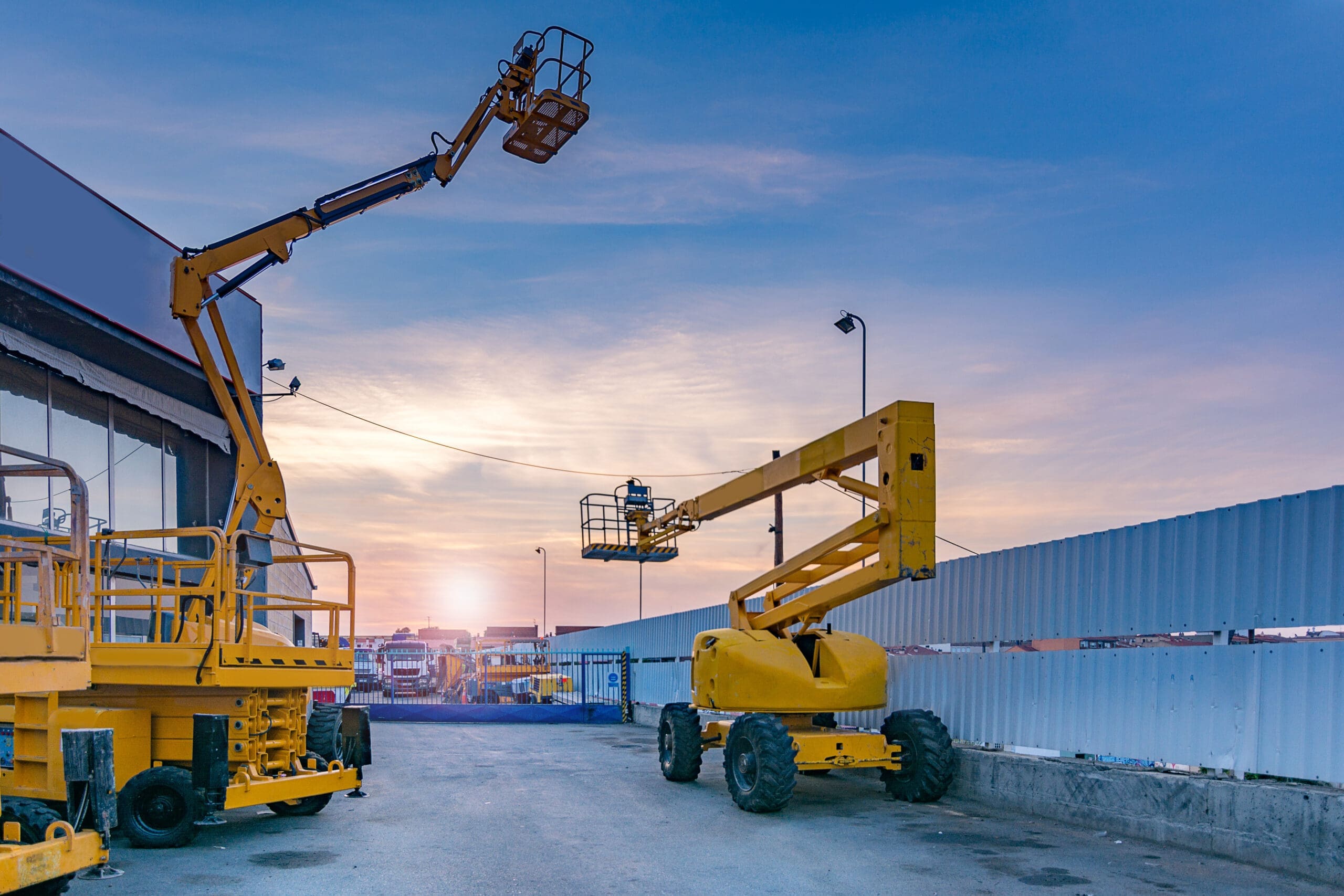
Aerial lift certification is the training and evaluation process that proves an operator can safely run a scissor lift, boom lift, or other elevated work platform. OSHA requires it under 29 CFR 1926.453 and 1926.454, allowing only trained personnel to operate this equipment. The stakes go beyond paperwork: aerial lift incidents cause hundreds of serious falls and equipment-related injuries on construction sites every year. Real certification teaches the judgment calls, spotting unstable ground, checking wind speeds, reading load limits, that keep you and your crew off an incident report.
OSHA requires employers to train and evaluate every aerial lift operator before they touch the controls, and that requirement doesn’t expire after one session. Certification typically needs renewal every three years, and lift-related falls remain one of the most common causes of construction fatalities each year. A certificate that isn’t backed by hands-on evaluation or proper documentation won’t protect a company during an OSHA inspection or an insurance claim after an accident.
Key Takeaways
- OSHA requires aerial lift operators to be trained and evaluated under 29 CFR 1926.453 (general industry equivalent: 29 CFR 1910.67), with ANSI/SAIA A92.22 and A92.24 providing the technical safe-use standards.
- Certification training combines classroom or online instruction with hands-on evaluation and typically takes between three and eight hours to complete, depending on delivery method and equipment type.
- Costs generally range from $75 to $150 per operator for online-only courses and $150 to $400 per operator for in-person or blended programs with practical evaluation.
- Most employers and training providers set a three-year recertification cycle, though OSHA requires retraining immediately after an incident, a near miss, or a change in equipment.
- Certified operators reduce workplace injury rates, lower insurance premiums, and help employers avoid OSHA citations that can carry penalties exceeding $16,000 per serious violation in 2026.
OSHA and ANSI Standards Governing Aerial Lifts
Aerial lift regulation in the United States rests on two overlapping frameworks. OSHA sets the legal floor through the Code of Federal Regulations, while the American National Standards Institute, working with the Scaffold and Access Industry Association (SAIA), publishes the technical detail that OSHA references and that manufacturers build into their equipment. Understanding both is necessary because OSHA inspectors frequently cite the ANSI standards when documenting a violation.
| Organization | Standard | What It Covers |
|---|---|---|
| OSHA | 29 CFR 1926.453 | General requirements for aerial lift design, operation, and maintenance on construction sites. |
| OSHA | 29 CFR 1926.454 | Training requirements for aerial lift operators, covering both classroom instruction and hands-on evaluation. |
| OSHA | 29 CFR 1910.67 | General industry counterpart to 1926.453, applied in manufacturing, warehousing, and maintenance settings. |
| ANSI/SAIA | A92.22-2018 | Safety requirements for the design, manufacture, testing, and inspection of mobile elevating work platforms (MEWPs). |
| ANSI/SAIA | A92.24-2018 | Safe use practices, including hazard assessment, fall protection, and emergency rescue procedures. |
Under these rules, employers must ensure operators receive both theoretical instruction (classroom or online modules covering hazard recognition, load limits, and stability principles) and practical evaluation (a supervised demonstration on the actual equipment the operator will use). A worker who only completes the online portion has not met the OSHA training requirement; the hands-on evaluation is not optional.
Who Enforces These Rules and What Happens If You Skip Them
OSHA compliance officers can and do issue citations for uncertified aerial lift operators during routine site inspections. In 2026, a serious violation carries a maximum penalty of $16,550, and a willful or repeated violation can climb past $165,000. Beyond the fine, an uncertified operator involved in an incident exposes the employer to civil liability and, in cases involving serious injury, potential criminal referral under state workplace safety statutes. The certificate itself is not just paperwork; it is the documented evidence that protects a company when an incident review board or attorney starts asking questions.
Who Needs Aerial Lift Certification
Any worker who operates a scissor lift, articulating boom lift, telescoping boom lift, or vertical mast lift needs certification specific to that category of equipment. Certification does not transfer automatically between lift types; a worker trained on a scissor lift is not automatically qualified to run a 60-foot articulating boom. Industries with the highest concentration of certified operators include:
- Construction: framing crews, electricians, and HVAC installers who need to reach elevated work areas on active job sites.
- Warehousing and manufacturing: maintenance staff performing overhead repairs, lighting replacement, or racking inspections.
- Entertainment and event production: riggers and technicians setting up stage lighting, sound equipment, and truss systems.
- Facility management: building maintenance teams handling signage, window washing, and exterior repairs.
Employers bear responsibility for verifying certification status before assigning a worker to an aerial lift task. A verbal assurance that “I have done this before” does not satisfy the documentation requirement OSHA expects to see during an inspection.
What Aerial Lift Certification Training Actually Covers
A properly built training program moves through a specific sequence, and each stage should produce a measurable outcome rather than a vague sense of familiarity. Below is the typical structure used by accredited providers.
- Equipment classification (45 to 60 minutes): Operators learn to distinguish between scissor lifts, boom lifts, and vertical mast lifts, along with the specific hazards tied to each category, such as tip-over risk on articulating booms versus platform overload on scissor lifts.
- Pre-use inspection (30 to 45 minutes): Trainees practice a documented walk-around inspection covering hydraulic lines, tires, guardrails, and control functions, using a checklist that mirrors OSHA’s expected pre-shift documentation.
- Load and stability principles (45 minutes): Coverage of platform weight capacity, typically ranging from 500 to 1,000 pounds depending on model, and how ground conditions, wind speed above 28 mph, and slope angle affect stability.
- Fall protection application (30 to 45 minutes): Instruction on harness and lanyard use required for boom lifts under ANSI A92.24, including anchor point selection and inspection of fall-arrest hardware before each shift.
- Hazard recognition (45 minutes): Identification of overhead power lines, uneven terrain, and proximity to other equipment, with real incident case studies used to reinforce decision-making.
- Hands-on practical evaluation (60 to 90 minutes): A supervised demonstration where the trainee operates the actual lift model, performs an inspection, and completes a maneuvering task while an evaluator scores performance against a documented rubric.
- Written and practical assessment (30 minutes): A final knowledge check, generally requiring a passing score of 80 percent or higher, paired with sign-off on the practical evaluation.
Total program length runs between three and eight hours depending on whether the course is delivered entirely online with a separate in-person evaluation day, or as a single blended session. Employers who need to train a large crew often schedule practical evaluations on-site so that operators are tested on the exact equipment models they will use daily, rather than a generic demonstration unit.

Certification Costs and Timeframes
Pricing for aerial lift certification varies by delivery format, group size, and whether the provider includes a practical evaluation. The table below reflects typical market rates for 2026.
| Training Format | Typical Cost Per Operator | Duration | Includes Practical Evaluation |
|---|---|---|---|
| Online-only course | $75 to $150 | 2 to 3 hours self-paced | No (requires separate in-person sign-off) |
| Blended online plus on-site evaluation | $150 to $250 | 3 to 4 hours total | Yes |
| Full in-person classroom and practical | $200 to $400 | 6 to 8 hours | Yes |
| Group on-site training (5+ employees) | $120 to $180 per person | Full day | Yes |
Group rates typically bring per-person costs down by 20 to 35 percent compared with individual enrollment, which makes on-site training attractive for companies certifying an entire crew at once. Factor in the cost of lost productive hours as well; a full-day on-site session removes workers from the job for six to eight hours, so many employers schedule certification during slower project phases or as part of new-hire onboarding before assignment to active sites.
Choosing a Qualified Training Provider
Not every course marketed as “aerial lift certification” meets the OSHA standard. A qualified provider should be able to document that its curriculum aligns with 29 CFR 1926.454 and ANSI A92.22/A92.24, and it should employ instructors with verifiable field experience operating the equipment being taught, not just a background in general safety compliance. When evaluating a provider, confirm the following before enrolling your team:
- The course includes a documented practical evaluation on the specific lift category your workers will use, not just a generic written test.
- Instructors hold current qualifications and can explain how the curriculum has been updated to reflect the 2018 revisions to ANSI A92.22 and A92.24.
- The provider issues a wallet card or digital certificate with an expiration date, typically three years from the issue date, along with an employer-facing training record for OSHA audit purposes.
- Custom training options exist for specialized environments, such as confined warehouse aisles, uneven construction terrain, or entertainment rigging setups.
- Refresher and recertification scheduling is available without requiring the operator to repeat the full initial course from scratch.
Providers such as Certified Safety Experts, based in Raleigh, North Carolina, build their aerial lift programs around this exact framework, combining OSHA-aligned classroom content with hands-on evaluation tailored to construction, manufacturing, and event production settings. Programs of this kind typically include interactive scenario training and equipment-specific assessments rather than a one-size-fits-all video course, which matters when your crew operates several different lift models across job sites.

Renewal, Recertification, and Recordkeeping
OSHA does not specify a fixed expiration date for aerial lift certification in the regulatory text, but the agency requires retraining whenever an operator demonstrates unsafe practices, is involved in an accident or near miss, is assigned to a new lift type, or when workplace conditions change significantly. Because of this, most employers and training providers adopt a three-year recertification cycle as an industry standard, aligning with practices common in forklift and crane operator certification.
Recertification typically takes one to two hours rather than the full initial course, focusing on a refresher of key hazard points and a repeat of the practical evaluation. Employers should maintain records for every operator, including the date of initial training, the specific equipment model evaluated, the evaluator’s name, and the scheduled recertification date. These records are the first item an OSHA compliance officer requests during a site visit, and gaps in documentation are treated the same as having no certification at all.
A certification card without a corresponding training record on file provides little protection during an OSHA inspection or a post-incident investigation. Documentation and credential must match.
Conclusion
Aerial lift certification protects workers from falls, tip-overs, and equipment-related injuries while giving employers a documented defense against OSHA penalties that now exceed $16,000 per serious violation (and can climb past $161,000 for willful or repeat offenses). Meeting the standard requires more than an online quiz; it demands classroom instruction, a hands-on evaluation on the actual equipment being used, and a recordkeeping system that tracks each operator’s status, renewal dates, and any incidents tied to their use of the machine.
Think about the difference between a scissor lift operator and a boom lift operator working near power lines. Each needs training specific to that equipment class, not a generic overview. A worker certified only on a scissor lift shouldn’t be handed the keys to an articulating boom without additional instruction, and a good training provider will flag that gap rather than let it slide.
Choosing a training provider that builds its curriculum around 29 CFR 1926.453/454 and ANSI A92.22/A92.24, and that recertifies operators on a three-year cycle, gives your crew the practical skills and legal standing to work at height with confidence. Cutting corners on training costs far more than the class ever will.

Frequently Asked Questions
How long does aerial lift certification remain valid?
Most certifications remain valid for three years from the issue date. OSHA does not set a hard expiration in its regulations, but this three-year cycle is the widely adopted industry standard, and employers must also retrain operators sooner after any accident, near miss, or change in equipment type.
Can aerial lift certification be completed entirely online?
No, OSHA requires a hands-on practical evaluation in addition to any online instruction. A worker can complete the classroom or knowledge-based portion online, generally two to three hours, but must still complete a supervised in-person demonstration on the specific lift model before being considered certified.
What is the difference between scissor lift and boom lift certification?
Each lift category requires its own evaluation because the hazards and controls differ significantly. Scissor lifts move only vertically and carry tip-over risks tied to platform overload and uneven ground, while boom lifts extend horizontally and require fall protection harnesses under ANSI A92.24, along with training on stability at extended reach angles.
How much does it cost to certify an entire crew?
Group on-site training typically runs $120 to $180 per person for five or more employees, compared with $150 to $400 for individual enrollment. Employers training larger crews often save 20 to 35 percent per operator by scheduling a single on-site session rather than enrolling workers individually in separate courses.
What happens if an employer allows an uncertified worker to operate an aerial lift?
The employer risks an OSHA citation carrying a penalty of up to $16,550 per serious violation in 2026, along with increased liability if an incident occurs. Beyond the fine, uncertified operation can void insurance coverage for equipment-related claims and expose the company to civil litigation if a worker or bystander is injured.