Scissor lift certification requirements under OSHA call for documented training on the specific equipment you operate, a hands-on evaluation, and employer authorization before you climb onto the platform. There is no single national license or card issued by a government agency. Instead, OSHA places the responsibility on employers to train and evaluate operators, typically through a program that follows ANSI/SAIA A92 standards. Most workers complete this training through a third-party provider or an in-house safety officer, and the resulting card or certificate generally remains valid for three years.
Because scissor lifts fall under a different regulatory category than boom lifts, the rules that apply to them are sometimes misunderstood on job sites. This article lays out exactly which regulations govern scissor lift training, who must be certified, what the process actually costs, and how often you need to renew your credentials.
Key Takeaways
- OSHA does not issue scissor lift licenses directly; it requires employer-provided training under 29 CFR 1926.453 (construction) and 29 CFR 1910.67 (general industry).
- Scissor lifts are classified as mobile scaffolds, not aerial lifts, though most employers still follow ANSI/SAIA A92.22 and A92.24 training guidelines for consistency.
- Certification typically involves three parts: formal instruction, a written exam, and a hands-on skills evaluation on the exact model you will operate.
- Training costs generally range from $50 to $300 per operator, depending on whether the course is online, in-person, or bundled with equipment rental.
- Certification cards are usually valid for three years, but employers must re-evaluate operators sooner if there is an accident, a near-miss, or a switch to a different lift model.
What OSHA Actually Requires for Scissor Lift Operators
OSHA regulates scissor lifts as a type of mobile scaffold platform rather than an aerial lift, which places them under 29 CFR 1926.451 and 1926.453 for construction work and 29 CFR 1910.67 and 1910.68 for general industry settings. This distinction matters because boom lifts and other aerial devices fall under separate ANSI standards (A92.20 and A92.24), while scissor lifts are covered primarily by ANSI/SAIA A92.22 (safe use standard) and A92.24 (training standard), both updated in 2018 to replace the older A92.6 standard.
OSHA does not certify individual workers itself. The regulation instead requires that employers ensure operators are trained by a “qualified person,” meaning someone with recognized credentials or extensive knowledge of the equipment, who can identify hazards and confirm the trainee understands proper operation. This means certification is really employer-issued, backed by a training curriculum that meets OSHA and ANSI expectations, rather than a government-administered license similar to a driver’s license.
Employers found in violation of these training requirements face real financial exposure. OSHA’s 2024 penalty structure lists a maximum of $16,131 per serious violation and up to $161,323 per willful or repeated violation. Scissor lift and scaffold-related citations consistently rank among OSHA’s most frequently cited standards each year, which is one reason employers rarely skip formal training even though no federal license exists.
Who Needs to Be Certified
Any employee who operates a scissor lift, including part-time workers, temporary staff, and subcontractors, must complete training before using the equipment unsupervised. This applies across industries including construction, warehousing, retail maintenance, film production, and event staging. Supervisors who occasionally step onto a platform to inspect work are not exempt simply because they hold a management title.
Employers also carry direct obligations under this framework. A company must:
- Verify that each operator has completed training specific to the model of scissor lift in use, since a certificate for one manufacturer’s controls does not automatically transfer to another.
- Conduct a documented evaluation of each operator’s performance before granting independent authorization.
- Retrain any operator who demonstrates unsafe practices, receives a citation, or has not operated a lift in more than a year.
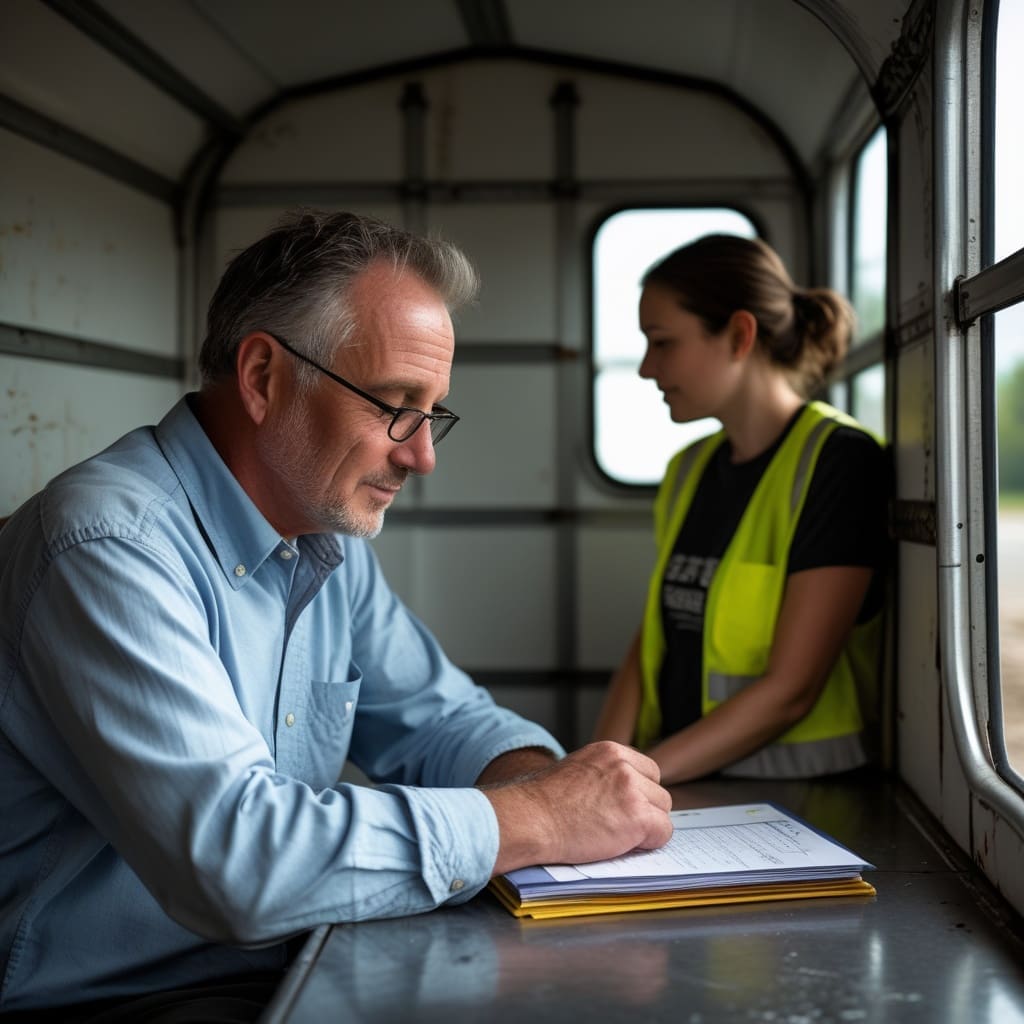
- Keep written records of training dates, evaluator names, and equipment models used during instruction, generally for the duration of employment plus three years.
Failure to document this evaluation is one of the most common gaps OSHA inspectors find during site visits, even at companies that did provide adequate verbal instruction.
Step-by-Step Certification Process
Most training programs follow a consistent sequence, whether delivered by an in-house safety officer, a third-party trainer, or an equipment rental company offering training as an add-on service. The process generally takes between 4 and 8 hours to complete from start to finish, including exam time.
- Enroll in a course that matches your industry. Construction workers typically need a course built around 29 CFR 1926.453, while warehouse employees often complete training aligned with 1910.67. Course enrollment fees usually run between $50 and $150 for online formats.
- Complete classroom or online instruction, roughly 2 to 4 hours. Topics cover load capacity limits, guardrail requirements, fall protection, ground conditions, and pre-operation inspection checklists.
- Pass a written knowledge exam, generally requiring 80 percent or higher. Most programs allow one retake at no additional cost if you fail the first attempt.
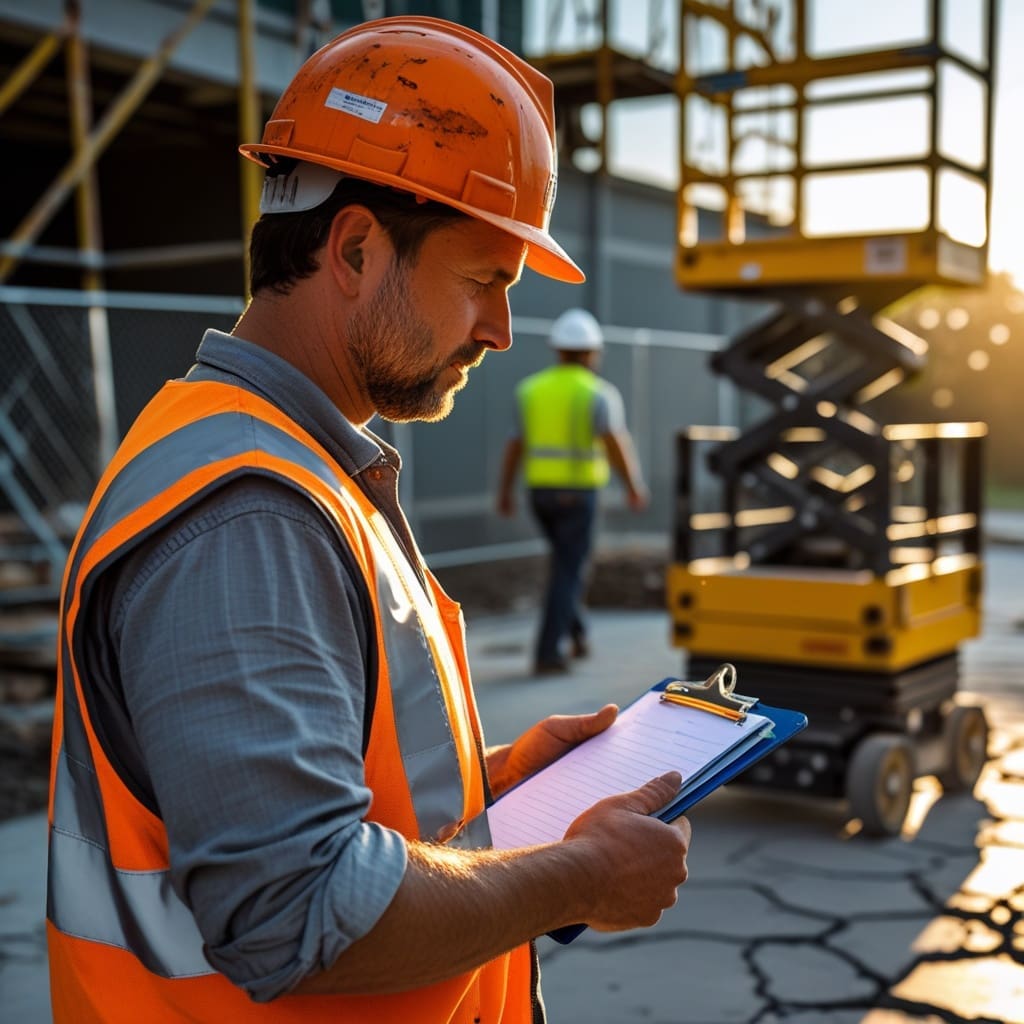
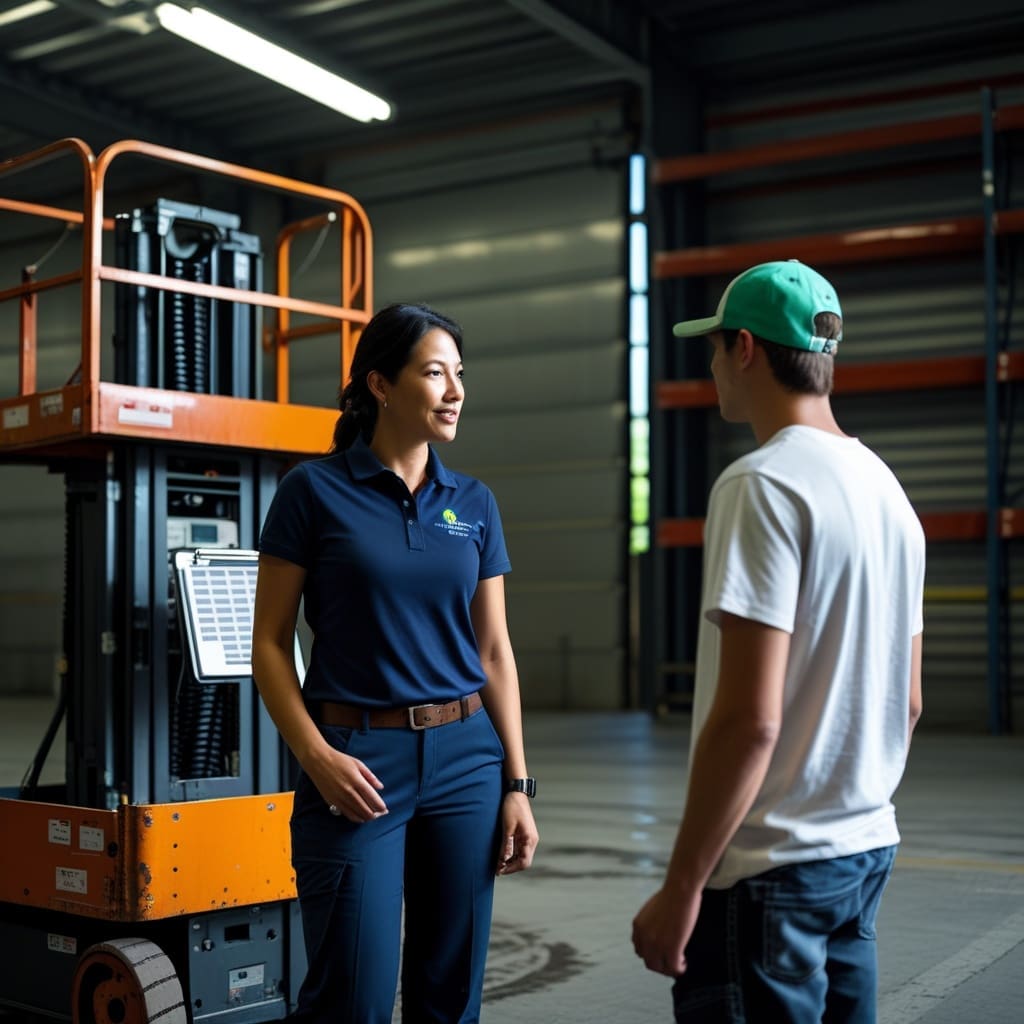
- Perform a hands-on skills evaluation, lasting 30 to 60 minutes. A qualified evaluator watches you complete a pre-operation inspection, maneuver the lift through a marked course, and demonstrate safe shutdown procedures.
- Receive your certification card or wallet certificate, typically issued within 1 to 3 business days. Some providers issue a digital certificate immediately, with a physical card mailed within two weeks.
- Employer sign-off and internal authorization, usually completed the same day. The employer documents that you are now authorized to operate the specific lift model tested.
Some providers, such as those following National Commission for the Certification of Crane Operators (NCCCO) or Occupational Safety and Health Association-endorsed curriculum, offer bundled programs covering both scissor lifts and boom lifts in a single 6 to 8 hour session, which can reduce overall training time for companies operating mixed fleets.
Costs You Should Expect
Training expenses vary based on delivery method, but concrete figures are easy to find across major providers. Expect the following typical ranges:
- Online-only courses: $50 to $99 per operator, covering the classroom portion only. These require a separate in-person hands-on evaluation arranged by the employer.
- Blended courses (online plus in-person evaluation): $99 to $199 per operator, often including the physical skills test with a local partner trainer.
- Full in-person training through a rental company or safety consultant: $150 to $300 per operator, sometimes bundled into equipment rental agreements at no added charge.
- Group or company-wide training packages: $500 to $2,000 for sessions covering 10 to 20 employees at once, which often lowers the per-person cost to under $75.
- Recertification (renewal) courses: $40 to $120, generally shorter than initial training since they focus on refreshing knowledge rather than full instruction.
Some employers absorb these costs entirely as part of onboarding, while others require workers to complete training independently before hiring. It is worth asking a prospective employer directly which model they follow, since this affects your out-of-pocket cost before your first paycheck.
Renewal and Recertification Requirements
Most scissor lift certifications remain valid for three years, which aligns with the general recommendation found in ANSI/SAIA A92.24 for periodic operator evaluation. However, several conditions can trigger the need for earlier retraining regardless of your card’s expiration date:
- You are assigned to operate a different make or model of scissor lift than the one used during your original evaluation.
- You are involved in an accident, near-miss, or safety violation while operating a lift.
- A supervisor observes unsafe operating habits during a routine job site inspection.
- You have not operated any scissor lift for a period of one year or longer.
- Workplace conditions change significantly, such as a shift from indoor warehouse work to outdoor uneven terrain.
Recertification courses are generally shorter than initial training, often completed in 1 to 3 hours, since they focus on refreshing key safety points rather than covering the full curriculum again. Many providers send automated renewal reminders 60 to 90 days before a certificate expires, though ultimately it remains the employer’s legal responsibility, not the training provider’s, to track expiration dates and schedule renewals on time.
In-Person vs. Online Training: Which Option Fits Your Situation
Choosing between formats depends on your timeline, budget, and whether your employer already has evaluators on staff. The comparison below summarizes the practical differences.
- Online courses offer flexibility and lower cost, generally $50 to $99, and can be completed in a single evening. They do not satisfy the hands-on evaluation requirement alone, so a qualified person must still observe your practical skills afterward.
- In-person courses cost more, typically $150 to $300, but combine classroom instruction and the physical evaluation into one session, often completed in a single business day.
- Employer-led internal training costs the least out-of-pocket for the worker, since companies often fold the expense into safety budgets, but quality varies significantly based on how experienced the in-house evaluator is.
- Rental company training bundles are convenient when a business rents lifts short-term, since the rental provider frequently includes a training session at no added charge or a nominal fee under $50.
Workers who need certification quickly for a new job often lean toward online plus in-person evaluation, since it can be arranged within 48 to 72 hours in most metropolitan areas. Rural areas may take longer to schedule an in-person evaluator, sometimes stretching to a week or more.
Common Mistakes That Lead to OSHA Citations
Even companies that invest in training sometimes fall short on documentation or scope. The most frequent gaps inspectors identify include missing records showing which specific lift model an operator trained on, evaluations conducted by someone who does not meet OSHA’s definition of a “qualified person,” and failure to retrain workers after a switch to new equipment.
Another frequent issue involves confusing scissor lift training with forklift or aerial boom lift certification. These are not interchangeable credentials, even though some general safety courses bundle multiple types of mobile equipment into a single session. An operator certified only on a boom lift is not automatically authorized to run a scissor lift, and vice versa, because the control systems, stability characteristics, and fall protection needs differ meaningfully between the two machine types.
Call to Action
If you operate scissor lifts on the job or manage employees who do, verify today whether your current certification records match the exact equipment models in use at your site. A worker trained on a 19-foot slab scissor lift years ago may not be legally qualified to run a 40-foot rough terrain model without additional evaluation, since OSHA and ANSI both require training to match the specific machine class and job site conditions. Pull your records and check three things: the date of the last evaluation, the equipment type listed, and whether a supervisor has signed off on a site-specific hazard assessment within the past year.
Contact a qualified training provider or your company’s safety officer to schedule an evaluation before an OSHA inspection forces the issue. Many providers offer half-day refresher courses that cost far less than a single citation, which can run several thousand dollars per violation. Keep copies of certification cards, trainer credentials, and written test scores in a shared folder that supervisors can access on short notice. Keeping documentation current protects both your safety and your employer’s ability to avoid costly citations, lost work time, and the liability that comes with an uncertified operator getting hurt on the job.
Conclusion
Scissor lift certification requirements center on employer-provided training that satisfies OSHA’s construction and general industry standards, backed by ANSI/SAIA guidelines that define what a qualified evaluation looks like. There is no single federal exam or card, but the documentation, hands-on skills test, and three-year renewal cycle function much like a license in practice. Understanding the specific regulations, realistic costs, and renewal triggers helps both workers and employers stay compliant without unnecessary delays or expenses.
Frequently Asked Questions
Do I need a license to operate a scissor lift?
No, there is no government-issued license for scissor lift operation. Instead, OSHA requires employer-verified training and a hands-on evaluation, typically documented with a certificate or wallet card from a training provider.
How long does scissor lift certification last before I need to renew it?
Most certifications remain valid for three years. Certain events, such as an accident, a switch to a new lift model, or a year without operating any lift, can require earlier retraining regardless of the card’s printed expiration date.
Can I get certified entirely online?
Partially, but not completely. Online courses cover the classroom knowledge portion, usually costing $50 to $99, but OSHA still requires a hands-on skills evaluation conducted in person by a qualified evaluator before you are authorized to operate independently.
Is scissor lift training the same as aerial lift or boom lift training?
No, these are separate credentials covering different equipment. Scissor lifts fall under ANSI/SAIA A92.22 and A92.24 and OSHA’s scaffold regulations, while boom lifts and other aerial devices follow different ANSI standards and control systems, so certification on one does not transfer to the other.
What happens if my employer does not provide required training?
The employer faces OSHA citations and financial penalties. Serious violations can reach up to $16,131 per instance, and willful or repeated violations can reach up to $161,323, based on OSHA’s 2024 penalty schedule, making documented training a legal necessity rather than an optional safety measure.