A snorkel lift is an aerial work platform, usually an articulating or telescoping boom lift, that raises workers and tools anywhere from 30 feet to over 150 feet. The name traces back to Snorkel International, a manufacturer founded in 1959 that became so closely tied to this equipment that contractors now use "snorkel lift" as a catch-all term for any articulating boom lift, much like "Kleenex" stands in for facial tissue. That distinction between brand and equipment type matters when you're renting, buying, or getting certified, since job specs often call for a specific reach, weight capacity, or platform size rather than a specific manufacturer. Mixing up the two can lead to ordering the wrong machine for a job site.
This distinction affects real decisions on a job site. A supervisor who requests a “snorkel lift” for a 45-foot ceiling repair may actually need any articulating boom lift with that working height, not a machine built by the Snorkel brand specifically. Knowing what the equipment does, what it costs, and what certification it requires will save you time and money before the job starts.
Key Takeaways
- A snorkel lift is typically an articulating or telescoping boom lift used for working at heights of 30 to over 150 feet.
- The name originated with Snorkel International, founded in 1959, and is now used generically for similar boom lifts across the industry.
- Renting a snorkel lift costs roughly $250 to $500 per day, while purchasing a new unit ranges from $60,000 to $200,000 depending on height and reach.
- Operators need training under OSHA 29 CFR 1926.453 and ANSI A92.20 standards before running one of these lifts.
- A snorkel lift differs from a straight boom lift mainly in its jointed arm, which lets it reach up and over obstacles instead of only going straight up.
What Is a Snorkel Lift?
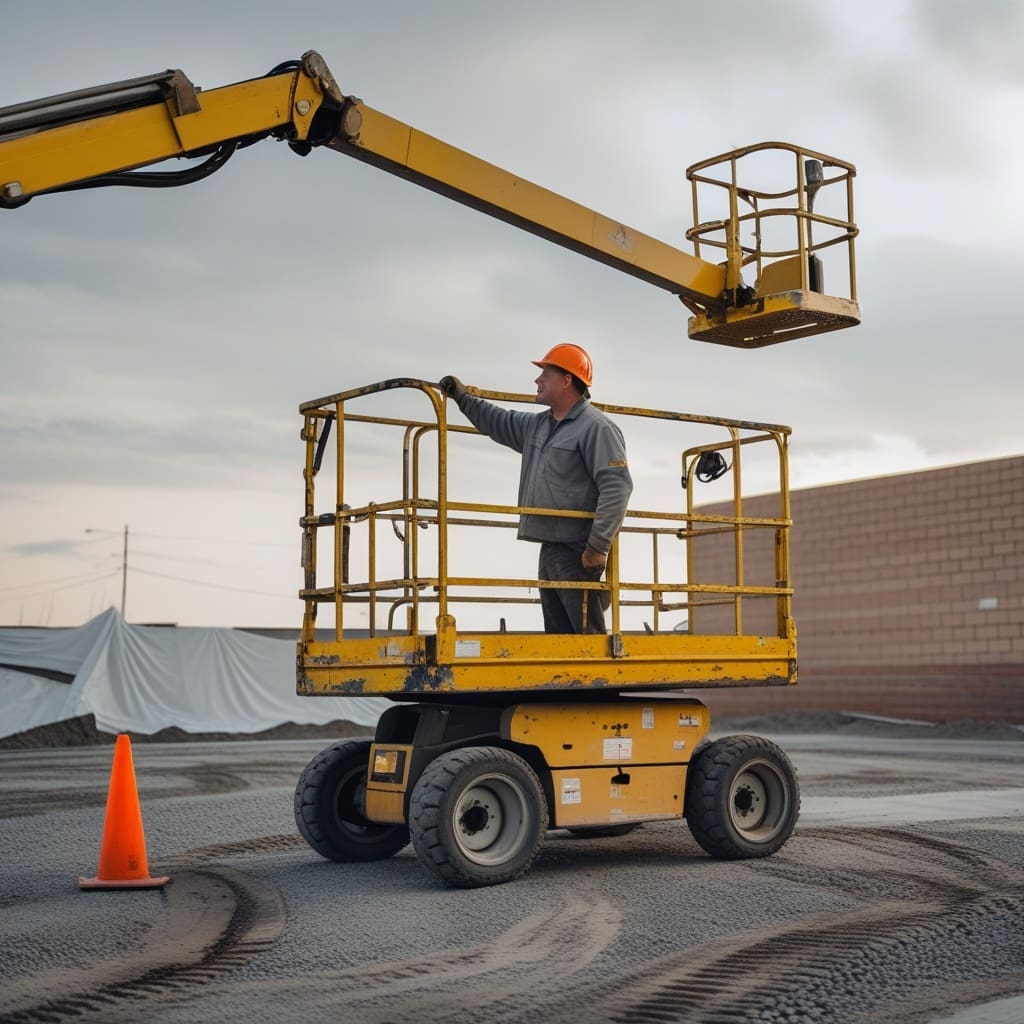
A snorkel lift is a self-propelled aerial platform with a jointed or telescoping arm that lifts one or more workers and their tools to an elevated work area. The platform, often called a basket or bucket, sits at the end of the boom and can hold between 500 and 1,000 pounds depending on the model. Most units run on diesel, gas, or electric power, with electric versions favored for indoor work because they produce no exhaust and run quieter, typically under 70 decibels at idle.
Snorkel International built its reputation on articulating boom lifts, which use two or more hinged sections to move up, out, and around obstacles such as pipes, ductwork, or building overhangs. In 2015, Xtreme Manufacturing acquired the Snorkel brand and continues to produce lifts under that name, including models like the A46JRT and A62JRT, which reach working heights of 52 and 68 feet respectively. Because the brand has been a market leader for decades, “snorkel lift” has become shorthand in many trades for any comparable articulating boom, even one made by JLG, Genie, or Skyjack.
How Does a Snorkel Lift Work?
A snorkel lift raises its platform through a hydraulic boom system controlled from a panel inside the basket, letting one operator both drive the base and position the platform at height. The base unit typically has four wheels, either solid rubber for indoor floors or pneumatic tires for rough outdoor terrain, and most models can climb grades of up to 30 to 45 percent depending on tire type. Outriggers or stabilizer arms extend from the chassis on larger units to keep the machine level and prevent tipping once the boom rises above 30 feet.
The articulating design is what separates a snorkel-style lift from a simple straight-mast lift. Instead of moving only vertically, the boom bends at one or two joints, so an operator can lift the platform over a wall, around a tree, or under a beam before extending it toward the actual work area. This makes the machine well suited for jobs where a straight path to the target is blocked, such as tree trimming near power lines or facade repair on buildings with overhangs.
When Should You Use a Snorkel Lift?
You should use a snorkel lift whenever a job requires reaching an elevated or obstructed work area that a ladder or scaffold cannot safely or efficiently access. The following situations are the most common reasons contractors choose this equipment over other options:
- Building maintenance above 20 feet. Window washing, sign installation, and gutter repair on two-story or taller structures often call for a platform height of 30 to 60 feet.
- Electrical and HVAC work around obstacles. Technicians servicing rooftop units or overhead conduit benefit from the articulating arm’s ability to bend around ductwork instead of requiring a clear vertical path.
- Tree trimming near structures or power lines. Arborists use snorkel-style lifts with reach of 40 to 80 feet to access limbs that hang over roofs or utility lines, where a bucket truck cannot maneuver.
- Warehouse and indoor construction up to 40 feet. Electric-powered models keep emissions and noise low for indoor use, and many fit through standard 8-foot doorways when the platform is lowered.
- Bridge and infrastructure inspection. Some specialized units, sometimes still called “snooper” or under-bridge inspection units, extend downward and outward to inspect the underside of overpasses, a task no straight boom lift can perform.
In each case, the deciding factor is whether the work area requires horizontal reach around an obstacle in addition to vertical height. If the target is directly overhead with no obstruction, a simpler scissor lift may cost less and work just as well.
Snorkel Lift vs Boom Lift: What Is the Difference?
A snorkel lift is a type of boom lift, so the real comparison is between an articulating boom (the snorkel style) and a straight, or telescopic, boom lift. The distinction affects reach, cost, and the kind of job each machine handles best.
- Movement pattern: A snorkel-style articulating lift bends at multiple joints to move up and over obstacles. A telescopic boom lift extends in a straight line, offering greater horizontal reach, sometimes over 70 feet, but only along a direct path.
- Working height: Articulating snorkel lifts commonly range from 30 to 135 feet. Telescopic boom lifts often reach higher, with some models exceeding 180 feet.
- Maneuverability: The jointed arm on a snorkel lift makes it better for tight or cluttered sites. Straight boom lifts perform better in open areas where a long, unobstructed reach is the priority.
- Rental cost: Articulating models typically rent for $250 to $450 per day, while larger telescopic booms can run $350 to $600 per day due to their added height and reach capacity.
- Platform capacity: Most snorkel-style lifts hold 500 to 750 pounds, close to the 500 to 1,000 pound range found on telescopic units, though the largest telescopic booms sometimes support two-person baskets rated higher.
Choosing between the two comes down to the shape of the job site. A cramped urban lot with overhead wires favors the flexibility of an articulating snorkel lift, while a wide-open industrial yard often favors the extended straight-line reach of a telescopic boom.
How Much Does a Snorkel Lift Cost?
Renting a snorkel lift generally costs between $250 and $500 per day, $700 to $1,400 per week, or $2,000 to $3,800 per month, with pricing driven mainly by platform height and power source. Purchasing new equipment involves a much larger investment, and buying used can cut that cost significantly if the machine has been well maintained.
- Daily rental (30 to 45 feet, electric): $250 to $325
- Daily rental (60 feet, diesel articulating): $375 to $500
- Weekly rental (60 to 80 feet): $900 to $1,400
- New purchase (40 to 50 feet): $60,000 to $95,000
- New purchase (60 to 80 feet): $100,000 to $160,000
- New purchase (100 feet or more): $170,000 to $220,000
- Used purchase (5 to 8 years old, 45 to 60 feet): $28,000 to $55,000
Delivery fees typically add $150 to $400 per rental depending on distance, and most rental companies require a damage waiver of 10 to 15 percent of the rental cost. Fuel and routine maintenance for owned equipment usually run $2,000 to $5,000 per year for a mid-size unit used regularly, so contractors renting fewer than 15 to 20 days a year almost always come out ahead financially by renting rather than buying.
What Certification Do You Need to Operate a Snorkel Lift?
Operators must complete training that satisfies OSHA 29 CFR 1926.453 for construction sites and 29 CFR 1910.67 for general industry, along with the ANSI A92.20 and A92.24 standards that govern aerial work platform design, safe use, and operator training. These regulations require that training cover equipment inspection, load limits, fall protection, and hazard recognition specific to the machine being used, and that a qualified trainer evaluate the operator’s hands-on performance before sign-off.
Training is typically divided into three parts: classroom instruction covering regulations and equipment types (roughly 2 to 4 hours), a written exam requiring a passing score of 70 to 80 percent depending on the provider, and a hands-on evaluation lasting 1 to 2 hours where the trainee operates the actual lift under supervision. Certification cards are generally valid for three years, after which a refresher course is required, and OSHA also mandates retraining sooner if an operator is involved in a near-miss incident or is observed operating unsafely.
Because the requirements differ slightly between articulating booms, telescopic booms, and scissor lifts, workers should confirm that their training covers the specific equipment category they will run on site. Contractors preparing crews for this kind of work often start by getting certified to operate this type of equipment through an accredited training provider before assigning anyone to operate a snorkel lift on an active job.
Where Can You Find Snorkel Lifts for Sale?
Snorkel lifts for sale are available through equipment dealers, manufacturer websites, rental companies liquidating older fleet units, and online auction platforms that specialize in construction machinery. New units come with full manufacturer warranties, typically covering the structure for 5 years and hydraulic and electrical components for 1 to 2 years, while used units sold through dealers often include a limited 30 to 90 day warranty on major components.
When shopping for a used snorkel lift, check the hour meter and compare it against the machine’s age; a unit averaging under 500 hours per year of use has generally seen lighter duty than one logging over 1,000 hours annually. Ask for maintenance records covering the last annual inspection, since ANSI A92.6 requires a documented annual inspection for aerial platforms, and any gap in that paperwork is a warning sign. Buyers should also confirm that the boom’s load chart, safety decals, and operator manual are present, since replacing missing documentation can add $200 to $600 in dealer fees and delay the machine’s return to service.
For companies weighing a purchase against ongoing rental, a simple break-even calculation helps: divide the purchase price by the daily rental rate to see how many rental days it would take to justify buying. A $90,000 unit rented at $400 per day would need roughly 225 rental days, close to a full working year, before ownership becomes the more economical choice.
Ready to Choose the Right Lift for Your Job?
Selecting between renting and buying, or between an articulating snorkel lift and a straight boom, depends on your site conditions, budget, and how often the equipment will be used over the coming year. Speak with a licensed equipment dealer or rental company about your specific height, reach, and terrain requirements before committing to a purchase, and confirm that every operator assigned to the machine holds current, documented training that meets OSHA and ANSI standards.
Conclusion
A snorkel lift, in practical terms, refers to an articulating boom lift capable of reaching heights from 30 to over 150 feet while bending around obstacles that a straight boom cannot clear. Whether you rent one for a short repair job or purchase a fleet unit for ongoing work, matching the machine’s height, reach, and power source to your actual job conditions will prevent wasted rental days and unnecessary expense. Proper operator certification under OSHA and ANSI standards remains non-negotiable, both for legal compliance and for the physical safety of everyone on site.
Frequently Asked Questions
Is “snorkel lift” a brand name or a type of equipment?
It started as a brand name and is now used as a general term. Snorkel International, founded in 1959 and now owned by Xtreme Manufacturing, built the original lifts that gave the term its popularity, but many contractors use “snorkel lift” today to describe any articulating boom lift regardless of manufacturer.
How high can a snorkel lift reach?
Most models reach between 30 and 135 feet. Compact electric units typically max out around 40 to 46 feet for indoor work, while larger diesel-powered articulating booms can extend past 120 feet for outdoor construction and utility jobs.
Do I need a special license to operate a snorkel lift?
You need OSHA-compliant training and a certification card, not a government-issued license. Training must meet 29 CFR 1926.453 and ANSI A92.20 requirements, including a written exam and a hands-on skills evaluation, and certification is typically valid for three years before a refresher is required.
What is the weight capacity of a typical snorkel lift platform?
Most platforms hold between 500 and 750 pounds. This usually covers one or two workers plus tools and materials, though exact limits vary by model, so operators should always check the load chart mounted on the machine before loading it.
Is it cheaper to rent or buy a snorkel lift?
Renting is usually cheaper unless you need the equipment more than 150 to 200 days a year. A rough break-even calculation, purchase price divided by daily rental rate, shows that companies using a lift less than a few months per year almost always save money by renting instead of owning.