
Crane signalperson certification is a legal requirement on most construction sites in the United States. OSHA’s crane and derrick standard, found under 29 CFR 1926.1419, requires that anyone directing crane movement be qualified through a recognized certification process. Without proper credentials, both workers and employers face serious safety and compliance risks.
If you work near cranes or direct crane operators during lifts, you need to understand exactly what OSHA requires, what the certification process involves, and where to get trained. This guide covers every key step so you can move forward with confidence.
Ready to learn more? Explore our signal person training program to get certified and meet OSHA requirements quickly.
What OSHA Requires for Crane Signalperson Certification
OSHA’s standard at 29 CFR 1926.1419 is clear: a signal person must be qualified before directing any crane movement. Qualification means the person has passed a written test and a practical evaluation. Both must be conducted by a qualified evaluator or an accredited third-party organization.
OSHA defines a “qualified evaluator” as someone with the knowledge, training, and experience to assess whether a signal person meets the required standard. Third-party certification through an accredited body, such as NCCCO (National Commission for the Certification of Crane Operators), satisfies the OSHA requirement and is widely recognized across job sites nationwide.
Employers cannot simply assign someone to signal a crane without verifying their qualifications. The employer is legally responsible for confirming that the signal person is certified before any lift begins.
The Two Accepted Paths to Signal Person Qualification

OSHA recognizes two distinct routes to becoming a qualified crane signal person. Understanding both helps you choose the path that fits your schedule and employer’s requirements.
1. Third-Party Certification
This path involves passing a written exam and a practical skills test administered by an accredited certification organization. Once you pass, you receive a credential that is portable across employers and recognized industry-wide. This is the most common and most widely accepted route for signal person crane OSHA compliance.
2. Qualification by an Employer’s Qualified Evaluator
An employer may use an in-house qualified evaluator to test and document a worker’s signal person competency. The evaluator must have sufficient knowledge and experience to assess all required skills. Documentation of the evaluation must be kept on record. This path is employer-specific and may not transfer to other job sites.
Core Knowledge Areas Covered in Signal Person Training
Crane hand signal certification and voice signal qualification both require demonstrated knowledge in specific areas. OSHA outlines the minimum knowledge a signal person must have before directing crane operations.
| Knowledge Area | What It Covers |
|---|---|
| Standard hand signals | ASME B30.5 hand signal chart and proper execution |
| Voice communication | Proper terminology and radio or phone protocols |
| Crane capabilities and limits | Load charts, radius, and crane capacity basics |
| Site hazard awareness | Power lines, ground conditions, and exclusion zones |
| Emergency stop procedures | When and how to signal an immediate stop |
| Visibility and positioning | Staying visible to the operator at all times |
Training programs also address what happens when the signal person loses sight of the load or operator. Knowing when to stop the lift is just as important as knowing how to direct one.
Step-by-Step Process to Get Your Crane Signalperson Certification
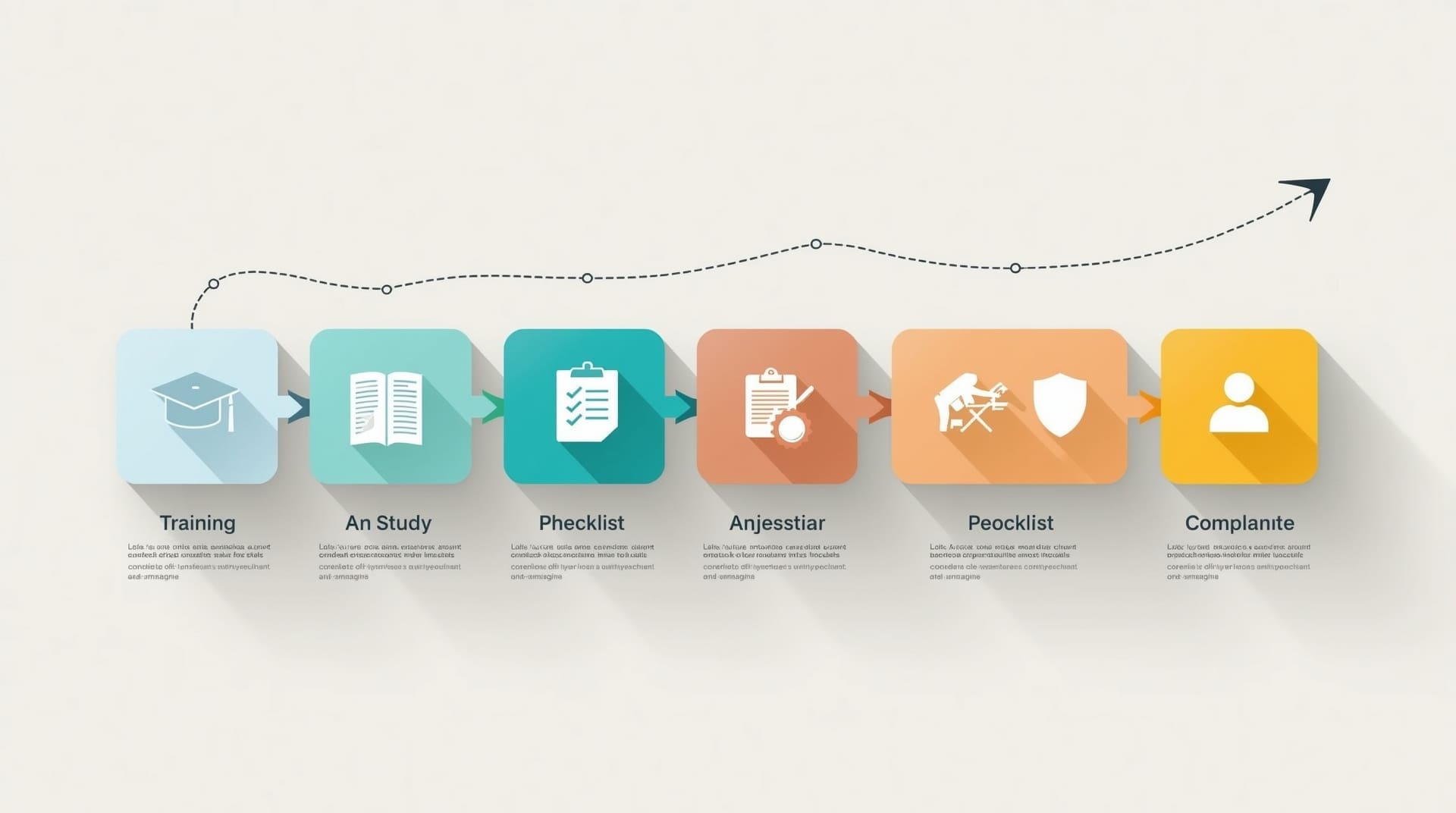
Getting certified follows a straightforward sequence. Here is what to expect from start to finish.
Step 1: Enroll in a Signal Person Training Program
Start with a structured training program that covers all OSHA-required knowledge areas. Programs like those offered at Certified Safety Experts walk you through hand signals, voice communication, site hazards, and crane operation basics. Training can be completed in person or in a blended format.
Step 2: Study the Hand Signal Chart
OSHA references the ASME B30.5 standard for crane hand signals. You need to memorize and accurately perform each signal. Practical repetition is the most effective study method. Your crane hand signal certification exam will test both written knowledge and physical demonstration of these signals.
Step 3: Pass the Written Exam
The written test covers OSHA regulations, crane terminology, load awareness, and signal procedures. Third-party exams are proctored and scored to a pass threshold. Employer-based evaluations must document that a written test was given and passed.
Step 4: Complete the Practical Skills Evaluation
You must demonstrate your hand signals and communication skills in front of a qualified evaluator. The evaluator confirms that you can position yourself correctly, execute each signal clearly, and respond appropriately to changing lift conditions. This is not a formality. Errors in the practical exam can disqualify you.
Step 5: Receive Your Credential and Begin Work
After passing both components, you receive documentation of your qualification. For third-party certifications, you typically receive a wallet card and access to a verification record. Keep your credential current and accessible on the job site.
How Signal Person Certification Relates to Crane Operator Certification
Signal person crane OSHA rules and crane operator certification requirements exist side by side. They are separate credentials covering separate roles. A crane operator controls the machine. A signal person directs the operator when the operator cannot see the load or work area clearly.
On complex lifts, both credentials are required at the same time. A certified operator and a certified signal person must work as a coordinated team. Neither credential substitutes for the other. If your role involves both directing and operating, you need both certifications.
Some workers in the Carolinas and across the Southeast hold both credentials to increase their employability and versatility on job sites. Training for both can often be completed through the same provider.
Employer Responsibilities Under the OSHA Signal Person Standard

OSHA places clear obligations on employers, not just workers. Understanding what your employer must do helps you hold your workplace accountable.
- Verify qualification before each lift: Employers must confirm the signal person is qualified before crane operations begin each day.
- Keep documentation on file: Records of third-party certification or employer-based evaluation must be maintained and available for inspection.
- Provide a safe work environment: Employers must ensure signal persons can position themselves safely and maintain visual contact with both the load and the operator.
- Respond to disqualification immediately: If a signal person’s certification lapses or is revoked, the employer must remove that worker from signaling duties without delay.
- Cover training costs: In most cases, employers are responsible for ensuring workers have access to the training needed to meet OSHA requirements.
Renewal and Recertification for Signal Persons
Crane signalperson certification through third-party accrediting bodies typically has an expiration date. Most credentials are valid for five years. After that period, you must recertify to remain compliant with signal person crane OSHA standards.
Recertification usually involves passing updated written and practical evaluations. Some organizations offer refresher courses to help you prepare. Do not wait until your credential expires to start the renewal process. Expired certification means you cannot legally serve as a signal person until you recertify.
Employer-based qualifications should also be reviewed periodically, especially when job site conditions change, new crane types are introduced, or OSHA standards are updated.
Common Mistakes That Delay or Disqualify Certification Candidates
Many candidates run into the same obstacles. Knowing these pitfalls in advance saves you time and frustration.
- Skipping formal training: Attempting the practical or written exam without structured preparation leads to high failure rates. Training programs exist for a reason.
- Relying only on experience: Years of working near cranes does not automatically satisfy OSHA’s qualification standard. You still need a documented evaluation or third-party credential.
- Memorizing signals without practicing them: The practical exam requires physical execution of each signal. Knowing the chart on paper is not enough.
- Missing documentation: If your employer uses an in-house evaluator, missing or incomplete records can invalidate the qualification entirely.
- Letting credentials expire: An expired credential has the same legal standing as no credential at all. Track your renewal date carefully.
Final Thoughts on Crane Signalperson Certification
Crane signalperson certification is not optional on regulated job sites. OSHA’s standard is explicit, and the consequences of non-compliance range from citations and fines to serious injury or fatality. Getting certified through a recognized training program is the fastest and most reliable way to meet the requirement and protect everyone involved in a lift.
Whether you are new to the role or renewing an existing credential, the path forward is clear. Enroll in a quality signal person training program, study the required material thoroughly, pass both the written and practical evaluations, and keep your documentation current. Certified workers make safer job sites, and safer job sites keep projects on schedule.
Frequently Asked Questions About Crane Signalperson Certification
Who is required to have crane signalperson certification under OSHA?
Anyone who directs crane movement during a lift where the operator does not have a direct, unobstructed view of the load must be a qualified signal person. This requirement applies to construction sites regulated under 29 CFR 1926.1419. Both the signal person and the employer share responsibility for ensuring this qualification is in place before any lift begins.
How long does it take to get certified as a signal person?
Most training programs can be completed in one to two days. The written exam and practical evaluation are often administered at the end of the training session. Third-party scheduling and employer-based evaluations may vary. Preparation time before the exam depends on your prior experience and how thoroughly you study the material.
Does crane hand signal certification expire?
Yes, third-party crane hand signal certification credentials typically expire after five years. You must pass a recertification exam before your credential lapses to remain in compliance with signal person crane OSHA standards. Employer-based qualifications should also be reviewed and updated whenever site conditions or equipment changes significantly.
Can a crane operator also serve as their own signal person?
No. A crane operator cannot signal themselves. OSHA requires a separate, qualified signal person whenever the operator’s view of the load or the travel path is obstructed. The signal person must be in a position where they can see the load and communicate clearly with the operator throughout the lift.
What is the difference between a signal person and a rigger?
A signal person directs crane movement using hand signals or voice communication. A rigger attaches and secures the load to the crane hook using slings, shackles, and other hardware. These are separate roles with separate OSHA qualification requirements. On some job sites, one worker may hold both credentials and serve in both capacities depending on the lift plan.