
Crane maintenance works through a layered system of daily checks, scheduled preventive service, and documented inspections that together catch wear before it causes a failure. This process covers every crane type, including mobile, overhead, tower, and gantry units, each governed by its own OSHA standard and ASME B30 requirement. A crane that receives consistent care can operate reliably for 20 to 30 years, while one left unchecked often develops hydraulic, structural, or electrical problems within a few seasons of heavy use. For employers, the stakes go beyond equipment cost; OSHA cites crane-related violations under 29 CFR 1926.1412 and 1910.179 regularly, and a single lapse in documented maintenance can shut down a job site.
Key Takeaways
- Crane maintenance blends four routines: daily operator checks, monthly documented inspections, annual comprehensive inspections, and manufacturer-scheduled preventive service.
- OSHA regulates mobile cranes under 29 CFR 1910.180 and 1926.1412, overhead and gantry cranes under 1910.179, and derricks under 1926.1400, each with distinct inspection intervals.
- Preventive maintenance typically costs 2 to 5 percent of a crane’s replacement value per year, far less than the cost of an unplanned breakdown or an OSHA citation.
- Hydraulic leaks, wire rope wear, and brake wear cause a majority of reported crane malfunctions, and most are catchable through routine visual and functional checks.
- Documentation is not optional. Written records of every inspection and repair must be kept on file, often for the life of the crane, to satisfy OSHA and insurance requirements.
What Crane Maintenance Actually Covers
Crane maintenance is the combined set of tasks that keep a crane’s mechanical, hydraulic, structural, and electrical systems working within the tolerances set by the manufacturer and by federal regulation. It is not a single event. It is a cycle that repeats daily, monthly, and annually, with each layer catching a different category of problem. A daily check might spot a frayed cable strand, while an annual inspection might reveal fatigue cracking in the boom that would never show up during a routine walk-around.
The work spans several crane types, and the requirements differ by design:
- Mobile cranes (rough-terrain, truck-mounted, and crawler units) require hydraulic system checks, tire or track inspection, and outrigger service, governed by 29 CFR 1910.180 and 1926.1412.
- Overhead and gantry cranes need bridge rail alignment checks, trolley wheel inspection, and hoist brake testing, governed by 29 CFR 1910.179 and ASME B30.2.
- Tower cranes require mast bolt torque verification, slewing ring lubrication, and climbing mechanism checks, governed by ASME B30.3 and, on construction sites, 29 CFR 1926.1400.
- Gantry cranes used in shipyards and fabrication yards follow similar rules to overhead cranes but add rail and runway alignment as a distinct maintenance item.
Every one of these crane types shares the same underlying principle: small problems caught early stay small. A $40 hydraulic fitting replaced during a monthly check prevents a $4,000 pump failure six months later.
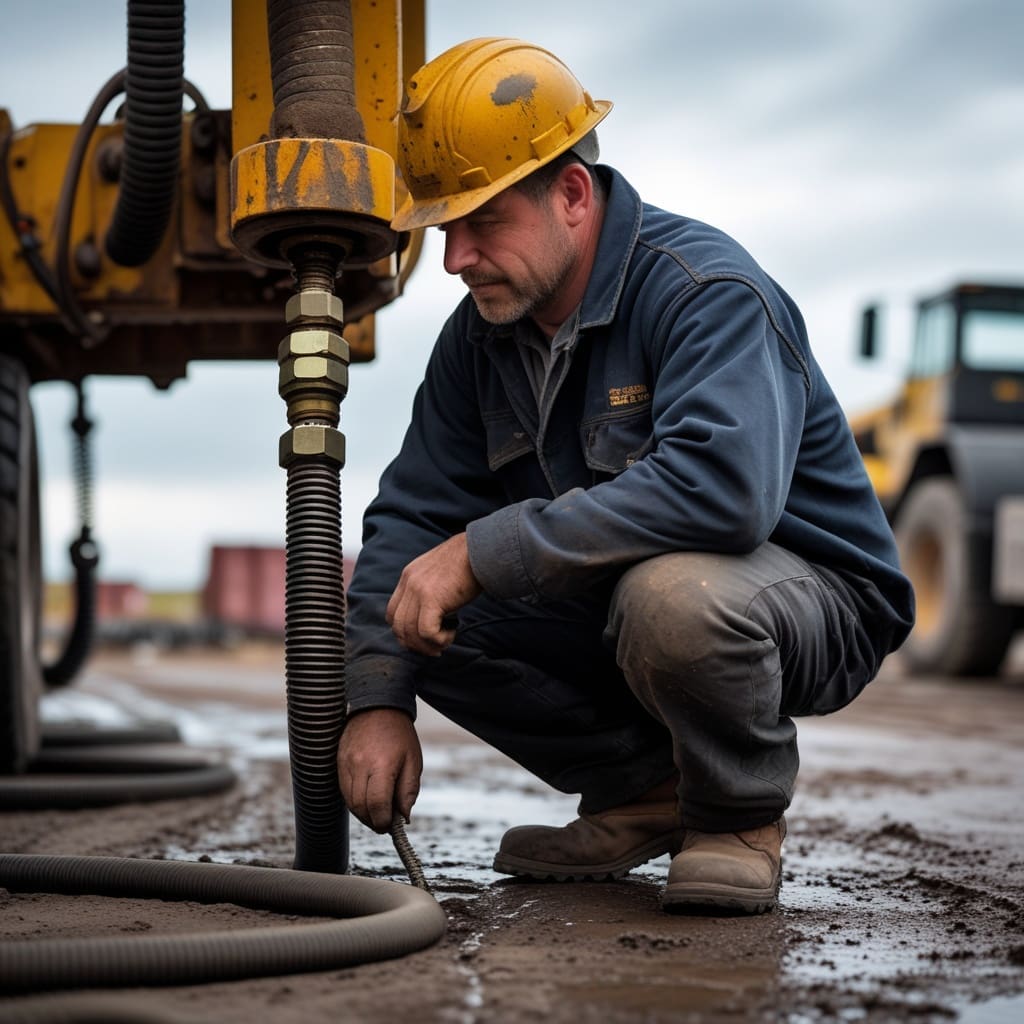
The Four Layers of a Crane Maintenance Schedule
A properly built maintenance schedule works in layers, each catching a different depth of problem. Skipping any one layer creates a gap that eventually shows up as downtime or a safety incident.
1. Daily Pre-Operational Checks (5 to 15 minutes per shift)
Every operator should complete a visual and functional check before the crane moves a single load. This includes checking hydraulic fluid levels, inspecting wire rope for kinks or broken strands, testing the horn and warning lights, and confirming that all emergency stop switches respond. OSHA requires this under 1926.1412(c) for mobile cranes, and most fleet operators log the results on a simple pass/fail form.
2. Monthly Documented Inspections (1 to 3 hours)
Monthly inspections go deeper than the daily walk-around. A qualified person examines the boom for deformation, checks brake and clutch systems for wear, tests load moment indicators, and inspects the hook and hoist rope in detail. Under 1926.1412, these results must be documented in writing and kept on file, typically for at least three months, though many companies retain them for the life of the crane to support warranty and insurance claims.
3. Annual Comprehensive Inspections (Full day or longer)
An annual inspection is a near full teardown of critical systems. It typically includes non-destructive testing of the boom and structural welds, detailed hydraulic system pressure testing, full electrical system diagnostics, and a complete review of maintenance records from the prior year. This inspection often requires a certified third-party inspector, and it is where scheduled inspections that catch wear before it becomes a compliance issue prove their value, since annual findings frequently reveal problems that monthly checks were never designed to catch.
4. Manufacturer-Scheduled Preventive Service (Interval varies by hours or miles)
Beyond regulatory inspections, manufacturers set their own service intervals, usually tied to engine hours rather than calendar time. A typical mobile crane might need an oil and filter change every 250 hours, hydraulic fluid replacement every 1,000 to 2,000 hours, and wire rope replacement based on wear criteria specified in ASME B30.5, not a fixed schedule. Following the manufacturer’s service manual exactly matters because deviating from it can void a warranty and create liability if an incident occurs.
OSHA and ASME Rules That Govern Crane Maintenance
Federal regulation sets the floor for crane maintenance, and ignoring it carries real financial risk. OSHA’s General Duty Clause and crane-specific standards work alongside industry consensus standards published by ASME, and both matter in an inspection or after an incident.
- 29 CFR 1926.1412 covers inspection requirements for cranes and derricks used in construction, including shift, monthly, and annual inspection intervals.
- 29 CFR 1910.180 governs mobile cranes used outside construction, such as those used in general industry and manufacturing yards.
- 29 CFR 1910.179 governs overhead and gantry cranes, setting requirements for daily and periodic inspections of hoists, trolleys, and bridge structures.
- 29 CFR 1926.1400 defines the scope of cranes and derricks covered under the construction standard, including tower cranes and dedicated pile drivers.
- ASME B30.2, B30.3, and B30.5 provide the technical detail behind the OSHA rules, covering overhead cranes, tower cranes, and mobile cranes respectively, including wire rope discard criteria and load testing procedures.
OSHA penalties for crane-related violations are not small. As of 2026, the maximum penalty for a serious violation is $16,550 per instance, and a willful or repeated violation can reach $165,514. Missing or falsified maintenance records are one of the most commonly cited issues during OSHA crane inspections, because inspectors can request documentation on the spot and a gap of even a few weeks can trigger a citation.
A crane that passes a visual check but has no paper trail behind it is, in OSHA’s eyes, functionally the same as a crane that was never inspected at all.
Cost Breakdown: What Crane Maintenance Actually Runs
Budgeting for crane maintenance is easier when you break it into categories rather than treating it as one lump figure. Costs scale with crane size and usage, but the following ranges reflect typical spending for a mid-size mobile crane in active commercial use.
- Daily inspection labor: Built into operator time, roughly 15 minutes per shift, no separate cost beyond wages already budgeted.
- Monthly inspection and minor repair: $300 to $800 per month, covering a qualified inspector’s time plus small parts like filters, fittings, and fluids.
- Annual comprehensive inspection: $1,500 to $5,000, depending on crane size and whether non-destructive testing of the boom is required.
- Wire rope replacement: $2,000 to $10,000 per rope, needed roughly every 1 to 3 years depending on duty cycle.
- Hydraulic system overhaul: $5,000 to $20,000, typically needed every 5 to 8 years on a heavily used crane.
- Total annual preventive maintenance: Generally 2 to 5 percent of the crane’s replacement value, which for a $500,000 rough-terrain crane translates to roughly $10,000 to $25,000 per year.
Compare that to the cost of an unplanned hydraulic pump failure mid-project, which can run $8,000 to $15,000 in parts and labor alone, plus lost productivity that often exceeds the repair cost itself. Preventive spending is consistently the cheaper path, even though it feels like a larger line item on paper.
Common Failure Points and How Maintenance Catches Them
Most crane problems fall into four categories, and each has warning signs a trained eye or ear can catch before failure.
- Hydraulic issues: Slow boom movement, visible fluid leaks around fittings, or unusual whining from the pump usually point to worn seals or contaminated fluid. Left unaddressed, these lead to complete hydraulic failure, which on a mobile crane means the boom cannot be raised or lowered safely.
- Wire rope and rigging wear: Broken wires, corrosion, or flattened strands are checked against discard criteria in ASME B30.5. A rope with six or more randomly distributed broken wires in one lay length must be removed from service immediately.
- Electrical faults: Erratic load moment indicator readings, intermittent warning lights, or unresponsive controls often trace back to corroded connectors or chafed wiring harnesses, both of which show up during a thorough monthly inspection.
- Structural fatigue: Cracks, bends, or paint cracking along weld lines on the boom or jib signal fatigue from repeated overloading or age. These require non-destructive testing methods like dye penetrant or ultrasonic inspection, usually performed during the annual comprehensive check.
A crane operator who reports a strange sound or a slower-than-normal response is often the first line of defense, which is why operator training matters as much as the mechanical service itself.
Building a Maintenance Program That Holds Up to Scrutiny
A maintenance program that survives an OSHA audit or an insurance review needs five elements working together, not just a folder of receipts.
- A written schedule tied to both calendar intervals (monthly, annual) and usage intervals (engine hours), reviewed at least once per year against the manufacturer’s updated service bulletins.
- Assigned responsibility, meaning one named person or role, such as a fleet maintenance manager, owns the schedule and signs off on completion.
- Qualified personnel performing the inspections, which for annual comprehensive checks often means bringing in a third party. This is where training programs for the inspectors who sign off on crane condition become directly relevant, since an inspection is only as reliable as the person conducting it.
- Complete documentation, retained for a minimum of three months for routine inspections and for the life of the crane for major structural or hydraulic work, stored in a format that can be produced within minutes if requested.
- A repair verification step, meaning every repair gets a follow-up check to confirm it resolved the issue rather than masking it, since a poorly executed repair can create a false sense of security.
A simple maintenance checklist, whether digital or on paper, ties these five elements together and gives every crew member a shared reference point. Many fleet managers keep a downloadable checklist on hand that covers daily, monthly, and annual tasks in one document, so nothing gets skipped during a busy work week.
Call to Action
If your crane fleet’s maintenance records would not hold up under an OSHA site visit tomorrow, that gap is worth closing before it becomes a citation or, worse, an incident. Certified Safety Experts provides inspection services and inspector training built around the exact standards referenced above, giving your team a documented, defensible maintenance history. Reach out to schedule an inspection or enroll your inspectors in a certified training program before your next scheduled service window.
Conclusion
Crane maintenance works because it layers frequent, low-effort checks on top of deeper, less frequent inspections, catching problems at the level where they are cheapest to fix. A daily walk-around catches a frayed cable. A monthly inspection catches a worn brake pad. An annual comprehensive check catches a hairline crack in a weld before it becomes a structural failure. None of these layers replace the others, and skipping any one of them creates a blind spot that eventually costs far more than the maintenance itself would have. Whether you operate mobile, overhead, tower, or gantry cranes, the combination of a written schedule, qualified inspectors, and complete documentation is what keeps both your equipment and your crew safe for the long run.
Frequently Asked Questions
How often should a mobile crane be inspected?
A mobile crane needs a check before every shift, a documented inspection monthly, and a comprehensive inspection annually. OSHA sets these intervals under 29 CFR 1926.1412 for construction cranes, and the same general pattern applies to general industry cranes under 1910.180. Skipping any one of these intervals is one of the most common findings during OSHA site visits.
What is the difference between crane inspection and crane maintenance?
Inspection identifies problems, while maintenance fixes or prevents them. An inspection is a documented review of the crane’s condition against a checklist, while maintenance includes the actual repair work, lubrication, part replacement, and preventive service that follows from what an inspection reveals. Both are required by OSHA and neither substitutes for the other.
How much does annual crane maintenance typically cost?
Annual preventive maintenance generally runs 2 to 5 percent of a crane’s replacement value each year. For a mid-size rough-terrain crane worth around $500,000, that translates to roughly $10,000 to $25,000 annually, covering routine service, minor parts, and the comprehensive annual inspection.
Who is qualified to perform crane maintenance and inspections?
Daily checks can be done by the operator, but monthly and annual inspections require a qualified or certified person as defined by OSHA. For construction cranes under 1926.1412, this often means someone with documented training and experience recognized by the employer, and many companies use third-party inspectors certified through programs like NCCCO for annual comprehensive checks.
What happens if crane maintenance records are missing during an OSHA inspection?
Missing maintenance records can result in a citation even if the crane itself appears to be in good condition. OSHA treats undocumented maintenance as equivalent to no maintenance at all, and serious violations can carry penalties up to $16,550 per instance as of 2026, with willful violations reaching over $165,000.