
Getting crane ground conditions safety right is a big deal. It’s not just about having a crane that can lift heavy stuff; it’s about making sure the ground underneath it isn’t going to cause a problem. Think about it – all that weight pressing down. If the ground isn’t prepared, things can go sideways fast. This article breaks down what you need to know to keep things safe and sound when setting up a crane.
Key Takeaways
- Always check the ground before you set up a crane. Look for soft spots, wet areas, or anything that looks unstable. Knowing the soil type and how wet it is makes a difference.
- You need to figure out how much pressure the crane and its load will put on the ground. This calculation needs to be done by someone who knows what they’re doing.
- Crane mats are super important for spreading out the weight. They help stop the ground from getting too much pressure in one spot, which is key for stability.
- Picking the right mats depends on the crane, the load, and the kind of ground you’re working on. Sometimes standard mats aren’t enough, and you might need something tougher.
- Make sure the area where the crane will work is level and clear of any junk. Also, keep an eye on the weather, because rain can change the ground conditions pretty quickly.
Understanding Your Ground Conditions
Before you even think about lifting a single beam, the most important thing is to really get to know the ground you’re working on. It sounds simple, but honestly, it’s where so many problems start. The ground is literally the foundation for your entire operation, and if it’s not right, nothing else will be.
Identifying Potential Ground Hazards
Think of this as a detective job. You need to look for anything that could cause trouble later. This includes things like old, poorly compacted fill material, especially on sites that have been built up over time. You also need to watch out for areas near buried structures or old utility lines; the ground around them might be weaker than it looks. Trenches or embankments nearby can also be a problem, as the ground could shift or collapse under the weight of the crane. It’s all about spotting these hidden issues before they become big problems.
Assessing Soil Stability and Moisture Content
Soil isn’t just dirt; it’s got different strengths depending on what it is and how much water is in it. Wet soil is generally weaker than dry soil. So, if you’ve had a lot of rain, or if there’s been recent earthwork that changed how water flows on the site, the ground’s ability to hold weight can change dramatically. You’ve got to figure out what kind of soil you’re dealing with and how its moisture content might affect its bearing capacity. This is a key part of making sure the ground can handle the load. You can find some helpful guidance on this in the CICA & CANZ crane stability note.
Recognizing Buried Obstacles and Their Impact
Beyond just weak soil, there can be actual stuff buried underground that you need to know about. We’re talking about old pipes, forgotten foundations, or even just debris. These things can create voids or areas of uneven compaction. When a heavy crane sits on top of one of these spots, it can lead to settlement, or worse, the buried item could collapse, taking the ground with it. Identifying these buried obstacles is vital for planning where to set up and how to support the crane properly.
Calculating Crane Ground Pressures
Alright, let’s talk about the nitty-gritty of keeping those massive cranes stable: ground pressure. It sounds complicated, and honestly, it can be, but understanding it is super important for safety. Basically, we need to figure out how much weight the crane is putting onto the ground and make sure the ground can handle it.
Determining Loads on Outriggers and Tracks
When a crane is set up, its weight and the load it’s lifting are transferred down to the ground. This happens through the crane’s outriggers (those big legs that extend out) or its tracks (if it’s a crawler crane). The pressure exerted by these points of contact is what we need to calculate. It’s not just the static weight of the crane; you’ve also got to factor in the weight of the boom, the load itself, and any dynamic forces that might come into play, like wind.
Here’s a simplified look at what goes into the calculation:
- Crane Weight: The base weight of the machine.
- Boom Weight: The weight of the boom sections.
- Load Weight: The actual weight of the object being lifted.
- Counterweights: The weights used to balance the crane.
- Dynamic Factors: Things like wind or sudden movements.
The total load needs to be distributed evenly to avoid overloading any single point.
The Role of Competent Persons in Calculations
This isn’t a DIY job for just anyone. The calculations for crane ground pressures must be done by a competent person. This means someone with the right knowledge, training, and experience to understand the crane’s specifications, the ground conditions, and how to perform these complex calculations accurately. They’re the ones who look at the crane’s load charts and figure out the exact forces at play. Without their input, you’re essentially guessing, and that’s a recipe for disaster.
Relying on a competent person for these calculations is non-negotiable. They bridge the gap between the crane’s capabilities and the ground’s limitations, making sure the setup is safe before any lifting begins.
Bearing Capacity of the Working Platform
Once you know how much pressure the crane is going to exert, you need to compare that to what the ground can actually support. This is called the bearing capacity. Different types of soil have different strengths. Soft, wet soil can’t hold as much weight as firm, dry, compacted soil. If the pressure from the crane is more than the ground’s bearing capacity, you’re going to have problems – sinking, tilting, or worse.
Think of it like this:
- High Bearing Capacity: Like trying to stand on solid concrete. It holds up well.
- Low Bearing Capacity: Like trying to stand on wet sand. You sink in.
So, the goal is to match the crane’s ground pressure to the ground’s bearing capacity, often by using crane mats or pads to spread the load over a larger area. This is where understanding soil types and moisture content becomes really important, which we’ll touch on more later.
The Importance of Crane Mats and Pads
Alright, let’s talk about something super important for keeping cranes steady and safe: crane mats and pads. You know, those big, sturdy platforms you see under cranes? They’re not just there to look tough; they’re doing some serious work.
Distributing Weight for Stability
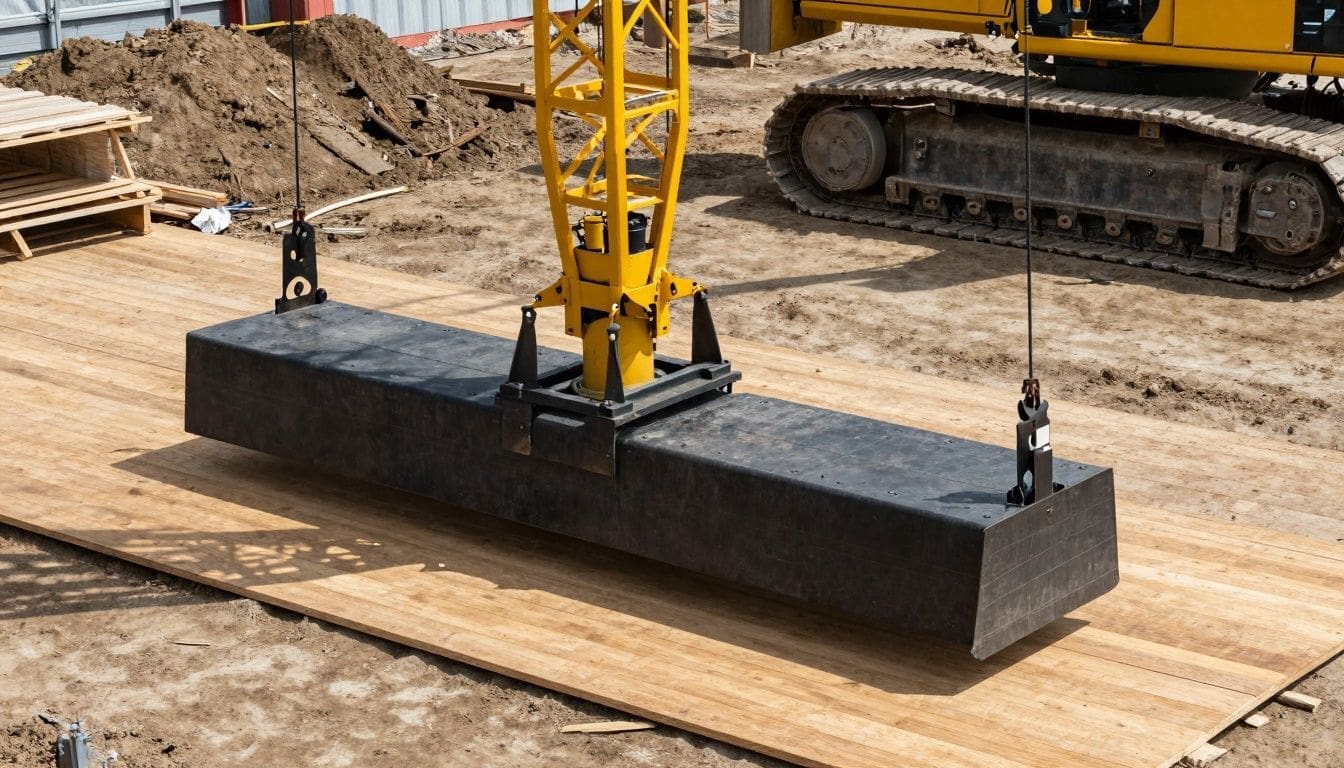
Think about it. A crane is a massive piece of equipment, and when it’s lifting something heavy, all that weight is concentrated on a few points – usually the outriggers or the tracks. If the ground underneath isn’t solid, that weight can cause the ground to sink, shift, or even collapse. That’s a recipe for disaster, right? Crane mats are designed to spread that heavy load out over a much larger area. This is key. By distributing the weight, they significantly reduce the ground pressure at any single point. This stops the crane from sinking into soft soil, prevents it from tipping over, and generally makes the whole operation a lot more stable and predictable.
Choosing the Right Mat Material
So, what are these mats made of? It really depends on the job. You’ve got a few main options:
- Wood Mats: These are pretty common. They’re usually made from strong hardwoods like oak. They’re good for a lot of situations, but you’ve got to watch out for their condition. Old, rotten wood isn’t going to cut it.
- Composite Mats: These are newer and often made from strong plastics or engineered materials, sometimes with steel reinforcement. They can be super strong and are often lighter than wood, which can be a plus for transport.
- Steel Mats: For really extreme conditions or super heavy loads, steel mats might be the way to go. They’re incredibly strong but also very heavy and expensive.
Each material has its pros and cons, and the best choice depends on how much weight you’re dealing with, the ground conditions, and how long you need them.
Understanding Load Transfer with Different Mat Types
This is where things can get a little technical, but it’s important. How the load actually gets from the crane to the ground through the mat matters. With some older-style timber mats, where individual planks are bolted together, the bolts just hold the planks together. They don’t always do a great job of transferring the load evenly to the planks next to the one the outrigger is sitting on. This can lead to uneven pressure, even with a mat down.
Newer, engineered mats, like some composite designs, are built as a single unit or with special internal structures. This means they are designed from the ground up to transfer the load much more effectively and predictably across the entire mat surface, no matter where the weight is applied. This engineered approach gives you more confidence that the load is being managed as intended.
Basically, a good mat doesn’t just sit there; it actively helps manage the forces involved in crane operations, making everything safer.
Selecting Appropriate Ground Support
Alright, so we’ve talked about understanding the ground and figuring out the pressures. Now, let’s get down to the nitty-gritty of actually supporting that crane. Picking the right ground support isn’t just about throwing down some wood; it’s a calculated decision that keeps everything safe and sound.
Factors Influencing Mat Selection
When you’re deciding on what kind of mats or pads to use, a few things really come into play. It’s not a one-size-fits-all situation, not by a long shot. You’ve got to think about the crane itself, what it’s lifting, and most importantly, the ground you’re working on.
- Crane Type and Size: A small mobile crane needs different support than a massive crawler crane. The weight and footprint of the machine are primary factors.
- Load Being Lifted: A heavier lift means more pressure on the ground, so your support system needs to be beefier.
- Ground Conditions: This is huge. Is it soft mud, hard-packed clay, rocky terrain, or maybe even a bit marshy? Each requires a different approach.
- Duration of Operation: Is the crane here for a few hours or a few weeks? Longer-term setups might need more robust, permanent solutions.
Considering Equipment and Terrain
Think of your crane mats as the shoes your crane wears. You wouldn’t wear flip-flops to hike a mountain, right? Same idea here. The terrain dictates the type of support needed.
For really soft or wet ground, like wetlands or marshy areas, you’ll want something that spreads the load out as much as possible. This is where engineered laminated mats or composite crane mats really shine. They’re built to handle challenging terrain and distribute weight effectively, which is super important for safe operation.
On the flip side, if you’re on firm, dry ground, you might get away with simpler outrigger pads or even just well-placed cribbing. But always, always double-check. It’s better to be a little over-prepared than to have a costly and dangerous mishap.
When Standard Mats Are Not Enough
Sometimes, the standard options just won’t cut it. Maybe you’ve got extremely uneven ground, very soft soil that’s prone to settlement, or you’re dealing with slopes that make a level setup a real challenge. In these cases, you might need to look at more specialized solutions.
This could involve:
- Custom Mat Designs: Tailoring mats to the specific site and load requirements.
- Geotextiles and Geogrids: These can be used to reinforce the soil beneath the mats, adding an extra layer of stability.
- Engineered Working Platforms: For very demanding situations, a professionally designed working platform might be necessary. This often involves a geotechnical engineer assessing the site and recommending specific materials and construction methods.
Don’t underestimate the ground. It might look solid, but it can surprise you. Always err on the side of caution when selecting your ground support. A little extra effort upfront can prevent a lot of trouble later on.
Ensuring a Level and Stable Surface
Alright, let’s talk about making sure the ground under that big crane is just right. It’s not just about having solid dirt; it’s about making sure it’s flat and won’t shift when things get heavy. Think of it like building a house – you wouldn’t start on a lopsided foundation, right? The same goes for cranes.
The Necessity of a Level Working Area
Seriously, a level spot is super important. Even a small tilt can throw off the crane’s balance. It’s like trying to stand on a hill with a heavy load – you’re going to wobble. A perfectly level surface is key to preventing the crane from tipping or shifting unexpectedly. This means using equipment to grade the area, making sure there are no bumps or dips where the crane will sit or move.
Addressing Erosion and Ground Instability
Sometimes, the ground can be a bit… well, unstable. You might see signs of erosion, especially after rain. If the soil is washing away, it’s definitely not going to hold up a heavy crane. You’ve got a few options here:
- Compacting the soil: This makes it denser and less likely to move.
- Adding gravel or engineered fill: This builds up a stronger, more stable base.
- Using erosion control measures: Things like retaining walls or special fabric (geotextiles) can hold the soil in place.
You really need to keep an eye on how the ground is holding up, especially if you’ve had a lot of rain or if the site is sloped. Ignoring signs of erosion is just asking for trouble down the line.
Clearing the Site of Obstructions
Before the crane even rolls in, you need to do a thorough sweep of the area. Get rid of anything that could get in the way or cause a problem. This includes:
- Rocks and debris: Small things can trip up tracks or get caught.
- Vegetation: Overgrown plants can hide uneven ground or get tangled.
- Other equipment or materials: Anything left lying around is a hazard.
It’s all about creating a clean, predictable space for the crane to operate safely. No surprises allowed!
Advanced Planning for Crane Operations
Alright, let’s talk about the really important stuff that happens before the crane even rolls onto the site. Advanced planning for crane operations is all about looking ahead and thinking through every possible curveball. It’s not just about showing up and lifting; it’s about making sure everything is set up for success, and more importantly, for safety.
Integrating Weather into Ground Assessments
Weather is a huge factor, and honestly, sometimes it feels like the biggest wildcard. Rain can turn solid ground into a muddy mess, making it unstable. Snow can hide hazards, and extreme heat can affect soil composition. You really need to look at the forecast not just for the day of the lift, but for the days leading up to it and the days after. If heavy rain is expected, you might need to put extra drainage in place or even postpone the lift. It’s about being proactive and not just reacting when things go wrong. Thinking about how weather might impact the ground conditions is a big part of planning crane operations.
Identifying and Mitigating Site-Specific Risks
Every site is different, right? What works on one job might not work on another. You’ve got to really scout the area. Are there underground pipes or cables? Are there overhead power lines? What about nearby buildings or structures that the crane’s swing radius might hit? Identifying these potential problems early is key. Once you know what the risks are, you can figure out how to deal with them. This might mean rerouting utilities, trimming trees, or setting up specific exclusion zones. It’s about creating a detailed plan that accounts for all the unique challenges your specific site presents.
The Value of Geotechnical Reports
Sometimes, just looking at the ground isn’t enough. For bigger or more complex jobs, getting a geotechnical report is a really smart move. These reports are done by soil experts who can tell you exactly what kind of soil you’re dealing with, how strong it is, and how much weight it can actually support. This kind of detailed information is gold. It helps you figure out precisely what kind of ground support you’ll need, like specific types of mats or even engineered fill, to make sure the ground can handle the crane and its load safely. It takes a lot of the guesswork out of the equation.
Here’s a quick rundown of what to consider:
- Soil Type: Is it clay, sand, silt, or rock? Each behaves differently under pressure.
- Moisture Content: Wet soil is generally weaker than dry soil.
- Underground Utilities: Knowing what’s below the surface prevents costly and dangerous accidents.
- Slope: Even a slight incline can affect crane stability.
Don’t underestimate the power of a thorough site assessment. It’s the bedrock of a safe lift, preventing issues before they even have a chance to start. Thinking through these details upfront saves time, money, and most importantly, lives.
Here’s a little table to help visualize some common ground issues and their solutions:
| Ground Issue | Potential Risk | Mitigation Strategy |
|---|---|---|
| Soft/Saturated Soil | Crane sinking, outrigger failure, tipping | Use heavy-duty mats, engineered fill, or compaction |
| Uneven Terrain | Crane instability, load shifting | Level the surface, use shims or adjustable supports |
| Buried Obstructions | Damage to utilities, ground collapse | Conduct utility locates, use ground-penetrating radar |
| Steep Slopes | Crane sliding, tipping, uncontrolled descent | Bench the slope, use specialized anchoring systems |
Wrapping It Up: Keeping Your Crane Operations Safe and Sound
So, we’ve talked a lot about how important the ground is when you’re using a crane. It’s not just about having a flat spot; you really need to think about the soil, what’s underneath it, and how the crane’s weight is spread out. Using the right mats and understanding how to distribute that load can make a huge difference in preventing accidents. Always check the ground conditions, know your crane’s limits, and don’t be afraid to bring in extra support if you need it. A little bit of planning goes a long way in keeping everyone and everything safe on the job site. Stay safe out there!
Frequently Asked Questions
Why is checking the ground before using a crane so important?
Cranes are super heavy, and so are the things they lift. If the ground isn’t strong or level enough, the crane could tip over or sink, causing serious damage and injuries. Checking the ground helps make sure everything stays safe and steady.
What kind of ground problems can cause issues for cranes?
Lots of things can mess with the ground! This includes really wet soil that’s soft and mushy, areas where the ground has been dug up and refilled without being packed down tightly, or even hidden stuff underground like old pipes or foundations. All these can make the ground weak.
What are crane mats, and why do we use them?
Crane mats are like big, strong boards, often made of wood or other tough materials. They spread the crane’s weight over a much bigger area. This is like putting a big book under a wobbly table leg to stop it from sinking into the carpet. They help prevent the ground from getting crushed and keep the crane stable.
Do I need to be a soil expert to work with cranes?
Not exactly! You don’t need to be a scientist, but it’s really helpful to understand the basics. Knowing if it’s rained a lot recently, if the ground looks like it’s slumping, or if there are any obvious hazards nearby is super important for making safe decisions.
What happens if the ground isn’t level?
If the ground is tilted, even a little bit, it can make the crane unstable. Imagine trying to balance a tall tower on a ramp – it’s much more likely to fall over. Making sure the ground is perfectly flat is a key step for safety.
Can bad weather affect the ground for crane work?
Absolutely! Rain and snow can make the soil much weaker and softer because water fills up the spaces between the dirt particles. This means the ground can’t hold as much weight. That’s why checking the weather forecast and planning for drainage is a big part of preparing the site.