Aerial lift certification renewal is required every three years under most employer policies and ANSI A92 standards, or sooner if an operator is involved in an incident, near-miss, or equipment change. The exact renewal window depends on your employer’s internal policy, the type of lift you operate, and any state-specific rules layered on top of federal OSHA guidance. Missing a renewal deadline can mean losing your ability to legally operate equipment on a job site, which often translates into lost wages and delayed projects. Understanding the exact timeline, cost, and documentation involved helps you avoid gaps in your certification status.
Key Takeaways
- Most aerial lift certifications require renewal every three years, based on ANSI/SAIA A92.22 and employer safety policy, not a fixed OSHA mandate.
- OSHA (29 CFR 1926.453 and 1910.67) requires operator training but does not set a specific expiration date; that detail comes from ANSI standards and company policy.
- Renewal training typically costs between $50 and $450, depending on whether you choose an online refresher or an in-person practical evaluation.
- Online renewal courses usually take 1 to 4 hours, while in-person renewal with hands-on evaluation can take a half day to a full day.
- Certification must be renewed immediately after any workplace incident, near-miss, equipment change, or observed unsafe operation, regardless of the three-year clock.
What Aerial Lift Certification Renewal Actually Requires
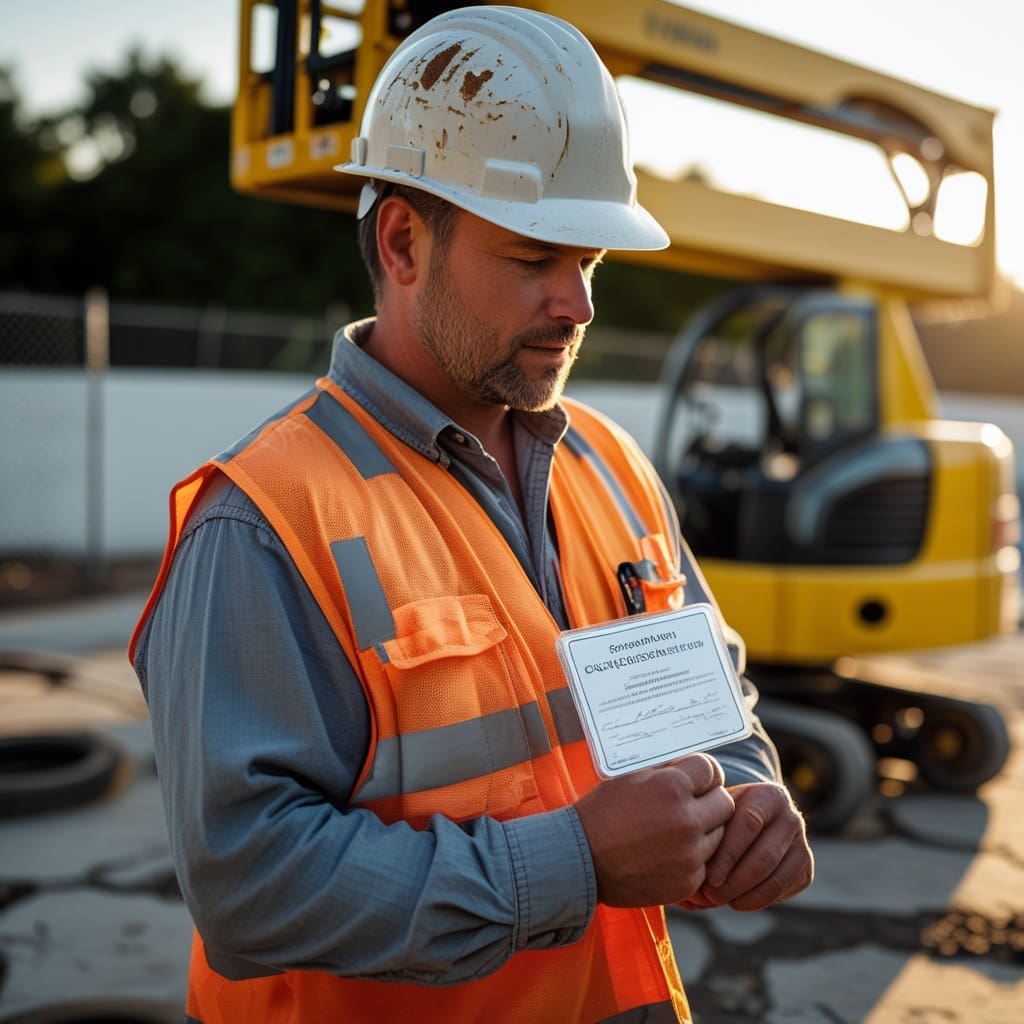
Aerial lift certification renewal generally requires a refresher training course, a written knowledge check, and in many cases a hands-on skills evaluation performed by a qualified trainer. The refresher course covers changes to equipment, updated OSHA guidance, and a review of common accident causes such as tip-overs, falls from the platform, and electrocution near power lines. Operators typically need to score at least 80 percent on the written portion to pass, though some third-party providers set the threshold at 70 percent.
The written OSHA standard governing aerial lifts, 29 CFR 1926.453 for construction and 29 CFR 1910.67 for general industry, requires that operators be trained and evaluated as competent, but it does not spell out a fixed renewal interval. That gap is filled by ANSI/SAIA A92.22-2018, the national consensus standard most training providers and employers reference, which recommends refresher training every three years at minimum. Many employers choose to renew certification even more frequently, particularly on job sites with strict insurance requirements or government contracts.
Why the Three-Year Renewal Cycle Exists
The three-year cycle reflects how quickly equipment, safety practices, and regulatory guidance change in the aerial lift industry. Manufacturers update lift models with new stability systems, load sensors, and emergency descent mechanisms roughly every few years, and operators need to stay current on how these features work. A 2021 review of workplace lift incidents found that a significant share involved operators using equipment they had not been formally trained on within the past 24 months.
Beyond equipment changes, the three-year window also accounts for skill decay. Operators who work with a lift daily retain procedures differently than those who use one occasionally, perhaps once every few months. Refresher training closes that gap by reinforcing pre-operation inspection steps, load capacity calculations, and fall protection procedures before those habits fade.
Situations That Trigger Immediate Renewal
Certain events require renewal before the standard three-year mark ever arrives. OSHA and ANSI both specify that retraining must happen right away under these circumstances:
- A workplace accident or near-miss involving the lift, even if no one was injured.
- Observed unsafe operation, such as exceeding rated load capacity or operating outside the platform’s designated work zone.
- A change in worksite conditions that affects how the lift is used, such as new overhead obstructions or a switch from indoor to outdoor terrain.
- A different type or model of lift than the operator was originally certified on, such as moving from a scissor lift to a boom lift.
- Extended time away from lift operation, commonly defined by employers as six months or longer without hands-on use.
Employers who ignore these triggers face liability exposure well beyond a simple compliance citation. Insurance carriers frequently review training records after an incident, and a lapsed or improperly triggered renewal can affect claims outcomes.
Step-by-Step Renewal Process
Renewing aerial lift certification follows a fairly consistent sequence across most training providers, whether you go through an employer-sponsored program or an independent certifying body. Below is the typical path from start to finish.
- Confirm your expiration date (5 minutes). Check your certification card or your employer’s training database to see exactly when your current credential expires.
- Select a renewal format (15 to 30 minutes). Decide between an online refresher course, an in-person classroom session, or a blended option that combines online modules with an in-person skills test.
- Complete the refresher coursework (1 to 6 hours). Online modules average 1 to 2 hours; in-person classroom sessions typically run 4 to 6 hours and include group discussion of near-miss case studies.
- Pass the written exam (20 to 40 minutes). Most exams contain 25 to 50 multiple-choice questions, and a passing score of 70 to 80 percent is standard.
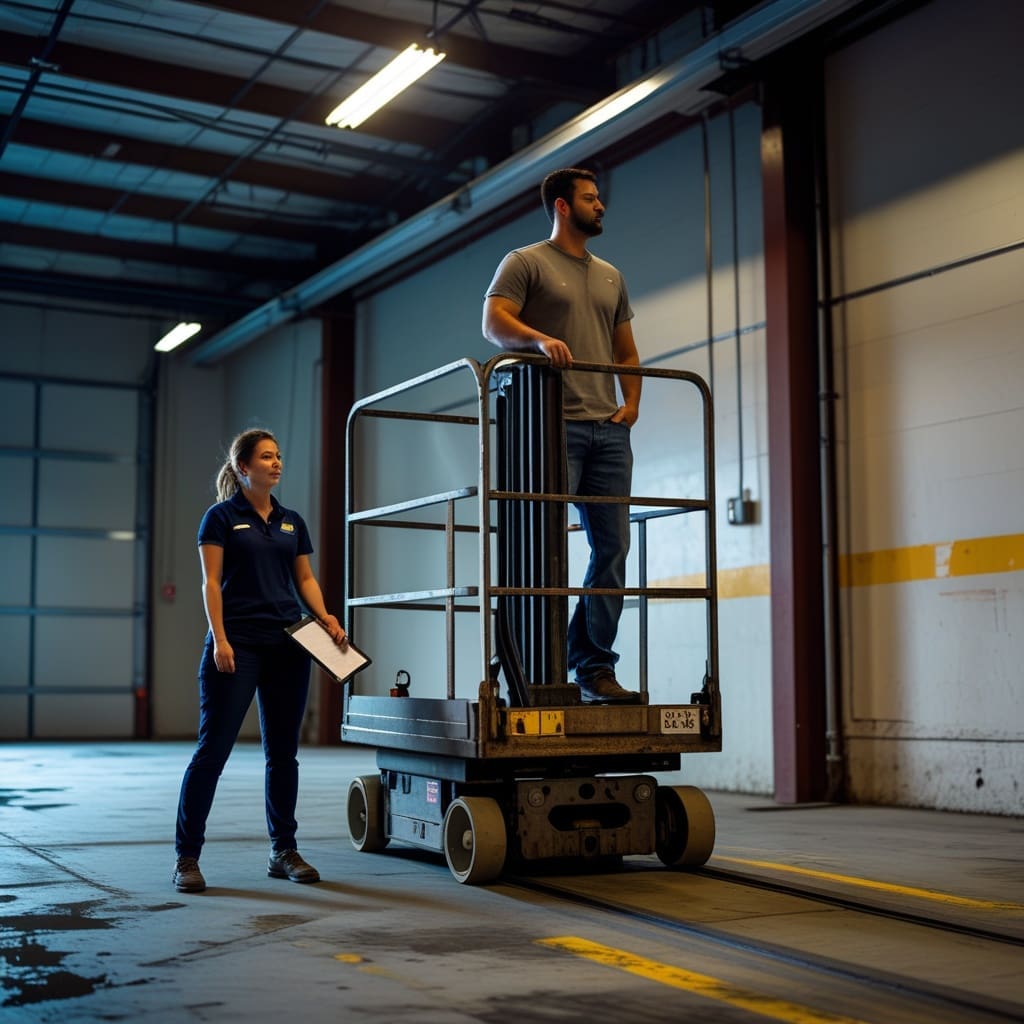
- Complete a hands-on evaluation if required (1 to 3 hours). A qualified evaluator observes you performing a pre-operation inspection, operating the controls, and demonstrating emergency lowering procedures.
- Receive your updated certification card (same day to 10 business days). Digital certificates often arrive within minutes; physical cards mailed by third-party providers can take one to two weeks.
- Submit proof to your employer (1 business day). Provide a copy of the updated card or certificate number for your employer’s safety records.
Cost Breakdown for Aerial Lift Certification Renewal
Renewal costs vary based on format, provider, and whether a hands-on evaluation is included. Below is a realistic breakdown of what operators and employers typically pay in 2024.
- Online refresher course only: $50 to $120 per operator, usually covering the written portion and a printable or digital certificate.
- In-person classroom refresher: $150 to $250 per operator, including instructor time and printed materials.
- In-person renewal with hands-on evaluation: $250 to $450 per operator, reflecting equipment rental, evaluator time, and facility costs.
- Group or company-sponsored training: $1,200 to $3,000 for a group of 10 to 15 operators, which often lowers the per-person cost to roughly $100 to $200.
- Replacement or duplicate certification card: $10 to $25 if your original card is lost before renewal is due.
Some employers cover the full cost of renewal as part of ongoing safety compliance, particularly on unionized job sites or federal contracts where training expenses are built into overhead budgets. Independent contractors and gig-based operators, on the other hand, often pay out of pocket and should budget accordingly before their certification lapses.
Online vs. In-Person Renewal: Choosing the Right Format
Online renewal courses work best for operators who already have strong hands-on experience and simply need to refresh their knowledge of regulations and equipment updates. These courses are typically self-paced, allow completion within a single sitting of 1 to 2 hours, and issue a certificate immediately upon passing the exam. However, online-only renewal does not satisfy the hands-on evaluation requirement that many employers and some ANSI-referenced programs expect, particularly for boom lifts operating near power lines or on uneven terrain.
In-person renewal, by contrast, includes direct observation of your equipment operation by a qualified evaluator. This format takes longer, generally a half day to a full day, but it produces a more defensible record if your employer or an OSHA inspector later questions whether your training met the “evaluated as competent” standard under 29 CFR 1926.453(b)(1). Many safety directors treat the in-person hands-on component as non-negotiable for operators working at heights above 30 feet or in high-traffic construction zones.
A blended approach, where operators complete online coursework followed by an in-person skills check, has become increasingly common because it balances cost against thoroughness. This format typically costs $180 to $320 and takes 3 to 5 hours total, split between self-paced study and a shorter in-person session.
What Happens If Your Certification Lapses
An expired aerial lift certification means you are no longer legally authorized to operate the equipment on most job sites, and continuing to do so can expose both you and your employer to OSHA citations. Fines for operating without proper training or allowing an uncertified operator to run equipment can reach $16,131 per violation for serious violations and up to $161,323 for willful or repeated violations, based on OSHA’s 2024 penalty schedule adjusted for inflation. These figures apply per instance, meaning multiple lapsed operators on one site can multiply the total exposure quickly.
Beyond regulatory fines, a lapsed certification typically triggers an immediate work stoppage for that operator until renewal is complete. General contractors on larger commercial projects often audit certification records weekly, and an expired card can result in an operator being sent home without pay until documentation is updated. Insurance carriers may also deny coverage for incidents involving an operator whose certification had expired at the time of the event, leaving both the worker and the employer financially exposed.
An expired certification card is not a paperwork technicality. It removes your legal authorization to operate the lift, regardless of how experienced you are.
Recordkeeping and Documentation Requirements
Employers are required to maintain training records that show the date of initial certification, the date of the most recent renewal, the name of the evaluator, and the specific type of lift covered. OSHA does not mandate a specific retention period for these records under the aerial lift standard itself, but most safety consultants recommend keeping records for at least three years past an operator’s last day of employment, aligning with general recordkeeping practice under 29 CFR 1904.
Operators should keep a personal copy of their certification card and any written exam results, either as a physical card or a digital PDF stored on a phone. When switching employers, a valid certification from a recognized third-party provider, such as the National Commission for the Certification of Crane Operators (NCCCO) or a similarly accredited program, often transfers without requiring a full retraining course, though the new employer may still require a site-specific orientation and a brief equipment-specific evaluation.

How to Prepare for Renewal Before Your Deadline
Preparing ahead of your renewal deadline reduces the risk of a compliance gap and often lowers your cost, since many providers charge a rush fee of $25 to $75 for expedited processing within 48 hours of expiration. Start by marking your expiration date on a calendar reminder set 60 days in advance, giving yourself enough time to schedule an in-person evaluation if your employer requires one. Review any incident reports or near-misses from the past three years, since these may affect which refresher modules you need to complete.
Reach out to your employer’s safety coordinator or human resources contact to confirm whether the company covers renewal costs or requires a specific accredited provider. Some companies maintain a list of approved trainers to ensure consistency across job sites, and using an unapproved provider could mean your renewal is not recognized internally even if it satisfies general OSHA requirements.
Take Action Before Your Certification Expires
If your aerial lift certification is due to expire within the next 90 days, schedule your renewal course now rather than waiting until the deadline approaches. Contact your employer’s safety department to confirm which renewal format, online, in-person, or blended, meets your company’s specific requirements, and set aside time on your calendar for both the coursework and any required hands-on evaluation. Acting early protects your ability to keep working without interruption and keeps your documentation audit-ready.

Conclusion
Aerial lift certification renewal protects far more than a piece of paper in your wallet. It confirms that you understand current equipment, current regulations, and the specific hazards tied to the lift you operate every day. Whether your renewal window is three years out or three weeks away, treating it as a scheduled priority rather than an afterthought keeps you working legally, keeps your employer compliant, and reduces the odds of a preventable accident on site.
Frequently Asked Questions
How often does aerial lift certification need to be renewed?
Most aerial lift certifications need renewal every three years. This interval comes from ANSI/SAIA A92.22 guidance rather than a specific OSHA rule, though many employers set their own stricter schedule, sometimes requiring renewal every two years for high-risk job sites.
Can I renew my aerial lift certification entirely online?
Yes, for the written and knowledge-based portion, but many employers still require an in-person hands-on evaluation. Online-only renewal typically satisfies OSHA’s training requirement but may not meet the “evaluated as competent” standard some companies enforce for higher-risk lift types.
What happens if I operate a lift with an expired certification?
You risk immediate suspension from lift duties and potential OSHA fines for your employer. Serious violations can reach $16,131 per instance, and willful violations can climb to $161,323, based on OSHA’s current penalty schedule.
Does switching employers require a full recertification?
Usually not, if your certification is current and from a recognized provider. Most new employers accept a valid, unexpired certification but will still require a brief site-specific orientation and an equipment-specific evaluation before you operate their lifts.
How much does aerial lift certification renewal typically cost?
Renewal generally costs between $50 and $450 per operator, depending on the format. Online-only refreshers sit at the lower end, while in-person renewal with a hands-on evaluation falls at the higher end of that range.