
There are four main types of crane inspections: pre-shift (or initial) inspections, monthly inspections, periodic (annual) inspections, and post-assembly inspections after erection or repair. Each type has its own frequency, checklist, and documentation requirement under federal law. Skipping any one of them is one of the most common causes of citations issued during Occupational Safety and Health Administration (OSHA) audits, and a leading factor in crane-related injuries, which OSHA links to roughly 42 fatalities per year in the construction industry alone.
Crane failures rarely happen without warning. Most stem from a worn wire rope, a cracked hook, or a hydraulic leak that a proper inspection would have caught weeks earlier. Knowing which inspection applies to which situation, and who is qualified to perform it, keeps your crew safe and keeps your paperwork ready for an OSHA compliance officer at a moment’s notice.
Key Takeaways
- Four inspection types govern most cranes: shift, monthly, periodic (annual), and post-assembly inspections, each with a distinct frequency and required documentation.
- OSHA sets the legal floor through 29 CFR 1926.1412 for construction cranes and 29 CFR 1910.179 for overhead and gantry cranes used in general industry.
- ASME B30 standards (B30.2, B30.5, B30.17, and related volumes) provide the technical detail OSHA references to define “qualified” inspectors and acceptable tolerances.
- Monthly inspection records must be kept on file for at least three months, while annual inspection documentation is typically retained for the life of the crane or per company policy.
- A qualified person, not just any operator, must sign off on monthly and annual inspections, while a competent person can usually handle shift checks.
- Third-party annual inspections generally cost between $500 and $2,500 per crane, depending on crane size, load capacity, and location.
Who Sets the Standards for Crane Inspections?
Two organizations shape almost every crane inspection requirement in the United States. OSHA writes the legally enforceable rules, while the American Society of Mechanical Engineers (ASME) publishes the technical consensus standards that OSHA often incorporates by reference. Understanding the relationship between the two helps explain why inspection paperwork sometimes references both an OSHA subpart and an ASME B30 volume on the same page.
OSHA regulates cranes under two primary standards. Construction sites fall under 29 CFR 1926 Subpart CC, most notably 1926.1412 (inspections) and 1926.1413 (wire rope inspection). General industry facilities, including manufacturing plants and warehouses using overhead or gantry cranes, fall under 29 CFR 1910.179. A separate standard, 29 CFR 1910.180, covers crawler, locomotive, and truck cranes used outside of construction.
ASME fills in the technical gaps that OSHA leaves open. ASME B30.2 governs overhead and gantry cranes, ASME B30.5 covers mobile and locomotive cranes, and ASME B30.17 applies to overhead cranes with underhung trolleys. Many state OSHA plans, including those in California, Washington, and Michigan, adopt these federal standards with only minor state-specific additions.
Pre-Shift Inspections: The First Line of Defense
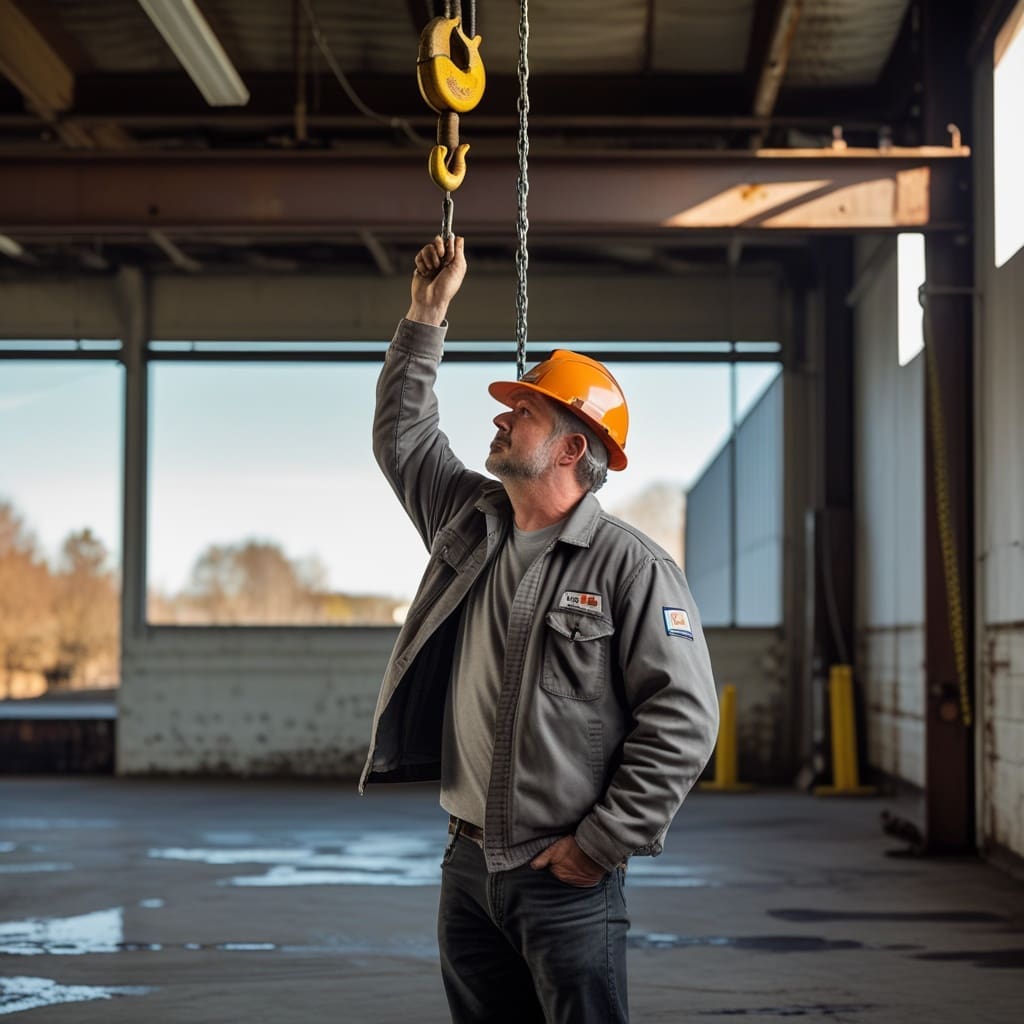
A pre-shift inspection, sometimes called a daily or initial inspection, happens before the crane operates each shift and takes about 10 to 15 minutes to complete. Under 29 CFR 1926.1412(c), the operator or a designated competent person must visually check the crane before use whenever it has been idle for more than one month is not required, but a shift check is mandatory every single time the equipment starts up.
Typical shift inspection items include:
- Control functions: testing all operator cab controls, including hoist limit switches, at the start of each shift.
- Hydraulic and air systems: checking for visible leaks around hoses, cylinders, and valves.
- Hooks and rigging: looking for cracks, deformation, or more than 15 percent throat opening increase compared to the manufacturer’s original spec.
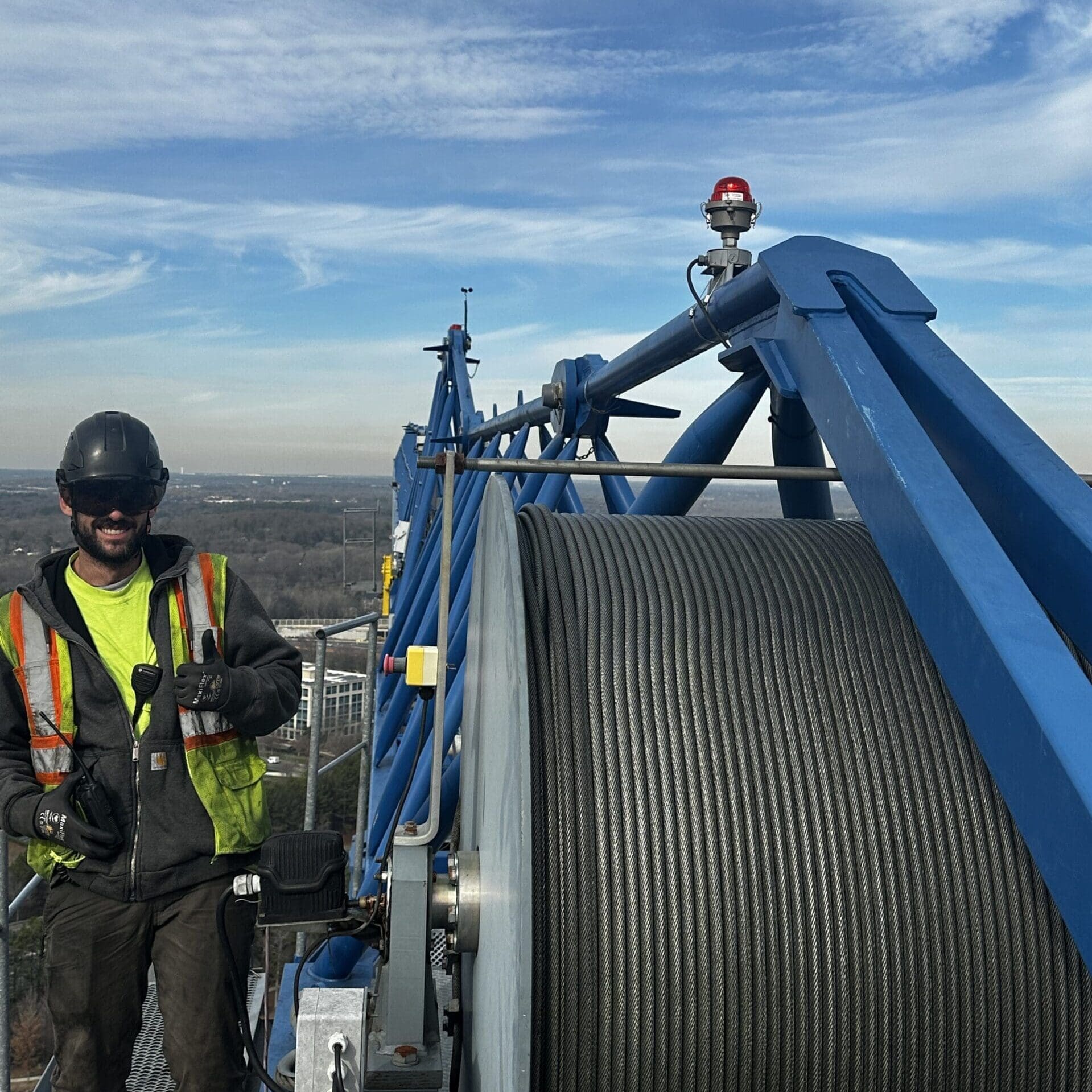
- Wire rope condition: scanning for kinking, crushing, or bird-caging along the visible length.
- Tires, tracks, and outriggers: confirming proper inflation, wear, and full extension before any lift begins.
Documentation requirements for shift inspections are lighter than for other categories. OSHA does not require a written record for a routine shift inspection that reveals no deficiencies, though many employers keep one anyway as a liability safeguard. If a defect is found, however, a written record becomes mandatory the moment the crane is removed from service.
Monthly Inspections: Building a Documented History
A monthly inspection is a documented, written inspection performed at intervals not exceeding one month for cranes in active use, and it must be signed by a qualified person, not simply the operator on duty. This inspection covers everything in a shift inspection plus a closer look at structural and mechanical components that develop wear over weeks rather than hours.
Monthly inspection checklists typically include:
- Wire rope wear measurement: checking for a reduction in rope diameter of 5 percent or more from nominal size, which triggers replacement under ASME B30.5.
- Brake system testing: verifying holding brakes stop and hold 100 percent of rated load without drift exceeding manufacturer tolerance.
- Hook inspection with gauge: measuring throat opening and twist against baseline manufacturer dimensions, flagging any deformation over 10 percent.
- Electrical component check: inspecting contactors, limit switches, and control panel wiring for corrosion or loose connections.
- Structural member review: examining boom sections, jib welds, and load-bearing pins for visible cracks or elongation.
Records from monthly inspections must be retained for a minimum of three months under most OSHA interpretations, though many facilities keep at least twelve months of history to track wear trends over time. A written log that shows a hook’s throat opening growing from 2 percent to 8 percent over four consecutive months gives a maintenance team an early warning long before a failure occurs.
Periodic (Annual) Inspections: The Deep Dive
A periodic, or annual, inspection is a detailed, documented exam done every 12 months (or every 1 to 4 years for cranes in standby service, per ASME B30.2 severity classes). It goes beyond a visual check, often requiring disassembly of key parts, non-destructive testing of critical welds, and sometimes load testing.
A qualified third-party inspector usually handles this, especially for cranes over 10 tons or those in high-hazard settings like steel erection or petrochemical plants. Costs run roughly $500 for a small overhead bridge crane up to $2,500 or more for a large mobile crane with a boom over 150 feet. Many companies bundle this into maintenance contracts costing $1,000 to $3,000 a year.
A $400 weld crack caught during an annual inspection is far cheaper than the average crane-related workers’ comp claim, which OSHA data ties to median costs in the tens of thousands per incident.
Annual inspections typically cover:
- Wire rope evaluation: replacement is often triggered at 6 or more broken wires in one rope lay.
- Load testing: some codes require a test lift at 100 to 125 percent of rated capacity after major repairs.
- Non-destructive testing: magnetic particle or dye penetrant checks on hooks, drums, and boom sections for cranes over 15 tons.
- Bolt torque checks: structural fasteners verified against manufacturer specs, within plus or minus 10 percent.

Post-Assembly and Post-Repair Inspections
A post-assembly inspection is required every time a crane is erected, reconfigured, or moved to a new location, and it must be completed before the crane lifts its first load. This category also covers post-repair inspections, which apply whenever a structural or mechanical component has been welded, replaced, or adjusted. Neither type substitutes for a shift or monthly inspection; they exist as an additional layer specific to a change in the crane’s physical configuration.
For tower cranes and large mobile cranes assembled on-site, this inspection often takes 2 to 4 hours and covers pin connections, boom sections, counterweight placement, and outrigger deployment. OSHA 1926.1412(d) specifically requires a post-assembly inspection any time a crane’s configuration changes, including boom length adjustments or the addition of a jib. Failing to document this step is one of the more frequent citations issued under Subpart CC, with penalties for serious violations reaching $16,550 per instance in 2026 under OSHA’s current civil penalty schedule, and up to $165,514 for willful or repeated violations.
Post-repair inspections carry similarly strict documentation rules. If a hoist motor is replaced or a boom section is re-welded, the crane cannot return to service until a qualified person signs off on a written report confirming the repair meets original manufacturer specifications. Many facilities integrate this step directly into their maintenance software so the crane’s digital record automatically flags it as “out of service” until the sign-off is logged.
Comparing the Four Inspection Types
The table below summarizes how frequency, inspector qualification, and documentation differ across the four main categories, giving you a quick reference for planning your inspection calendar.
- Shift inspection: Performed every shift or daily before first use; conducted by the operator or a competent person; written record only required if a defect is found.
- Monthly inspection: Performed at intervals not exceeding 30 days; conducted by a qualified person; written record required and retained for at least 3 months.
- Periodic (annual) inspection: Performed every 12 months, or every 1 to 4 years for standby cranes; conducted by a qualified person, often third-party; written record retained for the crane’s service life.
- Post-assembly/post-repair inspection: Performed after erection, reconfiguration, or repair; conducted by a qualified person; written record required before the crane returns to service.
How to Meet OSHA Crane Inspection Requirements in Practice
Meeting OSHA’s inspection requirements comes down to five concrete steps that most compliant facilities follow without exception.
- Assign a qualified person in writing. Document their training hours (typically 40 hours of formal crane inspection training plus 2 years of field experience) and keep that record on file.
- Build a documented inspection calendar. Schedule shift checks daily, monthly inspections on a fixed date each month, and annual inspections 30 days before the prior certification expires.
- Standardize your checklist forms. Use a single checklist format across all cranes so inspectors do not miss items when moving between equipment types.
- Set a defect threshold and escalation path. Define exactly what percentage of wear or damage takes a crane out of service, then train inspectors to apply that threshold consistently.
- Retain records for audit readiness. Keep at least 12 months of monthly records and the full annual inspection history for the crane’s entire service life, typically 15 to 25 years for a well-maintained overhead crane.

Cost Breakdown: What Crane Inspections Actually Cost
Inspection costs vary by crane type and inspection category, but real numbers help with budgeting far better than a vague estimate. Shift inspections cost effectively nothing beyond the operator’s time, since they take 10 to 15 minutes and require no outside vendor. Monthly inspections performed in-house by a trained employee typically add 30 to 45 minutes of labor per crane, which most facilities absorb into existing payroll.
Third-party involvement is where costs become significant. A basic annual inspection for a single-girder overhead bridge crane rated under 5 tons generally runs $500 to $900. A double-girder overhead crane rated between 10 and 20 tons often costs $1,200 to $1,800 for the same annual service. Mobile and tower cranes cost considerably more due to boom disassembly and NDT requirements, with typical pricing between $1,800 and $2,500 per unit, and complex tower crane annual certifications sometimes exceeding $4,000 when load testing is required by local code.
Post-repair inspections tied to a major component replacement, such as a new hoist motor or gearbox, typically add $300 to $700 in inspector labor on top of the repair cost itself. Facilities operating a fleet of 10 or more cranes often negotiate annual service contracts that bring per-crane inspection costs down by 15 to 20 percent compared to one-off scheduling.
Take Action on Your Crane Inspection Program
Review your current inspection calendar this week and confirm that every crane on your site has a documented shift check, a signed monthly report less than 30 days old, and an annual certification less than 12 months old. If any of those three records is missing or expired, remove that crane from service until a qualified person completes the inspection and signs off. A short delay now costs far less than a citation, a shutdown, or an injury later.
Conclusion
Crane inspections are not a single task but a layered system built from four distinct checks, each catching different types of wear before they become failures. Shift inspections catch the obvious problems in minutes. Monthly inspections build a documented history that reveals slow-developing wear. Annual inspections dig into structural integrity with tools a daily walk-around cannot match. Post-assembly and post-repair inspections close the loop whenever a crane’s configuration changes. Together, these four inspection types form the backbone of both OSHA compliance and genuine operational safety on any job site using cranes.
Frequently Asked Questions
How often does OSHA require crane inspections?
OSHA requires inspections at four separate intervals: before each shift, monthly, annually, and after any assembly or repair. The exact frequency for periodic inspections can extend to every 1 to 4 years for cranes in standby or infrequent use, based on the severity classification defined in ASME B30.2.
Who is qualified to perform a crane inspection?
A “qualified person” under OSHA rules has documented training and field experience, while a “competent person” can identify hazards but may have less formal training. Shift inspections generally allow a competent person, such as the operator, while monthly and annual inspections require a qualified person, often certified through a program tied to ASME B30 standards.
What happens if a crane inspection is skipped?
Skipping a required inspection can result in OSHA penalties up to $16,550 per serious violation in 2026, plus removal of the crane from active service. Repeated or willful violations carry penalties up to $165,514, and skipped inspections are frequently cited as contributing factors in crane-related injury investigations.
How long should crane inspection records be kept?
Monthly inspection records should be kept for a minimum of 3 months, while annual inspection records are typically retained for the crane’s entire service life. Many facilities keep 12 months or more of monthly records on hand to track gradual wear trends across multiple inspection cycles.
How much does a third-party crane inspection cost?
A third-party annual crane inspection typically costs between $500 and $2,500, depending on crane type, capacity, and complexity. Small overhead bridge cranes fall at the lower end of that range, while mobile and tower cranes requiring boom disassembly and non-destructive testing often land at $1,800 or more.