A snorkel lift is an aerial work platform built with a telescoping mast topped by a jointed jib arm, allowing the platform to travel up, out, and over obstacles rather than in a straight line. The jib section acts much like the tube on a swimmer’s snorkel, bending the reach of the machine so operators can clear a roofline, a pipe rack, or a piece of stationary equipment without repositioning the base. Snorkel International, the manufacturer that gave this style of lift its name, has built these units since 1959 in St. Joseph, Missouri, and the term now applies broadly to any telescoping boom with an articulating jib, regardless of brand. Understanding how this machine differs from a standard boom lift matters before you rent, buy, or step onto one at a job site.
Key Takeaways
- A snorkel lift combines a telescoping mast with a jointed jib arm, giving it up-and-over reach that a straight telescoping boom cannot match.
- Working heights on common models range from 46 feet to 135 feet, depending on the mast and jib configuration.
- Operators must be trained and evaluated under ANSI/SAIA A92.24 and follow the general duty requirements of OSHA 29 CFR 1926.453.
- New units typically cost between $85,000 and $180,000, while daily rental runs $350 to $650.
- Daily pre-shift inspections and annual third-party inspections are required to keep the machine in safe operating condition.
What Is a Snorkel Lift?
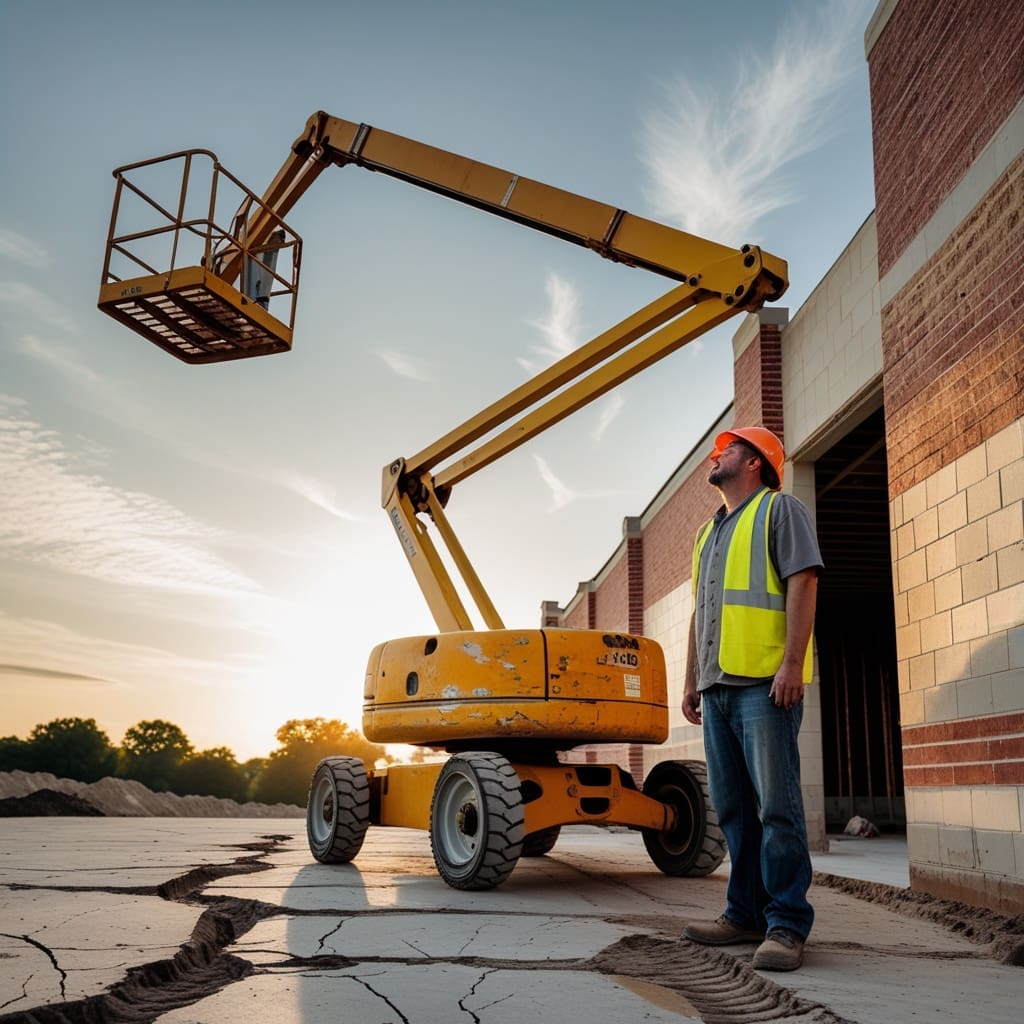
A snorkel lift is an aerial work platform (AWP) that pairs a telescoping boom section with an articulating jib at the top, letting the platform bend around an obstruction instead of only extending in one direction. This design distinguishes it from a pure telescoping boom, which extends and retracts like a fishing rod but cannot bend at the tip. The jib arm typically pivots through 60 to 135 degrees, giving operators the ability to lift the platform over a wall, a piece of ductwork, or an existing structure before setting it down on the far side.
The name traces back to Snorkel International, a manufacturer founded in 1959 that built some of the first telescoping lifts with this jointed reach capability. The brand name eventually became a generic industry term, similar to how “Kleenex” refers to facial tissue regardless of maker. Today, companies such as JLG, Genie, and Skyjack also produce lifts with the same jib-and-telescope configuration, and contractors on a job site will often call any of them a snorkel lift out of habit.
How Does a Snorkel Lift Work?
The operator raises the telescoping mast to the desired height, then extends the jib arm to position the platform horizontally over or around an obstacle. Hydraulic cylinders control both the mast extension and the jib rotation, and most modern units include proportional controls that let the operator move both functions at once for smoother positioning. Working heights on common models range from 46 feet on compact units up to 135 feet on the largest telescoping-jib machines, with horizontal outreach commonly falling between 30 and 75 feet depending on the model.
Platform capacity on most snorkel-style lifts falls between 500 and 1,000 pounds, enough for two workers plus tools on mid-size units. Drive speeds while elevated are intentionally slow, often capped around 0.5 miles per hour, to reduce tip-over risk when the mast is extended. According to the Equipment Rental Trade Association’s 2023 fleet utilization report, telescoping boom lifts with jib attachments account for roughly 18 percent of all boom lift rentals in the commercial construction sector, reflecting steady demand for their up-and-over reach.
When Should You Use a Snorkel Lift?
You should choose a snorkel lift whenever a job requires reaching over, under, or around a fixed obstruction that a straight boom or scissor lift cannot clear. This flexibility makes the machine common in several settings:
- Roofing and HVAC work where the platform must clear a parapet wall or roof overhang before descending onto the roof surface.
- Warehouse and industrial maintenance where pipe racks, conveyor systems, or overhead ductwork block a direct vertical path.
- Sign installation and exterior building work where the platform needs to hook around a building corner or cornice.
- Tree trimming and utility work where branches or overhead lines require the operator to approach a work point from an angle rather than straight up.
- Bridge and infrastructure inspection where the jib lets the platform tuck under a deck or ledge that a telescoping boom alone cannot reach.
If your work only requires straight vertical or diagonal reach with no obstacles to clear, a standard telescoping or articulating boom lift may be a simpler and less expensive choice. The jib arm on a snorkel lift adds mechanical complexity, which typically raises both the purchase price and the maintenance schedule compared to a lift without that feature.
Snorkel Lift vs Boom Lift: What Is the Difference?
A snorkel lift is technically a subtype of boom lift, distinguished by its added jib arm, while the broader term boom lift covers any aerial platform mounted on an extending arm, whether telescoping, articulating, or a combination of both. The distinction matters when you are comparing machines for a specific job:
- Reach pattern: A straight telescoping boom extends in one line; a snorkel lift’s jib lets the platform bend around an obstacle after the mast is extended.
- Working height: Standard telescoping booms commonly reach 40 to 150 feet; snorkel-style units with a jib typically top out closer to 135 feet due to added weight at the tip.
- Horizontal outreach: Articulating booms without a jib often max out around 45 to 60 feet of outreach; snorkel-style jib booms can push outreach to 75 feet on larger models.
- Cost: A comparable telescoping boom without a jib typically costs 10 to 20 percent less than a snorkel-style version with the added articulation point.
- Maintenance: The jib pivot adds an extra hydraulic circuit and pin connection that requires its own inspection point, slightly increasing routine maintenance time.
Contractors who need to clear a fixed obstacle on nearly every job, such as roofing crews working around parapets, generally favor the snorkel-style configuration. Crews working in open yards or on new construction with no overhead obstructions often find a standard boom lift does the job at a lower rental rate.
What Certification Do You Need to Operate a Snorkel Lift?
Operators must complete training that satisfies both ANSI/SAIA A92.24, the national standard covering safe use and training for mobile elevating work platforms, and the general duty clause found in OSHA 29 CFR 1926.453. Employers are responsible for verifying that each operator has been evaluated on the specific make and model of lift they will run, not just on aerial lifts in general. Before you run a boom or snorkel-style unit, confirming the credentialing requirements before you run a boom or snorkel-style unit can prevent a costly compliance gap during a jobsite audit.
A typical certification path follows these steps:
- Classroom instruction (4 to 8 hours): Covers OSHA regulations, ANSI standards, load charts, and manufacturer-specific operating limits.
- Written exam (30 to 50 questions): Most third-party programs set a passing threshold at 80 percent.
- Hands-on evaluation (1 to 2 hours): A qualified trainer observes the operator performing pre-shift inspection, elevation, jib articulation, and emergency descent.
- Certification card issued: Valid for 3 years under most third-party training program guidelines, after which a refresher course is required.
- Site-specific evaluation: Even certified operators must be evaluated on the exact model at each new job site per OSHA guidance.
Per the National Association of Home Builders’ 2022 workforce safety survey, roughly 62 percent of reported aerial lift incidents involved an operator who had not been evaluated on the specific model in use, underscoring why the site-specific step matters as much as the classroom hours. Training costs for a single operator typically range from $150 to $400, depending on whether the course is delivered in person or through a blended online-and-hands-on format.
How Much Does a Snorkel Lift Cost?
Pricing for a new snorkel lift generally falls between $85,000 and $180,000, with working height and outreach capacity driving most of the variation. If you are browsing snorkel lifts for sale, expect the following rough breakdown by category:
- Compact units (46 to 60 feet working height): $85,000 to $110,000 new; $25,000 to $45,000 used.
- Mid-size units (66 to 86 feet working height): $110,000 to $145,000 new; $40,000 to $65,000 used.
- Large units (110 to 135 feet working height): $150,000 to $180,000 new; $55,000 to $90,000 used.
Rental rates offer a lower-commitment option for short-term jobs. Daily rates typically run $350 to $650, weekly rates fall between $1,200 and $2,200, and monthly rates range from $2,800 to $4,500, depending on the region and the machine’s working height. Used equipment marketplaces and dealer auctions can offer savings of 40 to 60 percent off new pricing, though buyers should budget an additional $2,000 to $5,000 for a pre-purchase inspection and any deferred maintenance on the jib pivot and hydraulic hoses.
Why Does Inspection Matter for a Snorkel Lift?
The jib arm and telescoping mast on a snorkel lift create additional wear points that a standard boom lift does not have, which is why routine checks matter for extended-reach lift equipment like this far more than for simpler machines. A daily pre-shift inspection, which typically takes 10 to 15 minutes, should cover the jib pivot pin, hydraulic hose connections at the articulation point, telescoping mast wear pads, and the platform control panel.
Beyond daily checks, ANSI A92.22 requires a documented frequent inspection every 3 months and a full annual inspection performed by a qualified technician. OSHA requires employers to retain inspection records for a minimum of 3 years, and many rental companies require proof of a current annual inspection before releasing a unit. For a closer look at what a formal inspection program should include for this equipment type, reviewing the why routine checks matter for extended-reach lift equipment like this resource can help you build a compliant schedule before your next audit.
Skipping these checks carries real cost. According to the Center for Construction Research and Training’s most recent equipment safety bulletin, mechanical failure tied to unaddressed hydraulic or pivot wear accounted for close to 22 percent of aerial lift incidents reviewed over a five-year period, a figure that points directly at components unique to jib-equipped lifts.
If your crew is planning a project that requires reaching over rooftops, pipe racks, or other fixed obstructions, evaluate whether a snorkel lift’s added reach justifies its higher cost compared to a standard boom lift, and confirm that every operator on site holds current, model-specific training before the machine arrives.
Frequently Asked Questions
Is a snorkel lift the same as a cherry picker?
Not exactly, though the terms are often used interchangeably in casual conversation. “Cherry picker” is an informal name that can refer to any bucket truck or boom lift, while “snorkel lift” specifically describes a telescoping boom with an added jib arm for up-and-over reach.
How high can a snorkel lift reach?
Most models reach between 46 and 135 feet of working height. Compact units used for indoor or light commercial work typically max out around 60 feet, while large units built for infrastructure and bridge work can approach 135 feet.
Do you need a commercial driver’s license to move a snorkel lift on public roads?
Generally no, but transport requirements depend on the trailer and towing vehicle combination. Most self-propelled snorkel lifts are moved on a flatbed trailer, and the driver’s license requirement is based on the gross combined weight of the truck and trailer rather than the lift itself.
How long does snorkel lift certification take to complete?
A typical program takes one full day, combining 4 to 8 hours of classroom instruction with 1 to 2 hours of hands-on evaluation. The certification card issued at the end is generally valid for 3 years before a refresher course is required.
Can one person operate a snorkel lift alone?
Yes, a single trained operator can run the platform controls, but many job sites still require a second worker as a ground spotter. The spotter watches for overhead obstructions and can activate ground-level emergency controls if the operator becomes unresponsive.
Conclusion
A snorkel lift earns its place on a job site when the work requires reaching over or around a fixed obstacle that a straight boom cannot clear, whether that is a parapet wall, a pipe rack, or an overhead structure. Think of a warehouse retrofit where crews need to work above a mezzanine, or a refinery job where pipe runs block a direct line to the work area. In those cases, the jib arm’s up and over reach saves time compared to repositioning a standard boom lift again and again.
Weigh the added cost against a standard boom lift. Rental rates for snorkel lifts often run 10 to 20 percent higher, but that gap shrinks fast once you factor in the hours saved from fewer machine repositions. Confirm your operators hold current model-specific training, since the jib controls and up and over motion differ from a standard boom pattern. Keep up with the daily pre-shift checks and the annual inspection schedule that this jib-equipped equipment demands, paying close attention to the jib pivot points and hydraulic hoses, which see more wear than on a straight boom. Doing so keeps the machine running safely and keeps your crew compliant with OSHA and ANSI requirements throughout the life of the equipment.